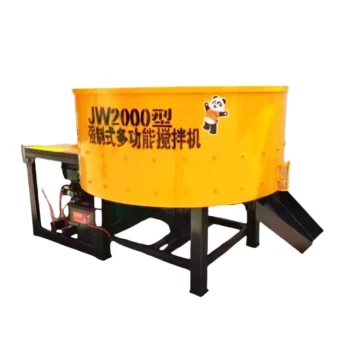
Beyond the foundation, a cement mixer is fundamentally a simple machine for tumbling and combining materials at a large scale. While its primary purpose is concrete, some genuinely clever applications exist, from creating decorative garden mulch by tumbling broken glass with sand to mixing sand with epoxy for large sculptures. And, of course, there's the classic joke of using it to mix a colossal batch of pancake batter—an idea far better in theory than in practice.
A cement mixer's unconventional potential lies in leveraging its core functions—tumbling and mixing—for large-scale, non-food-grade creative projects. Understanding its limitations, especially regarding food safety and cleaning, is the key to separating clever ideas from dangerous ones.
The Mixer as a Large-Scale Tumbler
The rotating drum is perfect for projects that require long-term, consistent abrasion to smooth or alter materials.
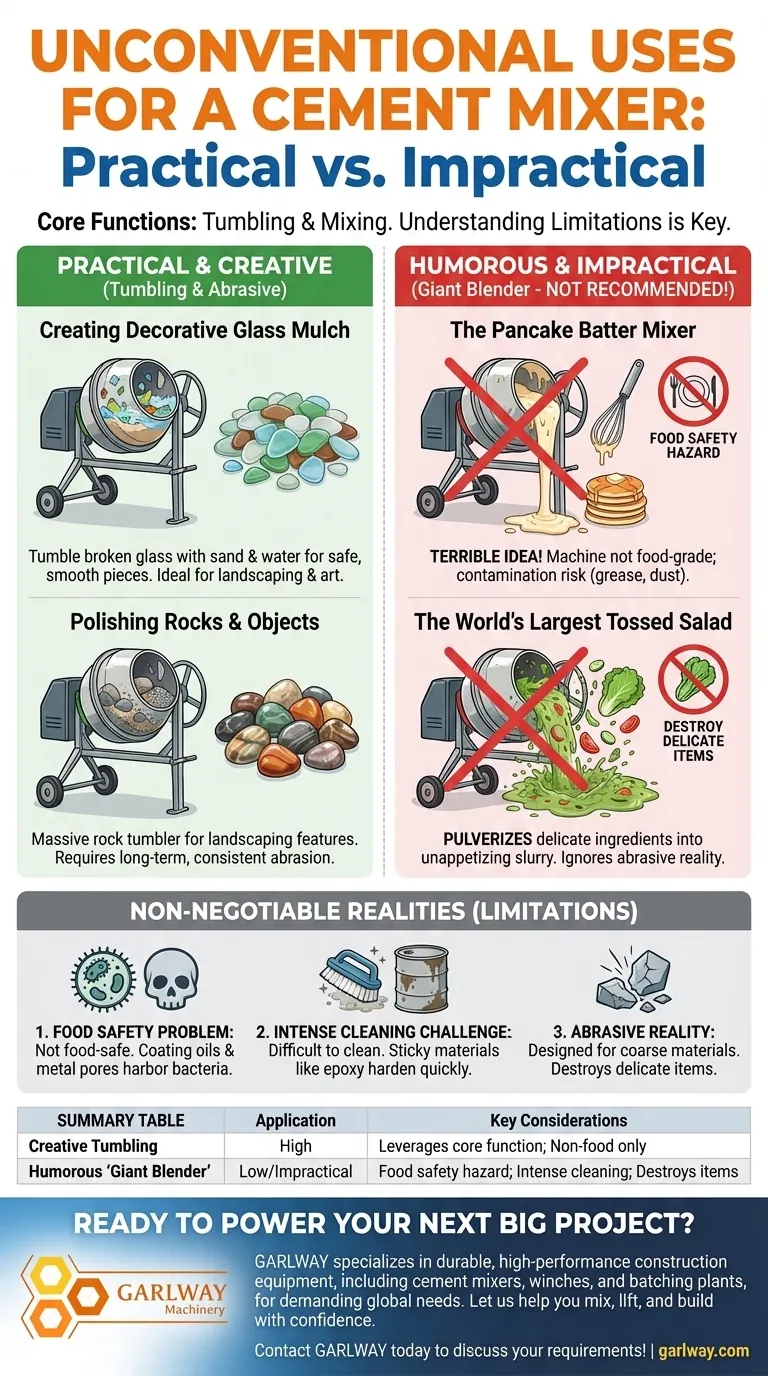
Creating Decorative Glass Mulch
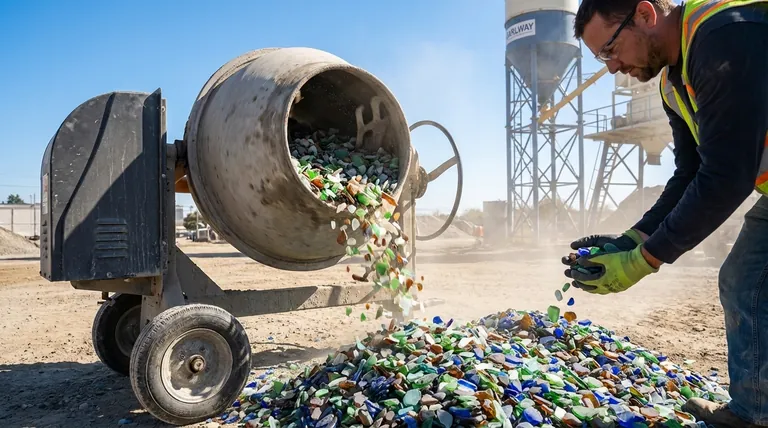
One of the most practical and creative uses is making sea glass or decorative mulch. By tumbling sharp, broken glass with sand and a small amount of water, the machine's action will smooth the sharp edges over time.
This creates beautiful, safe-to-handle glass pieces perfect for landscaping, garden beds, or art projects.
Polishing Rocks and Objects
In the same way it smooths glass, a cement mixer can function as a massive rock tumbler. This is ideal for polishing large quantities of rocks for landscaping features or artistic displays.
The principle remains the same: use an abrasive medium like sand or grit and let the machine's rotation do the work.
The Mixer as a Giant Blender (Humorous & Impractical)
The most humorous suggestions treat the mixer like a giant kitchen appliance. These are entertaining thought experiments but are not recommended for execution.
The Legendary Pancake Batter Mixer
The idea of making enough pancake batter for an entire town is a common joke. It humorously highlights the machine's massive capacity.
However, this is a terrible idea in reality. The machine isn't food-grade, and the grease and residual cement dust would contaminate the batter.
The World's Largest Tossed Salad
Similarly, one might joke about mixing a giant salad or batch of trail mix. The image is comical but ignores the practical reality.
The mixer's abrasive action would pulverize delicate ingredients like lettuce or fruit, creating an unappetizing slurry rather than a well-tossed mix.
Understanding the Key Limitations
To use a cement mixer creatively, you must first respect its design limitations. These are non-negotiable realities that separate a good idea from a costly or dangerous mistake.
The Food Safety Problem
A cement mixer is not food-safe. The drum is often coated with oils, and pores in the metal can harbor bacteria and residue from previous batches of concrete.
Never mix anything you intend to eat in a cement mixer.
The Intense Cleaning Challenge
Properly cleaning a cement mixer is difficult, which is why it's recommended to clean it immediately after use before the concrete sets.
For creative projects, this means any material that is sticky, oily, or prone to hardening (like epoxy) will require significant and immediate cleanup to avoid ruining the machine.
The Abrasive Reality
The machine is designed to aggressively combine coarse materials like sand, gravel, and stone.
This makes it unsuitable for anything delicate. It will shred, crush, or otherwise destroy materials that cannot withstand constant, heavy tumbling.
How to Apply This to Your Project
Your goal determines whether an unconventional idea is brilliant or a blunder.
- If your primary focus is a practical, creative project: Use the mixer's tumbling ability for abrasive tasks like smoothing glass, polishing rocks, or mixing large batches of non-food materials like resin and sand.
- If your primary focus is humor or a thought experiment: The idea of a mixer as a giant kitchen appliance is funny, but it should remain a joke due to critical food safety and cleaning issues.
Ultimately, creative thinking is about understanding a tool's fundamental purpose and applying it in a new context safely and effectively.
Summary Table:
| Application Type | Practicality | Key Considerations |
|---|---|---|
| Creative Tumbling (e.g., Glass Mulch, Rock Polishing) | High | Leverages machine's core function; non-food materials only. |
| Humorous 'Giant Blender' (e.g., Pancake Batter) | Low/Impractical | Food safety hazard; intense cleaning challenge; destroys delicate items. |
Ready to Power Your Next Big Project?
Whether you're a contractor on a major build or tackling a creative large-scale project, GARLWAY has the right machinery for the job. We specialize in durable, high-performance construction equipment, including cement mixers, winches, and concrete batching plants, designed to meet the demanding needs of construction companies and contractors globally.
Let us help you mix, lift, and build with confidence.
Contact GARLWAY today to discuss your specific requirements and discover how our equipment can deliver the reliability and performance you need!
Visual Guide
Related Products
- HZS25 Best Cement Mixer for Quick Mix Concrete at Bunnings
- JDC350 Small Cement Concrete Mortar Mixer
- Concrete Cement Mixer Machine Drum Mixer for Construction
- JW1000 Mobile Cement Mixer Concrete Mixer Truck and Batching Plant
- JZC500 Large Cement Mixer Machine Price for Concrete Mix
People Also Ask
- How do cement mixers enhance safety on construction sites? Reduce Strain, Hazards, and Accidents
- What are the main components of a cement mixer? A Guide to Core Parts & Functions
- What are some tips for using a cement mixer effectively? Maximize Your Mixer's Performance & Concrete Quality
- How does cleaning a cement mixer after use benefit its performance? Maximize Lifespan and Mix Quality
- Why is it important to clean the cement mixer after use? Prevent Costly Damage and Ensure Quality Concrete