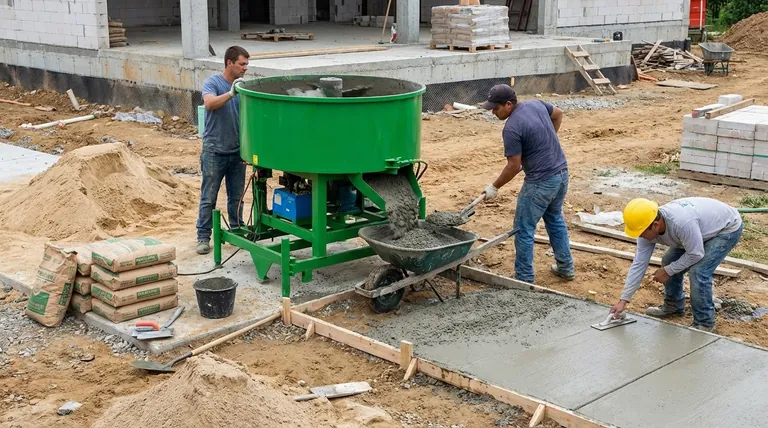
At its core, a portable cement mixer is an essential tool for a wide range of small to medium-scale masonry projects. Its most common applications include pouring small concrete slabs, creating sidewalks, setting fence posts, patching damaged concrete, and mixing mortar for binding block or stucco bases.
The true value of a portable cement mixer lies in its ability to deliver a consistent, high-quality mix with minimal effort. This makes it indispensable for jobs that are too large for hand-mixing but too small to justify a ready-mix concrete truck.
Why a Portable Mixer Excels
Hand-mixing concrete is physically demanding and often results in an inconsistent product. Portable mixers solve this by automating the process, which provides several distinct advantages for professionals and serious DIYers.
Achieving a Consistent, High-Quality Mix
A portable mixer ensures that cement, sand, gravel, and water are thoroughly and evenly combined. This uniform consistency is critical for achieving the concrete's maximum strength and durability, preventing weak spots that can lead to cracks and failure.
Saving Significant Time and Labor
Automating the mixing process drastically reduces the physical effort required for a project. This allows you to produce fresh batches of concrete or mortar quickly, keeping the project moving forward efficiently.
Versatility for Multiple Materials
While often called cement mixers, these machines are highly versatile. They are equally effective at mixing mortar, stucco, grout, and even other materials like plaster or epoxy, making them a multi-purpose tool on the job site.
Matching the Mixer to the Job
The term "portable" covers a range of sizes and power sources, each suited for different tasks. Understanding these differences is key to selecting the right tool.
Power Source: Electric vs. Gas
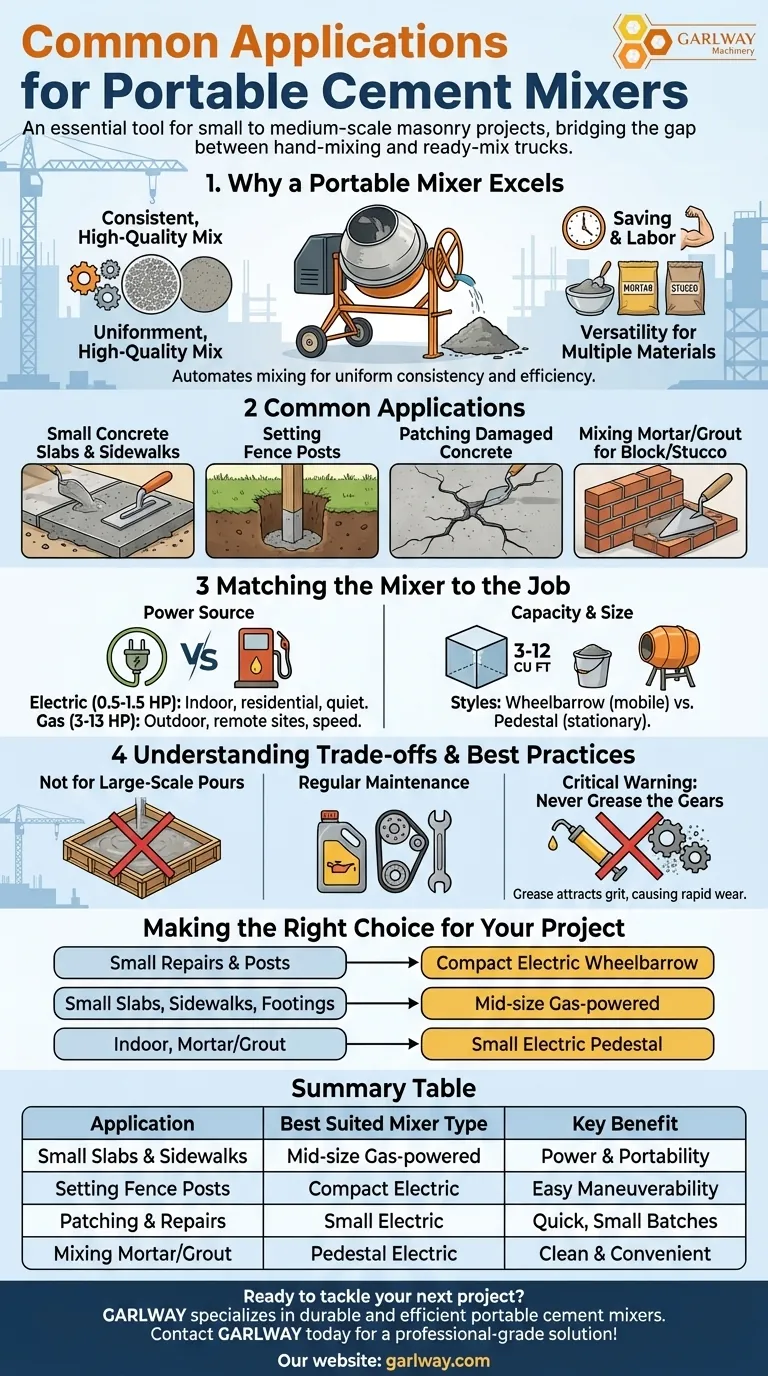
Electric mixers (typically 0.5 to 1.5 HP) are quieter and produce no fumes, making them ideal for indoor or residential use where power is accessible.
Gasoline-powered mixers (3 to 13 HP) offer more power and complete portability, perfect for remote job sites or larger pours like small driveways where speed is a factor.
Capacity and Size
Mixer capacity is measured in cubic feet, with portable models typically ranging from 3 to 12 cubic feet. A smaller mixer is sufficient for setting posts or minor repairs, while a larger, towable unit is better for pouring a small patio slab.
Common Mixer Styles
The most common designs are wheelbarrow-style and pedestal (or stand) mixers. Wheelbarrow models offer excellent on-site mobility, while pedestal mixers are stationary but often provide a more convenient dumping height.
Understanding the Trade-offs and Best Practices
While highly effective, portable mixers are not a one-size-fits-all solution. Awareness of their limitations and maintenance needs is crucial for safe and effective operation.
Not for Large-Scale Pours
A portable mixer is not a substitute for a ready-mix concrete truck. Attempting to pour a large foundation or a full driveway with a portable unit is impractical and can lead to "cold joints" where batches don't bond correctly.
The Importance of Regular Maintenance
Like any mechanical equipment, mixers require care. Daily checks of oil levels and filters are essential. V-belts and pulleys must be kept tight to ensure proper drum rotation.
A Critical Warning: Never Grease the Gears
It may seem counterintuitive, but the main ring gear and pinion gear should never be greased. Grease will attract and trap sand, grit, and cement dust, forming an abrasive paste that will rapidly wear down and destroy the gears.
Making the Right Choice for Your Project
Selecting the appropriate mixer comes down to the scale and location of your typical projects.
- If your primary focus is small repairs and post setting: A compact, electric wheelbarrow-style mixer offers the perfect balance of portability and capacity.
- If your primary focus is creating small slabs, sidewalks, or footings: A mid-size, gas-powered mixer provides the necessary volume and untethered freedom for outdoor work.
- If your primary focus is indoor work like mixing grout or mortar: A small electric pedestal mixer is the safest, cleanest, and most convenient choice.
Ultimately, choosing the right portable mixer empowers you to complete projects faster and with a more professional, durable result.
Summary Table:
| Application | Best Suited Mixer Type | Key Benefit |
|---|---|---|
| Small Slabs & Sidewalks | Mid-size Gas-powered | Power & Portability |
| Setting Fence Posts | Compact Electric | Easy Maneuverability |
| Patching & Repairs | Small Electric | Quick, Small Batches |
| Mixing Mortar/Grout | Pedestal Electric | Clean & Convenient |
Ready to tackle your next project with the right equipment?
GARLWAY specializes in durable and efficient construction machinery, including a range of portable cement mixers perfect for contractors and construction companies. Our mixers are designed to deliver consistent results, saving you time and labor on every job.
Contact GARLWAY today to find the ideal mixer for your specific needs and get a professional-grade solution for your concrete and masonry work!
Visual Guide
Related Products
- Portable Cement Mixer with Lift Concrete Machine
- Portable Electric Concrete Mixer Machine for Cement Mixing
- Portable Ready Mix Concrete Mixer Equipment
- Portable Concrete Mixer Machine Equipment for Mixing Concrete
- Portable Electric Small Cement Mixer Concrete Machine
People Also Ask
- What are the size and portability options for portable cement mixers? Find Your Perfect Match for Any Job
- Why is it necessary to use a portable concrete mixer? Gain Total Control & Efficiency
- How much concrete can you pour with a portable mixer? Find the Perfect Fit for Your Project
- What is a portable cement mixer? Achieve Consistent, On-Demand Concrete Mixing
- What are the power sources for portable cement mixers? Choose the Right Power for Your Job Site