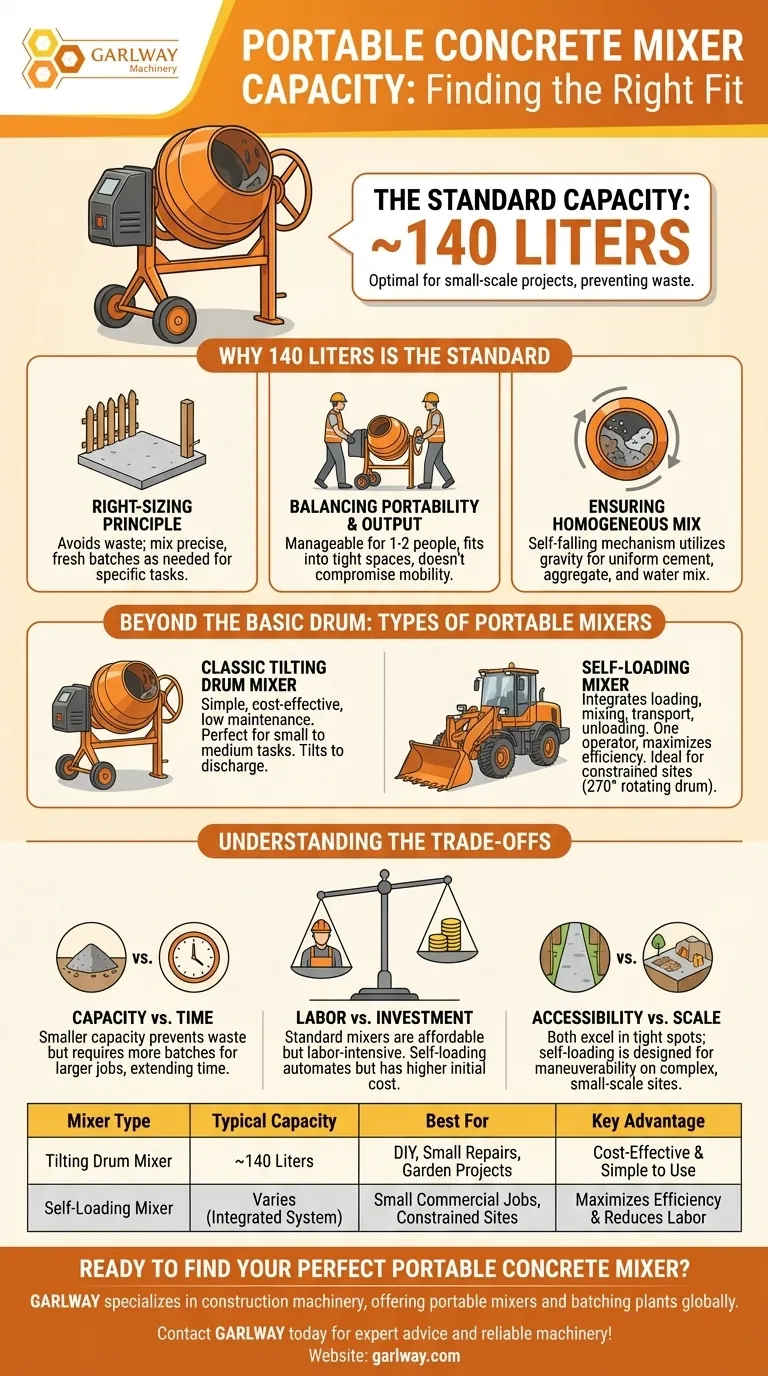
The standard capacity of a typical portable concrete mixer is approximately 140 liters. This specific size is engineered to be optimal for small-scale construction projects, providing enough volume for a manageable batch while preventing the material waste, and subsequent cost, associated with larger mixers.
While the drum capacity itself is a straightforward number, the real consideration is how that capacity fits into a larger system of efficiency, labor, and project scale. Understanding the different types of portable mixers is crucial to selecting the right tool for your specific goal.
Why 140 Liters is the Standard
The 140-liter capacity isn't an arbitrary figure; it represents a carefully calculated balance between output, portability, and material science. It's the sweet spot for delivering on the core promises of a portable mixer.
The Principle of "Right-Sizing"
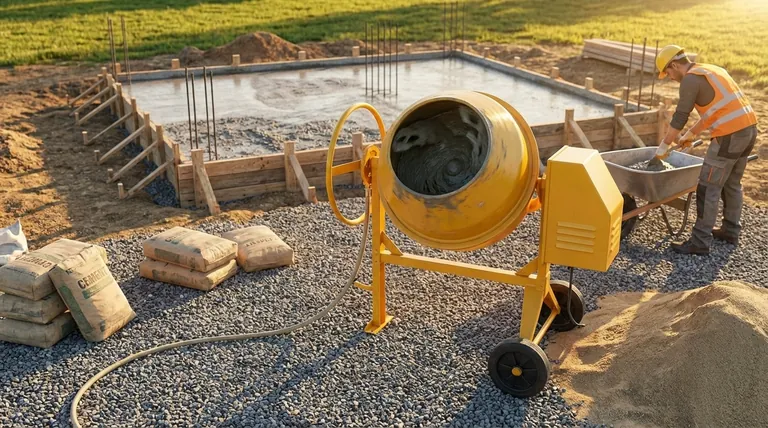
A key advantage of this capacity is avoiding waste. It allows you to mix precise, fresh batches of concrete as needed, which is essential for tasks like setting fence posts or pouring small slabs where a large delivery from a truck would be excessive and costly.
Balancing Portability and Output
A significantly larger drum would compromise the very "portability" of the machine. The 140-liter size is manageable for one or two people to move around a job site, fitting into tight spaces inaccessible to larger equipment.
Ensuring a Homogeneous Mix
This capacity is ideal for the "self-falling" mechanism used in most portable drum mixers. As the drum rotates, it lifts the materials and allows them to tumble back down, using gravity to create a uniform and consistent mix of cement, aggregate, and water.
Beyond the Basic Drum: Types of Portable Mixers
While the 140-liter machine is the most common, "portable" can describe a range of equipment. Understanding the alternatives clarifies which tool is best suited for your project's demands.
The Classic Tilting Drum Mixer
This is the quintessential portable mixer. Its design is simple: the drum rotates to mix and tilts downward to discharge the concrete via gravity. It's cost-effective, requires little maintenance, and is perfect for most small to medium-sized tasks.
The Self-Loading Mixer
This is a significant step up in capability. A self-loading mixer is a small, mobile mixing plant that integrates loading, mixing, transportation, and unloading into one vehicle. It requires only one operator and can dramatically increase efficiency.
Its narrow body and small turning radius make it ideal for projects in confined spaces. With features like a 270-degree rotating drum, it offers unparalleled precision for multi-directional unloading, drastically reducing labor costs.
Understanding the Trade-offs
Choosing the right portable mixer involves weighing its benefits against its inherent limitations.
Capacity vs. Project Time
The primary trade-off is volume. While a 140-liter mixer prevents waste on small jobs, it requires mixing multiple batches for anything larger than a small patio. This can significantly extend the time and labor required for the project.
Labor vs. Investment
A standard drum mixer is an affordable tool but requires manual labor to load all the raw materials. A self-loading mixer automates this process and saves immense amounts of time and labor, but it represents a much larger initial investment.
Accessibility vs. Scale
All portable mixers excel in areas where a concrete truck cannot go. However, the self-loading mixer, while larger than a tilting drum model, is specifically designed for maneuverability on constrained construction sites, offering a powerful solution for complex but small-scale projects.
Making the Right Choice for Your Project
Your decision should be guided by the specific demands of your job.
- If your primary focus is small DIY repairs or garden projects: The standard 140-liter tilting drum mixer is the most practical and cost-effective solution.
- If your primary focus is maximizing efficiency on a small commercial job: A self-loading mixer is a powerful investment that can radically reduce labor costs and shorten project timelines.
- If your primary focus is working in a highly constrained area: Any portable mixer is an advantage, but the maneuverability of a self-loading unit provides the greatest operational control.
Ultimately, selecting the right mixer is about accurately matching the equipment's capabilities to the scale and complexity of your work.
Summary Table:
| Mixer Type | Typical Capacity | Best For | Key Advantage |
|---|---|---|---|
| Tilting Drum Mixer | ~140 Liters | DIY, Small Repairs, Garden Projects | Cost-Effective & Simple to Use |
| Self-Loading Mixer | Varies (Integrated System) | Small Commercial Jobs, Constrained Sites | Maximizes Efficiency & Reduces Labor |
Ready to Find Your Perfect Portable Concrete Mixer?
Choosing the right mixer is critical to your project's efficiency and budget. GARLWAY specializes in construction machinery, offering a range of portable concrete mixers and batching plants designed for the precise needs of construction companies and contractors globally.
Let us help you match the perfect equipment to your project's scale and complexity.
Contact GARLWAY today for expert advice and reliable machinery!
Visual Guide
Related Products
- Portable Concrete Mixer Machine Equipment for Mixing Concrete
- Portable Ready Mix Concrete Mixer Equipment
- Portable Electric Concrete Mixer Machine for Cement Mixing
- Portable Cement Mixer with Lift Concrete Machine
- Portable Electric Small Cement Mixer Concrete Machine
People Also Ask
- Why is it necessary to use a portable concrete mixer? Gain Total Control & Efficiency
- How much concrete can you pour with a portable mixer? Find the Perfect Fit for Your Project
- What types of projects are portable concrete mixers suitable for? Ideal for DIY & Small-Scale Construction
- How much does a portable concrete mixer hold? A Guide to Choosing the Right Capacity
- What types of portable concrete mixers exist? Find the Perfect Mixer for Your Project