Proper mortar mixer care is a matter of disciplined routine, not complex repair. The fundamental process involves cleaning the drum with water immediately after every use to prevent material from hardening, followed by regular mechanical checks to ensure the machine runs reliably. A scraper can be used for minor build-up, but the primary goal is to never let it get to that stage.
A mixer's lifespan is determined not by major overhauls, but by the non-negotiable habit of cleaning it thoroughly at the end of each workday. This simple discipline prevents the cumulative damage that leads to poor performance, costly downtime, and premature failure.
The Cardinal Rule: Immediate Cleaning
Hardened mortar is essentially concrete. Once it has cured inside your mixer's drum, it is incredibly difficult to remove without damaging the machine itself. The entire cleaning process is designed to prevent this from happening.
Why Speed is Critical
As soon as water is added, the cement in mortar begins a chemical reaction called hydration. This process is what causes it to harden. Cleaning the mixer while the mortar is still in a plastic, workable state requires little more than water and light rinsing.
The Most Effective Cleaning Method
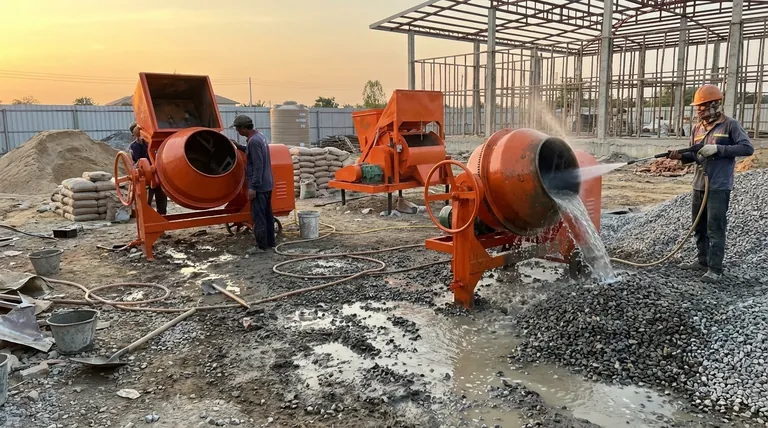
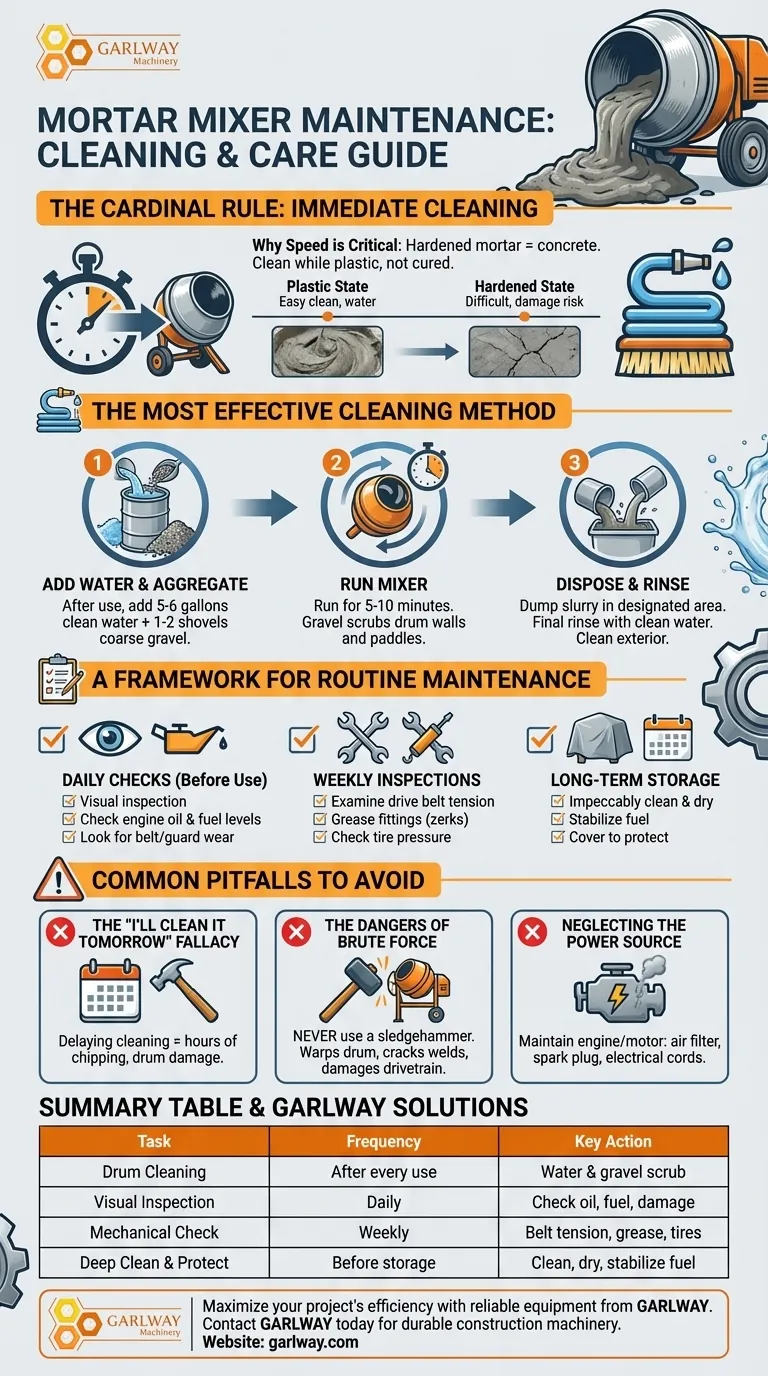
The industry-standard method uses water and aggregate. After pouring out the last batch, add 5-6 gallons of clean water and one or two shovels of coarse gravel or stone to the drum. Let the mixer run for 5-10 minutes. The gravel acts as a gentle, abrasive scrubber, removing all residual mortar from the drum walls and mixing paddles.
Disposing of the Slurry
Once the drum is clean, carefully dump the slurry in a designated washout area where it will not contaminate soil or enter storm drains. A final rinse with clean water will leave the drum ready for the next day. Ensure the exterior of the machine is also hosed down to remove any splashes.
A Framework for Routine Maintenance
Cleaning prevents build-up, but mechanical maintenance ensures reliability. A simple checklist, integrated into your daily and weekly workflow, will catch small issues before they become major problems.
Daily Checks (Before First Use)
Before starting work, perform a quick visual inspection. Check the engine oil and fuel levels on gas-powered models. Look for any obvious signs of wear or damage on belts and guards.
Weekly Inspections
Once a week, take a few minutes for a more thorough check. Examine the drive belt for proper tension and signs of cracking. Grease any fittings (zerks) to keep bearings and pivot points lubricated. If the mixer has pneumatic tires, check the air pressure.
Long-Term Storage
If the mixer will be stored for an extended period, ensure it is impeccably clean and dry to prevent rust. It's also wise to stabilize the fuel in the engine and cover the machine to protect it from the elements.
Common Pitfalls to Avoid
Mistakes in mixer maintenance are costly and almost always related to procrastination or improper technique.
The "I'll Clean It Tomorrow" Fallacy
Delaying cleaning is the single most destructive thing you can do to a mortar mixer. A single day of hardening can require hours of chipping with a hammer and chisel, which can dent the drum and damage the paddles, leading to poor mixing performance.
The Dangers of Brute Force
Never use a sledgehammer to break hardened mortar out of a drum. This will inevitably warp the drum, damage paddles, and can even crack the welds or harm the drivetrain. If you must chip away material, use a smaller hammer and scraper, and work with care.
Neglecting the Power Source
Remember that the engine or electric motor is the heart of the machine. It requires its own maintenance, such as cleaning the air filter, checking the spark plug, and ensuring electrical cords are not frayed or damaged.
Making the Right Choice for Your Goal
Your maintenance schedule should reflect your usage pattern to maximize efficiency and equipment life.
- If your primary focus is daily production on a large job site: Make the end-of-day water-and-gravel cleaning an unbreakable crew ritual, and perform a quick engine check every morning.
- If your primary focus is intermittent use for smaller projects: Prioritize a perfectly thorough cleaning before storing the mixer, as material left for weeks will be impossible to remove.
Consistent care is the single most important factor in ensuring your mixer remains a reliable and profitable tool for years to come.
Summary Table:
| Task | Frequency | Key Action |
|---|---|---|
| Drum Cleaning | After every use | Use water and gravel to scrub away residue. |
| Visual Inspection | Daily | Check oil, fuel, and for visible damage. |
| Mechanical Check | Weekly | Inspect belt tension, grease fittings, and tire pressure. |
| Deep Clean & Protect | Before long-term storage | Clean thoroughly, dry, and stabilize fuel. |
Maximize your project's efficiency with reliable equipment from GARLWAY.
As a specialist in construction machinery for contractors and construction companies worldwide, we understand that consistent performance is non-negotiable. Just as proper maintenance keeps your mortar mixer running smoothly, investing in quality equipment from the start pays off in the long run.
GARLWAY offers a range of durable construction machinery, including concrete mixers, winches, and batching plants, designed to withstand the rigors of the job site. Let us help you build with confidence.
Contact GARLWAY today to find the right machinery solutions for your business needs.
Visual Guide
Related Products
- JDY350 Electric Hydraulic Mortar Mud Concrete Mixer
- JDC350 Small Cement Concrete Mortar Mixer
- Mini Cement Mortar Mixer Truck for Construction
- Belle Mixer Drum Self Loading Mortar Mixers JS3000
- JS1000 Volumetric Concrete Mortar Mixer for Sale Skid Steer Cement Mixer
People Also Ask
- When are electric mortar mixers typically used? Find the Perfect Tool for Small to Medium-Sized Jobs
- What are hydraulic concrete mixers used for? Powering Large-Scale Construction Projects
- How are mortar mixers utilized in concrete and grout projects? Maximize Your Mixing Efficiency
- What are the benefits of electric concrete mixers? Quiet, Clean, and Low-Maintenance Mixing
- What is a mortar mixer and what is its primary use? Master Masonry with the Right Equipment