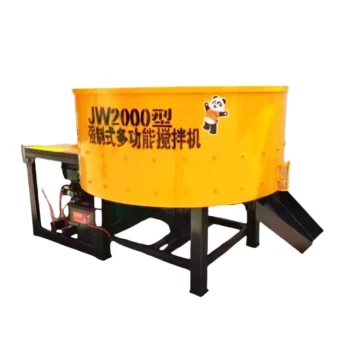
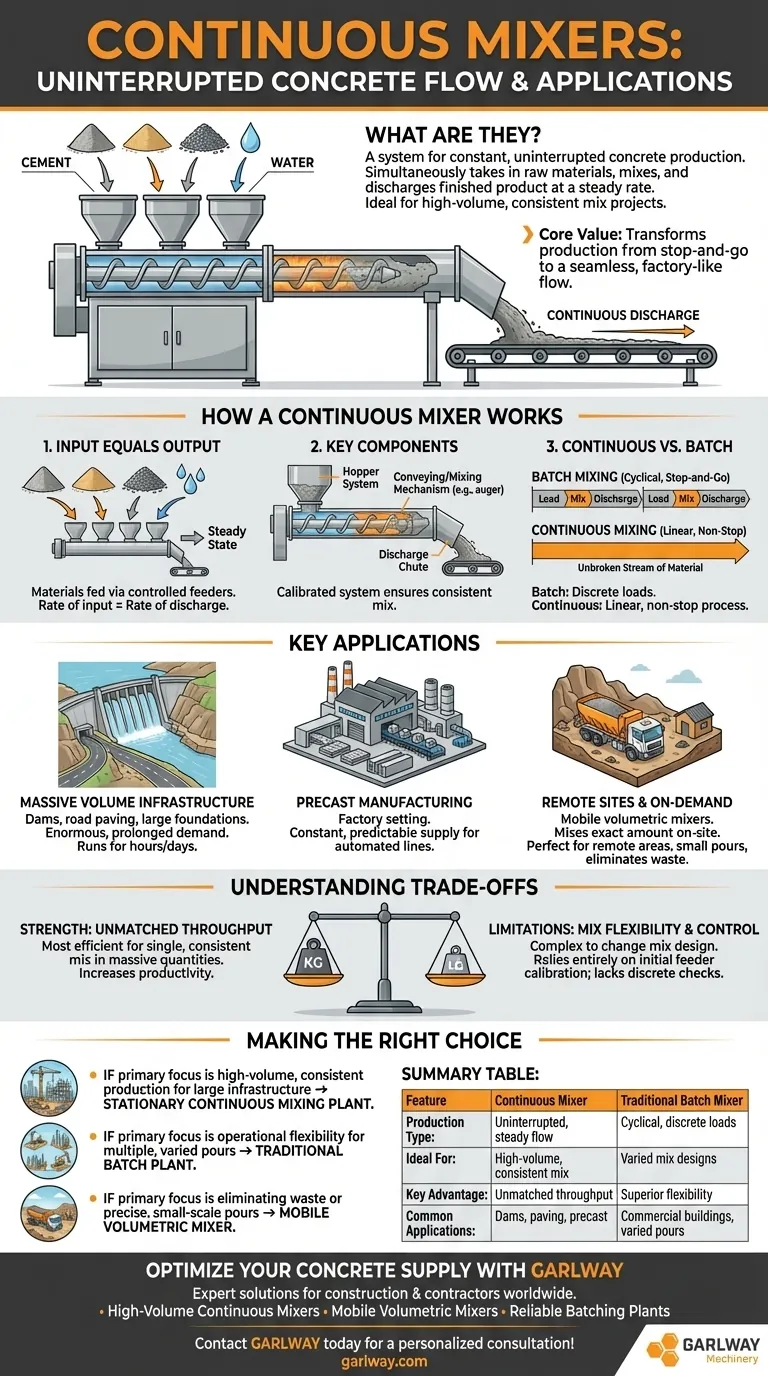
In essence, a continuous mixer is a system designed to produce a constant, uninterrupted flow of concrete. Unlike traditional batch mixers that create discrete loads, a continuous mixer simultaneously takes in raw materials, mixes them, and discharges the finished product at a steady rate. This makes it the ideal solution for projects that demand a high-volume, non-stop supply of a consistent mix.
The core value of a continuous mixer is its ability to transform concrete production from a stop-and-go batch process into a seamless, factory-like flow. This makes it indispensable for applications where the cost of interrupting the concrete supply is prohibitively high.
How a Continuous Mixer Works
A continuous mixer operates on a simple but powerful principle: what goes in must come out. The entire system is calibrated to maintain a steady state of operation.
The Core Principle: Input Equals Output
Materials like cement, sand, aggregate, and water are fed into the system from hoppers or silos via precisely controlled screw feeders or conveyor belts. The rate of input is matched exactly by the rate of discharge, ensuring a consistent mix from start to finish.
Key Components of the System
Most continuous mixers consist of a hopper system for loading materials, a conveying mechanism (often an auger or mixing screw), and a discharge chute. In some designs, like continuous drum mixers, ingredients are gravity-fed into a rotating drum with internal flights that blend the materials as they travel from the inlet to the outlet.
Continuous vs. Batch Mixing: The Critical Difference
The fundamental distinction lies in the workflow. Batch mixing is a cyclical, stop-and-go process where one complete load is mixed and fully discharged before the next one begins. Continuous mixing is a linear, non-stop process, providing an unbroken stream of material for as long as it is fed.
Key Applications for Continuous Mixers
The decision to use a continuous mixer is driven by the need for high throughput and operational consistency. They excel in several key scenarios.
Massive Volume Infrastructure
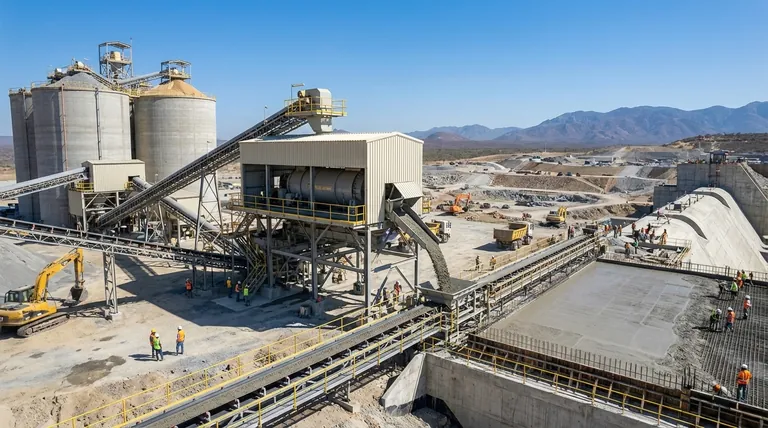
For projects like dams, road paving, and large bridge foundations, the demand for concrete is enormous and prolonged. A continuous mixer can run for hours or days, supplying the thousands of cubic meters needed without the logistical complexity of coordinating hundreds of individual batches.
Precast Concrete Manufacturing
In a factory setting, production lines for precast elements like pipes, panels, and blocks require a constant, predictable supply of concrete. A stationary continuous mixer integrates perfectly into this automated environment, acting as a reliable utility for the manufacturing process.
Remote Sites and On-Demand Needs
A specialized type of continuous mixer, the volumetric mixer, is truck-mounted. These mobile units carry unmixed materials to a job site and mix the exact amount of concrete needed on the spot. This is perfect for remote locations, small deliveries, or repair work, as it eliminates waste from over-ordering and ensures fresh concrete every time.
Understanding the Trade-offs
While powerful, continuous mixers are not universally superior. Their strengths in some areas create limitations in others.
Strength: Unmatched Throughput
When a single, consistent mix design is needed in massive quantities, nothing is more efficient than a continuous mixer. Its ability to produce a non-stop flow dramatically increases productivity on large-scale pours.
Limitation: Mix Flexibility
Changing the concrete mix design in a continuous mixer is more complex than in a batch system. Because the entire system is a running process, adjustments must be carefully managed to avoid producing large amounts of out-of-spec material during the transition.
Limitation: Calibration and Control
The quality of the final product depends entirely on the initial calibration of the material feeders. While highly reliable once set, they lack the discrete quality control checkpoints inherent in a batch-by-batch process. Any error in feed rate can impact a large volume of concrete before it is detected.
Making the Right Choice for Your Project
Selecting the correct mixing technology requires aligning the equipment's core strengths with your project's primary goal.
- If your primary focus is high-volume, consistent production for large infrastructure: A stationary continuous mixing plant is the most efficient and logical solution.
- If your primary focus is operational flexibility for multiple, varied pours in one day: A traditional batch plant offers superior control over creating distinct mix designs.
- If your primary focus is eliminating waste on remote sites or for precise, small-scale pours: A mobile volumetric mixer provides unmatched on-demand capability.
Ultimately, choosing the right mixer depends less on the total size of the project and more on the required rhythm of production.
Summary Table:
| Feature | Continuous Mixer | Traditional Batch Mixer |
|---|---|---|
| Production Type | Uninterrupted, steady flow | Cyclical, discrete loads |
| Ideal For | High-volume, consistent mix projects | Projects requiring multiple, varied mix designs |
| Key Advantage | Unmatched throughput for large pours | Superior flexibility and mix control |
| Common Applications | Dams, road paving, precast plants | Commercial buildings, varied daily pours |
Optimize Your Concrete Supply with the Right Mixing Technology
Choosing between a continuous and batch mixer is critical for your project's efficiency and budget. GARLWAY specializes in providing the ideal concrete mixing solutions for construction companies and contractors worldwide.
Our expertise includes:
- High-Volume Continuous Mixers for large-scale infrastructure projects.
- Mobile Volumetric Mixers for on-demand concrete at remote sites.
- Reliable Concrete Batching Plants for flexible, batch-by-batch production.
Let our experts help you select the perfect equipment to ensure a seamless, cost-effective concrete supply.
Contact GARLWAY today for a personalized consultation and quote!
Visual Guide
Related Products
- JS1000 Volumetric Concrete Mortar Mixer for Sale Skid Steer Cement Mixer
- Portable Concrete Mixer Machine Equipment for Mixing Concrete
- HZS25 Best Cement Mixer for Quick Mix Concrete at Bunnings
- JDY350 Electric Hydraulic Mortar Mud Concrete Mixer
- Portable Cement Mixer with Lift Concrete Machine
People Also Ask
- What is the basic working principle of volumetric concrete mixers? On-Demand Mixing for Zero Waste
- What are the advantages of using volumetric mixers for small concrete jobs? Save Costs and Gain On-Site Control
- What are the advantages of volumetric concrete mixers compared to drum mixers? Achieve On-Demand Mixing & Zero Waste
- What are some innovations in volumetric concrete mixers? Boost Efficiency with On-Demand Production
- Why do volumetric mixers provide better ROI? Maximize Profit with On-Demand Concrete Production