In short, no—installing a standard manual boat trailer winch is typically a straightforward project for someone with basic DIY skills. The difficulty escalates significantly, however, when moving to electric or hydraulic models, which often require professional expertise for safe and correct installation.
The true difficulty of installing a boat trailer winch isn't the winch itself, but the type of system you are working with. A simple mechanical installation is very different from one that requires integrating an electrical system.
The Two Tiers of Winch Installation
The most significant factor determining the complexity of your installation is the winch's power source. This single detail separates a simple afternoon task from a project that may require specialized help.
The Manual Winch: A Straightforward DIY Project
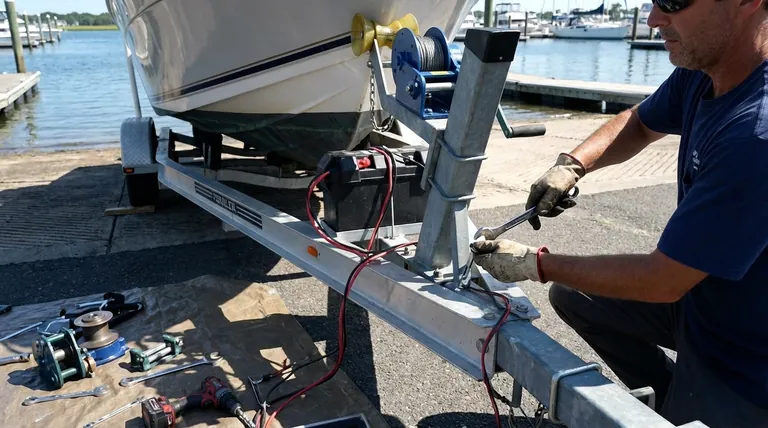
A manual winch is a purely mechanical device. Installation generally involves unbolting the old unit and bolting the new one onto the winch stand of your trailer.
This process can often be completed with a basic set of wrenches or a socket set. As long as the new winch's bolt pattern matches the existing holes on your trailer, it's one of the easier maintenance tasks you can perform.
The Electric Winch: Adding Electrical Complexity
An electric winch introduces a layer of complexity that goes beyond simple mechanics. This type of installation requires a dedicated power source.
You will need to run wiring from the winch to your vehicle's battery, which involves routing cables safely, making secure connections, and potentially installing fuses or circuit breakers. A mistake in the electrical work can lead to equipment failure or a serious safety hazard.
Common Factors That Increase Difficulty
Beyond the type of winch, a few common issues can complicate what seems like a simple job.
Mismatched Mounting Holes
If your new winch has a different bolt pattern than the old one, you will need to drill new holes in your trailer's winch stand. This requires a powerful drill, appropriate metal drill bits, and careful measurement to ensure proper alignment.
Rusted or Seized Hardware
Boat trailers live in a harsh environment of water and, often, salt. It is very common for the nuts and bolts holding the old winch to be rusted and seized.
Removing them can require penetrating oil, a breaker bar for extra leverage, or even tools to cut the old bolts off. This can quickly turn a 20-minute job into a frustrating, hours-long endeavor.
Understanding the Trade-offs: DIY vs. Professional
Your decision to install the winch yourself or hire a professional comes down to a simple balance of cost, time, and safety.
The DIY Approach: Savings vs. Risk
Installing a winch yourself, especially a manual one, is the most cost-effective option. However, you are trading money for your own time and effort.
The risk is low with a manual winch, but with an electric model, improper installation could damage your boat, trailer, or vehicle's electrical system.
Professional Installation: Peace of Mind vs. Cost
Hiring a professional ensures the job is done correctly, safely, and quickly. This is the recommended path for electric winches if you lack experience with vehicle wiring.
The clear downside is the additional labor cost, which can sometimes equal or exceed the price of the winch itself.
Making the Right Choice for Your Situation
Your approach should be determined by the equipment you've chosen and your personal skill set.
- If your primary focus is replacing an old manual winch: This is an excellent DIY project that requires only basic hand tools and a bit of time.
- If your primary focus is upgrading to an electric winch: It is highly recommended to seek professional installation unless you have specific experience with 12-volt electrical systems.
- If your trailer requires drilling new mounting holes: Be prepared for a more involved mechanical task that adds complexity to any winch installation.
Ultimately, understanding the true scope of the work based on your winch type is the key to a successful and stress-free installation.
Summary Table:
| Winch Type | Difficulty Level | Key Considerations |
|---|---|---|
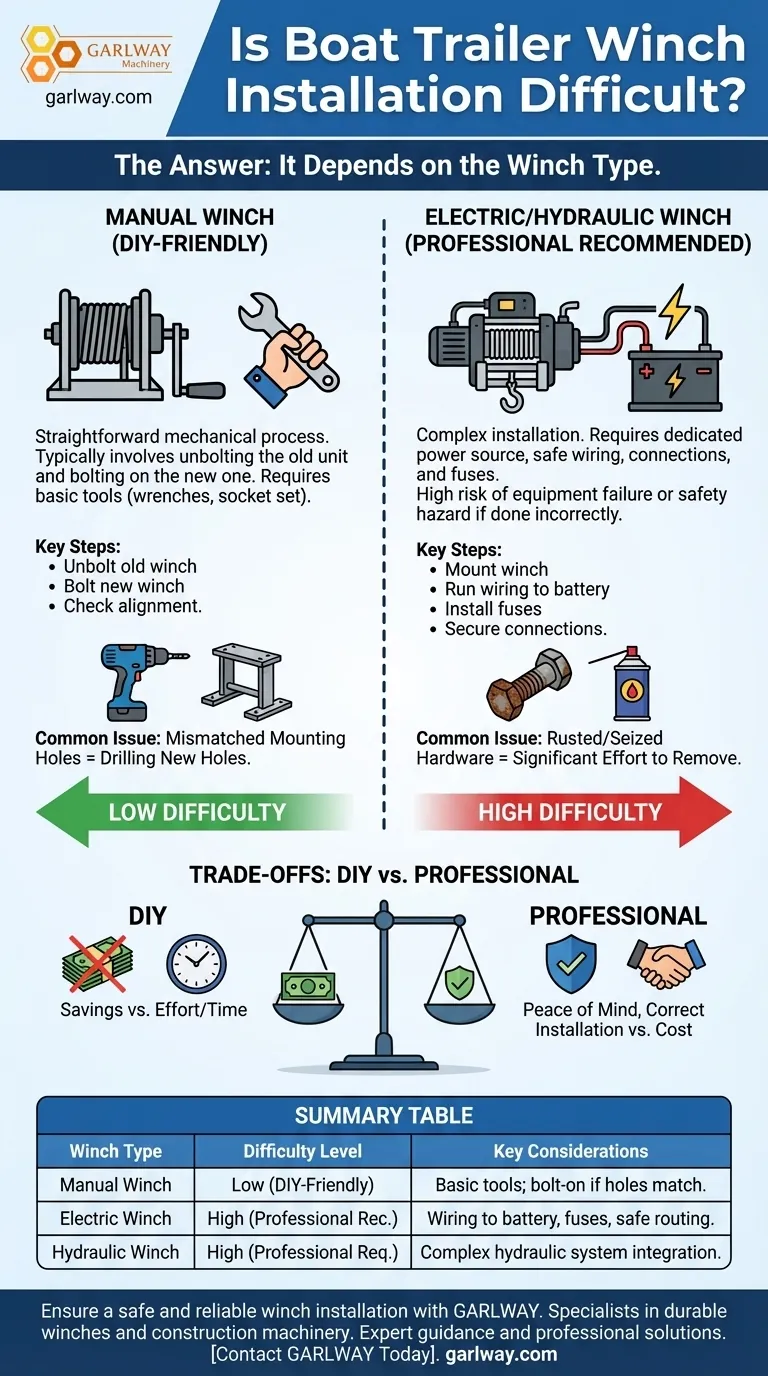
| Manual Winch | Low (DIY-Friendly) | Requires basic tools; bolt-on replacement if holes match. |
| Electric Winch | High (Professional Recommended) | Requires wiring to battery, fuses, and safe cable routing. |
| Hydraulic Winch | High (Professional Required) | Complex integration with vehicle's hydraulic system. |
Ensure a safe and reliable winch installation for your construction or marine project. GARLWAY specializes in durable, high-performance winches and construction machinery. Our experts can help you select the right winch and provide guidance on professional installation, ensuring your equipment operates safely and efficiently. Contact GARLWAY today for a consultation!
Visual Guide
Related Products
- 12000 lb Electric Boat Trailer Winch with Windlass Anchor Warn
- Warn Winch Windlass Boat Trailer Winch
- Quick Windlass Portable Winch for Truck and Boat Best Boat Winch
- Best 18000 Pound Drum Anchor Trailer Winch
- 12000 lb Heavy Duty Electric Boat Winch
People Also Ask
- How does an electric boat trailer winch differ from a manual one? Effort vs. Control Explained
- What size winch do I need for my boat? Get the Right Capacity for Safe Hauling
- How should a boat trailer winch be properly used? A Step-by-Step Guide for Safe Loading
- What maintenance steps are specific to boat trailer winches? Ensure Safety & Reliability at the Ramp
- How strong of a winch do I need for my boat? Get the Right Pulling Power for Trailering & Anchoring