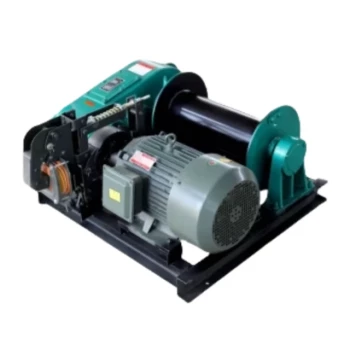
At their core, electric winches enhance industrial safety by replacing unpredictable and hazardous manual labor with highly controlled, predictable, and automated force. They are engineered with specific mechanisms like automatic brakes, overload protection, and remote operation to systematically remove personnel from high-risk situations involving heavy loads.
The fundamental safety advantage of an electric winch is its ability to create distance and control. By allowing an operator to manage immense forces from a safe location with precision, it drastically reduces direct human exposure to the primary dangers of lifting and pulling heavy materials.
The Foundation of Safety: Control and Predictability
The primary safety benefit of an electric winch is its ability to transform a potentially chaotic physical task into a manageable mechanical process.
Eliminating Manual Strain and Error
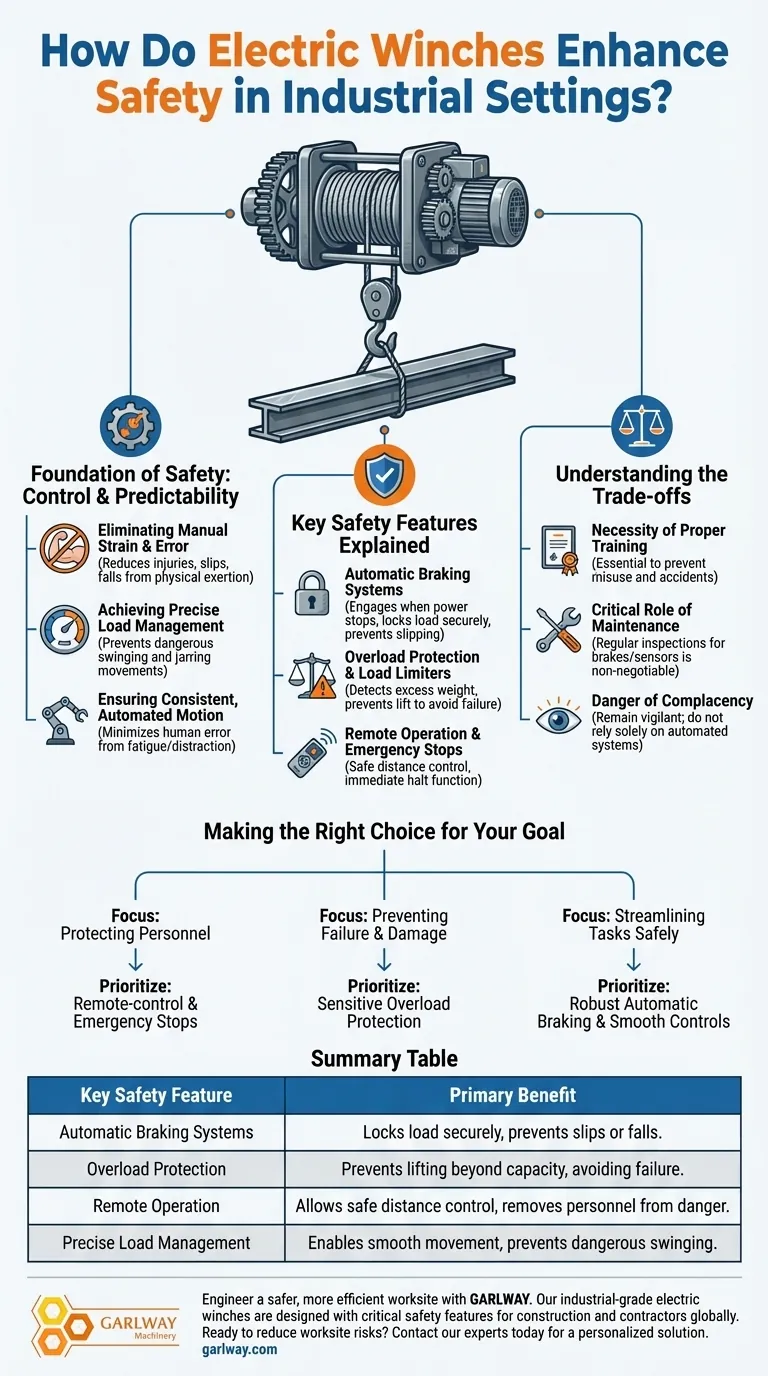
Manual lifting and pulling are leading causes of workplace injuries. Electric winches automate this strenuous work, directly reducing the risk of musculoskeletal injuries, slips, and falls associated with physical exertion.
Achieving Precise Load Management
Modern electric winches feature advanced control systems. This allows operators to precisely manage the speed and direction of a load, preventing dangerous swinging or jarring movements that can lead to accidents.
Ensuring Consistent, Automated Motion
For repetitive tasks, such as moving components on an assembly line, winches provide consistent and reliable performance. This automation minimizes the chance of human error that can arise from fatigue or distraction during manual operations.
Key Safety Features Explained
Beyond control, specific built-in features are designed to prevent the most common failure scenarios.
Automatic Braking Systems
Most industrial electric winches are equipped with automatic brakes. These systems engage the moment the motor stops or power is cut, locking the winch drum and securely holding the load in place, preventing it from slipping or falling.
Overload Protection and Load Limiters
These critical safety mechanisms use sensors to detect when a load exceeds the winch's rated capacity. They prevent the lift from proceeding, which protects the winch from catastrophic mechanical failure, safeguards the load from being dropped, and protects nearby personnel.
Remote Operation and Emergency Stops
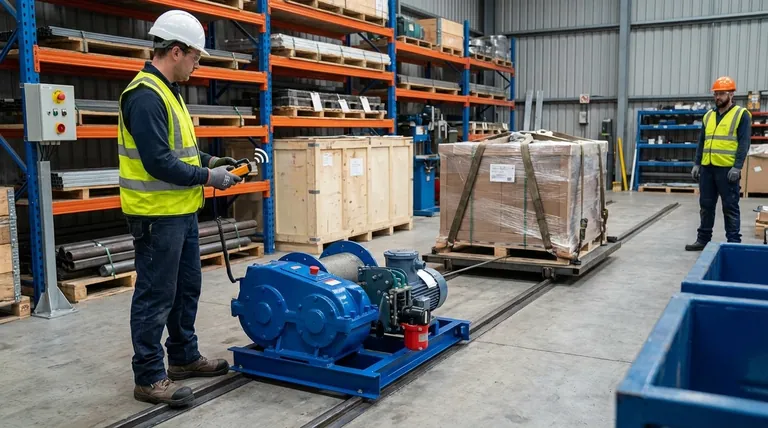
The ability to operate a winch remotely is a significant safety advancement. It allows the operator to stand at a safe distance, away from the load and out of the "danger zone," with a clear line of sight. An emergency shut-off switch provides a vital, immediate way to halt all operations if a problem arises.
Understanding the Trade-offs
While highly effective, the safety of an electric winch is not absolute. Its effectiveness is directly tied to proper implementation and use.
The Necessity of Proper Training
A powerful tool in untrained hands can become a hazard. Operators must be thoroughly trained on the specific winch model, its load limits, and all safety features to prevent misuse and accidents.
The Critical Role of Maintenance
Safety features like brakes and overload sensors are mechanical or electronic components that can fail. A strict, regular inspection and maintenance schedule is non-negotiable to ensure these systems are always in working order.
The Danger of Complacency
The presence of advanced safety features can sometimes lead to operator complacency. It is crucial to foster a culture where operators remain vigilant and do not rely solely on automated systems to prevent accidents.
Making the Right Choice for Your Goal
To maximize safety, align your winch's features with your primary operational objective.
- If your primary focus is protecting personnel: Prioritize winches with reliable remote-control functionality and clearly accessible emergency stop buttons.
- If your primary focus is preventing equipment failure and load damage: Ensure the winch is equipped with a sensitive and accurate overload protection system.
- If your primary focus is streamlining repetitive tasks safely: Select a winch with a robust automatic braking system and controls designed for smooth, precise automation.
Ultimately, integrating an electric winch is a proactive step toward engineering a safer and more efficient industrial environment.
Summary Table:
| Key Safety Feature | Primary Benefit |
|---|---|
| Automatic Braking Systems | Locks load securely when power stops, preventing slips or falls. |
| Overload Protection | Prevents lifting beyond capacity, avoiding equipment failure. |
| Remote Operation | Allows control from a safe distance, removing personnel from danger zones. |
| Precise Load Management | Enables smooth, controlled movement to prevent dangerous swinging. |
Engineer a safer, more efficient worksite with GARLWAY.
As a specialist in robust construction machinery, GARLWAY provides industrial-grade electric winches designed with the critical safety features your projects demand. Our winches, along with concrete mixers and batching plants, help construction companies and contractors globally protect their teams and enhance operational control.
Ready to reduce worksite risks? Contact our experts today for a personalized solution.
Visual Guide
Related Products
- Electric 120V Boat Winch by Badlands
- Small Electric Winch 120V and 240V for Compact Applications
- Electric and Hydraulic Winch for Heavy Duty Applications
- 12000 lb Electric Boat Trailer Winch with Windlass Anchor Warn
- Electric Hoist Winch Boat Anchor Windlass for Marine Applications
People Also Ask
- How do electric boat winches work? Unlock Effortless Launching & Retrieval
- How much current does an electric boat winch draw? Plan Your Electrical System for Peak Performance
- Can I run a winch straight from a battery? Essential Power Setup for Safe Operation
- What are the types of electric winches available? Choose the Right Winch for Your Job
- What are the uses of electric winches in mining and tunneling? Enhance Safety and Efficiency Underground