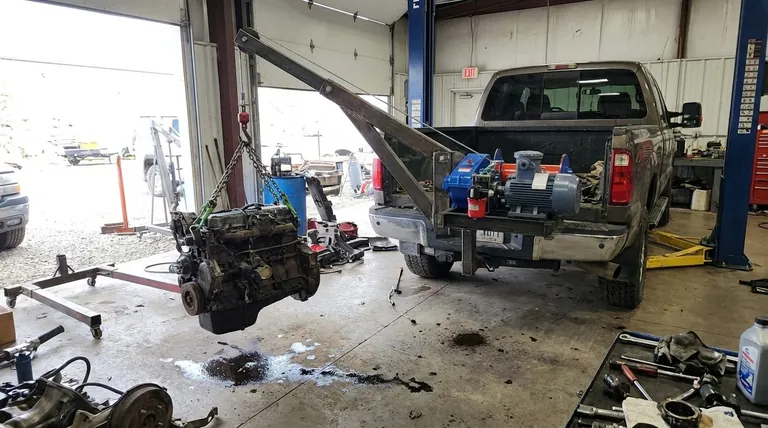
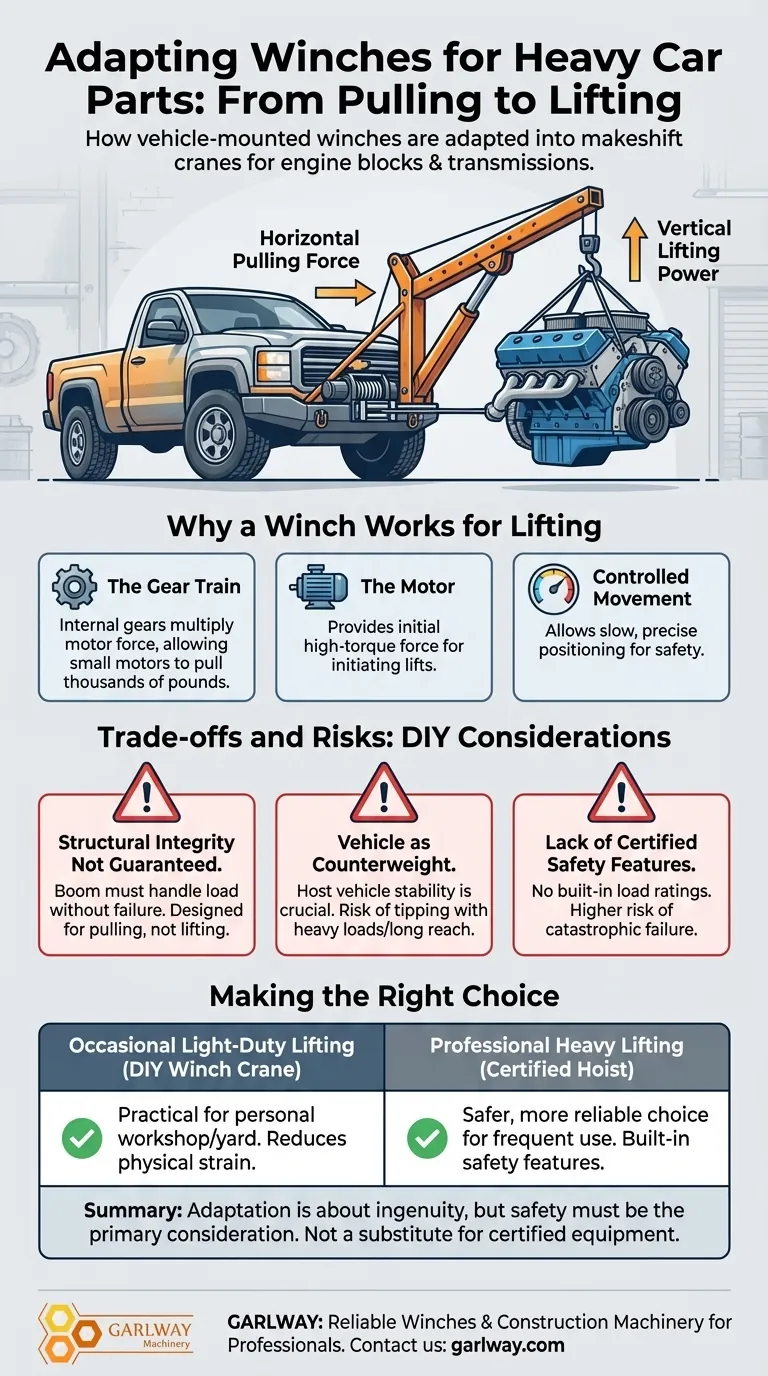
The most common adaptation is converting a vehicle-mounted winch into a small, functional crane. By fabricating a boom, often from a modified tow bar or similar steel structure, users can transform the horizontal pulling force of the winch into vertical lifting power for heavy components like engine blocks or transmissions.
The core principle is repurposing a winch's controlled pulling mechanism for vertical lifting. This makeshift crane provides a low-cost, mobile solution for moving heavy parts without the need for dedicated equipment like a forklift or engine hoist.
Why a Winch Works for Lifting
A standard winch is engineered with the necessary components to handle immense loads, which translates directly to its potential use as a lifting device.
The Power of the Gear Train
The heart of a winch's strength is its gear train. These internal gears multiply the force generated by the motor, much like the gears on a bicycle allow a rider to pedal up a steep hill.
This gearing system is what allows a small motor to pull thousands of pounds. When adapted for lifting, it provides the raw power needed to hoist heavy automotive parts.
The Role of the Motor
The winch motor provides the initial force that the gear train multiplies. It is designed for high-torque applications, ensuring it can handle the stress of initiating the pull or lift on a heavy, stationary object.
Controlled and Steady Movement
The combination of the motor and gear train allows for slow, controlled movement. This is crucial when positioning a heavy engine block or transmission, where precision and safety are paramount.
Understanding the Trade-offs and Risks
While effective, this DIY adaptation is not a replacement for certified lifting equipment and comes with significant risks that must be managed.
Structural Integrity is Not Guaranteed
A winch is designed for pulling, not necessarily for vertical lifting as a primary function. The boom or crane arm you construct must be strong enough to handle the load without bending or failing.
The Vehicle as a Counterweight
The entire system relies on the stability of the host vehicle. The vehicle's weight acts as the counterweight, and lifting an object that is too heavy or extending the boom too far can destabilize or even tip the vehicle.
Lack of Certified Safety Features
Professional cranes and engine hoists have built-in safety features, load ratings, and engineering certifications that a homemade system lacks. There is a higher risk of catastrophic failure if the equipment is pushed beyond its unknown limits.
Making the Right Choice for Your Goal
This solution is about ingenuity, but safety must be the primary consideration before building or using a winch-based crane.
- If your primary focus is occasional light-duty lifting: A well-built, vehicle-mounted winch crane can be a practical tool for moving parts around a personal workshop or yard, reducing physical strain.
- If your primary focus is professional or frequent heavy lifting: Investing in a dedicated, certified engine hoist or shop crane is the safer and more reliable choice.
Ultimately, adapting a winch for lifting is a testament to clever problem-solving, but it requires a deep respect for the forces involved.
Summary Table:
| Adaptation | Key Component | Key Consideration |
|---|---|---|
| Convert to Crane | Fabricated Boom (e.g., modified tow bar) | Structural integrity of the boom and vehicle stability |
| Mechanism | Winch Gear Train & Motor | Provides controlled vertical lifting power |
| Primary Use Case | Occasional, Light-Duty Lifting | Not a substitute for certified heavy-lifting equipment |
Need reliable and powerful winches for your construction or automotive projects?
At GARLWAY, we specialize in manufacturing robust construction machinery, including high-performance winches, concrete mixers, and batching plants. Our equipment is engineered for durability and safety, providing the power and control professionals need.
Whether you're a contractor on a job site or a workshop owner handling heavy parts, GARLWAY offers solutions you can trust. Contact our experts today to find the perfect winch for your specific requirements and ensure your projects run smoothly and safely.
Visual Guide
Related Products
- Warn Winch Windlass Boat Trailer Winch
- Small Electric Winch 120V and 240V for Compact Applications
- Electric and Hydraulic Winch for Heavy Duty Applications
- Quick Windlass Portable Winch for Truck and Boat Best Boat Winch
- Hydraulic Winding Engine Harbor Freight Winch
People Also Ask
- What are the main components of a boat trailer winch? A Guide to Safe & Efficient Boat Loading
- What factors should be considered when choosing a boat trailer winch? Ensure Safe and Effortless Boat Loading
- What is the purpose of boat trailer winches? Safely and Efficiently Load Your Boat
- What are the two main types of boat trailer winches? Manual vs. Electric Explained
- How often should a boat trailer winch be replaced? Your Guide to Safety and Longevity