
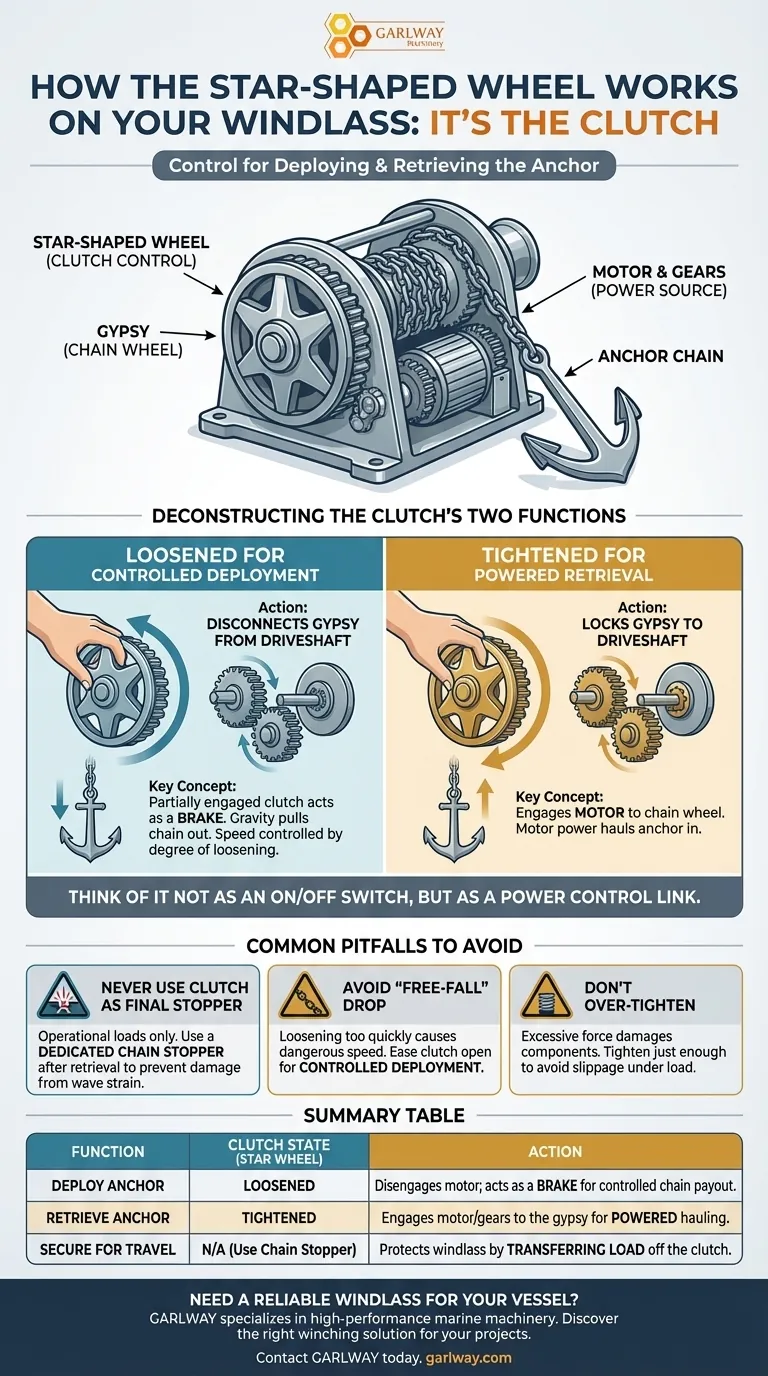
In short, the star-shaped wheel on your windlass is the clutch. It is the critical control that allows you to switch between deploying and retrieving your anchor. When loosened, it acts as a brake, allowing the anchor's weight to pull the chain out. When tightened, it engages the motor or manual gears, enabling you to winch the anchor back up.
The key is to think of the star-shaped wheel not as an on/off switch, but as a control for engaging and disengaging power. Tightening it connects the motor to the chain wheel (gypsy); loosening it disconnects them.
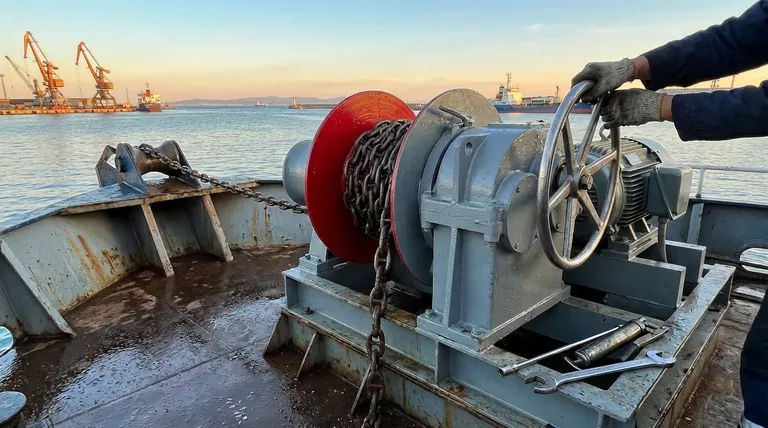
The Windlass Mechanism: A System of Parts
To fully appreciate the clutch's role, it's helpful to understand how the entire windlass system functions. It isn't just a simple winch; it's a coordinated mechanism.
The Gypsy and the Chain
The primary component that handles the anchor chain is the gypsy. This is the special notched wheel designed to precisely interlock with the links of your chain, providing a secure grip.
The Motor and Gears
An electric windlass uses a powerful gearmotor to do the heavy lifting. This motor drives a set of gears that multiply the force, giving it the immense strength needed to pull a heavy anchor and chain from the seabed.
The Clutch: Connecting Power to the Gypsy
The star-shaped wheel controls the clutch, which is the essential link between the motor's power and the gypsy. Without the clutch, you would have no way to disengage the motor to let the anchor drop.
Deconstructing the Clutch's Two Functions
The state of the clutch—tight or loose—determines the windlass's operational mode.
Function 1: Tightened for Powered Retrieval
When you tighten the star-shaped wheel, you are pressing clutch plates together. This action locks the gypsy to the driveshaft, connecting it directly to the power of the motor and gears.
With the clutch engaged, activating the windlass motor will turn the gypsy and haul your anchor chain in.
Function 2: Loosened for Controlled Deployment
When you loosen the star-shaped wheel, you release the pressure on the clutch plates. This disconnects the gypsy from the driveshaft, allowing it to spin independently.
In this state, the weight of the anchor itself is what pulls the chain out. The partially engaged clutch acts as a brake, and how much you loosen it determines how fast the chain pays out.
Common Pitfalls to Avoid
Understanding the clutch is also key to operating the windlass safely and preventing damage.
Never Use the Clutch as the Final Stopper
The clutch is designed for operational loads, not for securing the anchor while underway. The strain from a boat pitching in waves can damage the clutch and gears. Always use a dedicated chain stopper or snubber to take the load off the windlass once the anchor is fully retrieved.
Avoid a "Free-Fall" Drop
Loosening the star wheel too quickly can cause the chain to run out at a dangerous speed. This can damage the windlass and create a hazardous situation on the foredeck. Always ease the clutch open for a controlled, deliberate deployment.
Don't Over-Tighten
While the clutch needs to be firm for retrieval, cranking down on it with excessive force can damage the threads or clutch components. Tighten it just enough so it doesn't slip under load.
Making the Right Choice for Your Goal
Your operation of the star-shaped wheel depends entirely on your immediate goal.
- If your primary focus is deploying the anchor: Loosen the clutch wheel gradually, using it as a brake to control the speed at which the chain pays out.
- If your primary focus is retrieving the anchor: Tighten the clutch wheel firmly to ensure the motor's power is fully transferred to the gypsy for a smooth retrieval.
- If your primary focus is securing the vessel for travel: After retrieval, transfer the load from the windlass to a chain stopper to protect the mechanism from shock loads.
Mastering the function of this simple-looking wheel is the key to operating your anchoring system with safety and confidence.
Summary Table:
| Function | Clutch State (Star Wheel) | Action |
|---|---|---|
| Deploy Anchor | Loosened | Disengages motor; acts as a brake for controlled chain payout. |
| Retrieve Anchor | Tightened | Engages motor/gears to the gypsy for powered hauling. |
| Secure for Travel | N/A (Use Chain Stopper) | Protects windlass by transferring load off the clutch. |
Need a Reliable Windlass for Your Vessel?
Operating your anchor system safely requires robust equipment. GARLWAY specializes in high-performance construction and marine machinery, including powerful winches and windlasses designed for demanding conditions. Our solutions offer the durability and precise control that construction companies, marine contractors, and vessel operators depend on globally.
Let us help you equip your fleet with machinery you can trust.
Contact GARLWAY today to discuss your specific needs and discover the right winching solution for your projects.
Visual Guide
Related Products
- Quick Windlass Portable Winch for Truck and Boat Best Boat Winch
- Warn Winch Windlass Boat Trailer Winch
- Electric Hoist Winch Boat Anchor Windlass for Marine Applications
- Heavy Duty Electric Boat Winch Windlass Anchor
- 12000 lb Electric Boat Trailer Winch with Windlass Anchor Warn
People Also Ask
- What features were incorporated into the upgraded portable winch system? Boost Your Recovery Power & Safety
- What are some uses mentioned for portable winches beyond vehicle recovery? Essential Versatility for Property & Work
- How could the twisting issue with a portable winch be mitigated? Achieve Safe, Centered Pulls with Proper Rigging
- What are the primary uses of a portable winch for a truck? Boost Your Truck's Capability and Self-Reliance
- What is the single rope traction force of the quick winch without a pulley block? 0.5 to 40 Tons Explained


