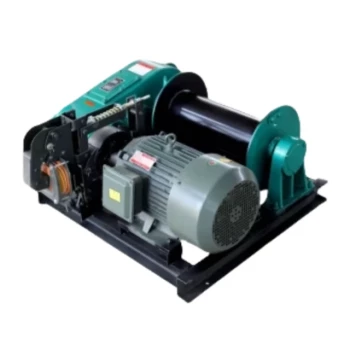
At its core, a marine electric winch is a specialized pulling and lifting device powered by an electric motor, specifically engineered to withstand harsh saltwater environments. These winches are defined by their use of corrosion-resistant materials and watertight components, making them essential tools for critical onboard operations like anchoring, mooring, and towing.
A marine electric winch provides precise, efficient power for key maritime tasks, but its performance is fundamentally tied to the vessel's electrical system. Its design prioritizes operational reliability and resilience against corrosion above all else.
The Core Function: Translating Electricity into Force
A marine electric winch serves a straightforward but vital purpose: converting electrical energy into mechanical force to pull heavy loads. This is achieved through a system of integrated components designed for power and control.
How an Electric Winch Works
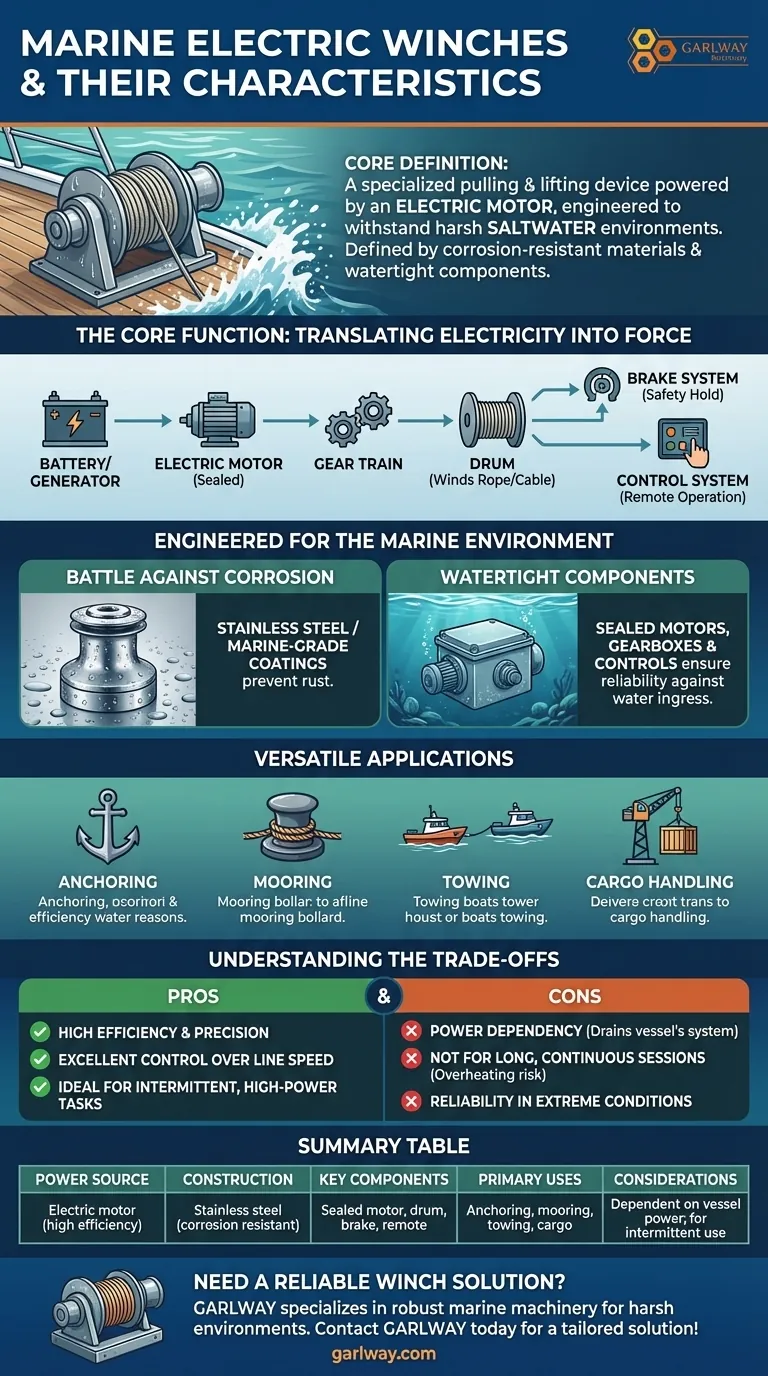
The operational principle is simple. An electric motor, powered by the vessel's battery or generator, drives a gear train. This gear train rotates a drum, which winds a rope or steel cable, creating the immense pulling force needed for heavy-duty tasks.
Key Components of the System
While designs vary, nearly all marine electric winches are built around a few core components:
- The Electric Motor: The heart of the winch, providing the rotational power. These are sealed to be watertight.
- The Drum: The cylinder that the rope or cable is wound onto.
- The Brake System: A critical safety feature that automatically engages to hold the load securely when the motor is not active.
- The Control System: Allows the operator to manage the winch, often through remote controls for safety and convenience.
The Advantage of Electric Power
Electric winches are valued in the marine industry for their high efficiency and precision. They offer excellent control over line speed, allowing for both slow, careful adjustments and faster operations as needed. This adaptability is crucial for delicate mooring or cargo handling.
Engineered for the Marine Environment
A standard industrial winch would fail quickly at sea. A marine electric winch is set apart by features specifically designed to combat the destructive nature of saltwater and moisture.
The Battle Against Corrosion
Constant exposure to saltwater spray makes corrosion the primary enemy of all marine equipment. To counter this, these winches are constructed from materials like stainless steel or are coated with specialized marine-grade finishes to prevent rust and degradation.
Watertight and Sealed Components
Water ingress can instantly destroy an electrical system. The motors, gearboxes, and control boxes on a marine electric winch are sealed and watertight. This ensures reliable operation even when exposed to rain, waves, and heavy spray.
Versatile Applications Onboard
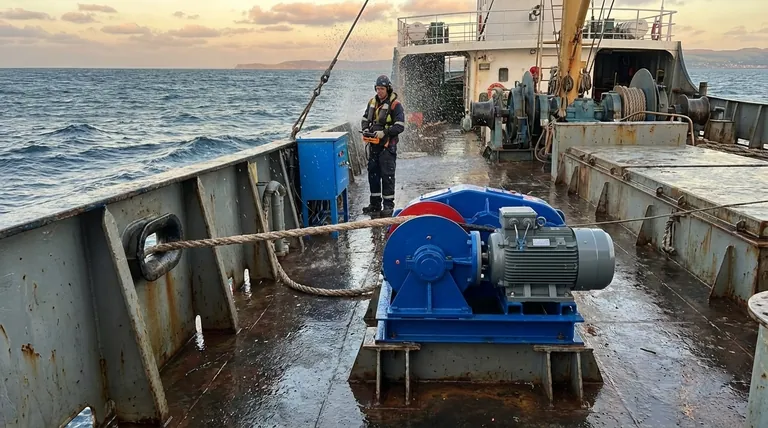
The reliability and power of these winches make them indispensable for a range of maritime operations. They are the go-to solution for hoisting anchors, managing mooring lines, towing other vessels, and lifting heavy cargo or equipment from a dock.
Understanding the Trade-offs
While highly effective, marine electric winches have operational limitations that are critical to understand. Their greatest strength—electric power—is also the source of their primary constraint.
The Power Dependency
An electric winch is entirely dependent on the vessel's electrical system. Under a heavy load, it can drain a battery very quickly. For sustained use, the vessel's engine or generator must be running to constantly recharge the batteries.
Limitations on Duration
These winches are not typically designed for long, continuous winching sessions. The electric motor can overheat under constant strain, and the significant power draw can tax the ship's electrical supply. They excel at intermittent, high-power tasks.
Reliability in Extreme Conditions
While built to be robust, the electrical systems can sometimes struggle in the most extreme wet or cold conditions. This dependency makes them slightly less foolproof than purely mechanical or hydraulic alternatives in certain survival scenarios.
Making the Right Choice for Your Operation
Selecting the appropriate winch requires aligning its characteristics with your primary operational needs.
- If your primary focus is precise control and ease of use: The adjustable speed and remote operation of an electric winch make it an excellent choice for tasks requiring fine adjustments.
- If your operation involves short, high-power tasks: An electric winch is ideal for applications like anchor retrieval or quick mooring adjustments where efficiency and on-demand power are key.
- If you require long-duration, continuous pulling: You must carefully evaluate your vessel's power generation capacity or consider exploring alternatives like hydraulic systems that are better suited for sustained heavy loads.
Ultimately, a marine electric winch is a masterful balance of precision power and environmental resilience, all built upon the foundation of a stable onboard electrical source.
Summary Table:
| Feature | Description | Benefit |
|---|---|---|
| Power Source | Electric motor driven by vessel's battery/generator | High efficiency and precise speed control |
| Construction | Stainless steel or marine-grade coatings | Superior corrosion resistance for saltwater environments |
| Key Components | Sealed motor, drum, brake system, remote control | Watertight, safe, and easy to operate |
| Primary Uses | Anchoring, mooring, towing, cargo handling | Versatile for critical onboard tasks |
| Considerations | Dependent on vessel's electrical system; not for continuous long-duration use | Ideal for intermittent, high-power operations |
Need a reliable winch solution for your vessel?
GARLWAY specializes in robust construction and marine machinery, offering durable electric winches designed for harsh environments. Our expertise ensures your operations run smoothly with precision and safety.
Contact GARLWAY today to discuss your specific needs and get a tailored solution!
Visual Guide
Related Products
- Electric Hoist Winch Boat Anchor Windlass for Marine Applications
- Heavy Duty Electric Boat Winch Windlass Anchor
- Electric 120V Boat Winch by Badlands
- 12000 lb Heavy Duty Electric Boat Winch
- 12000 lb Electric Boat Trailer Winch with Windlass Anchor Warn
People Also Ask
- How does an electric anchor winch work? Power, Safety, and Reliable Operation Explained
- What are the advantages of installing an electric anchor winch on a boat? Boost Safety & Ease for Boaters
- What are the operational differences between electric hoists and winches? A Guide to Safe Lifting vs. Pulling
- What are the main benefits of a boat anchor winch? Boost Safety & Efficiency for Your Vessel
- How does a boat anchor winch work? A Guide to Reliable Anchor Handling