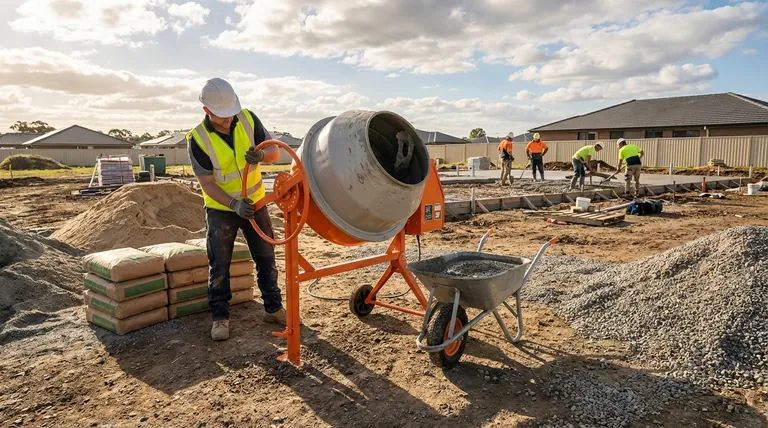
At its core, a small cement mixer saves money by fundamentally changing the economics of labor and materials on a job site. It directly reduces the number of workers required for mixing, ensures precise use of ingredients to prevent costly waste, and offers a more cost-effective solution than renting for those with recurring projects.
The true value of a small cement mixer extends beyond immediate cost savings. It represents a strategic investment in operational efficiency, consistent quality, and worker well-being, which collectively drive down project costs and improve outcomes.
The Core Financial Benefits
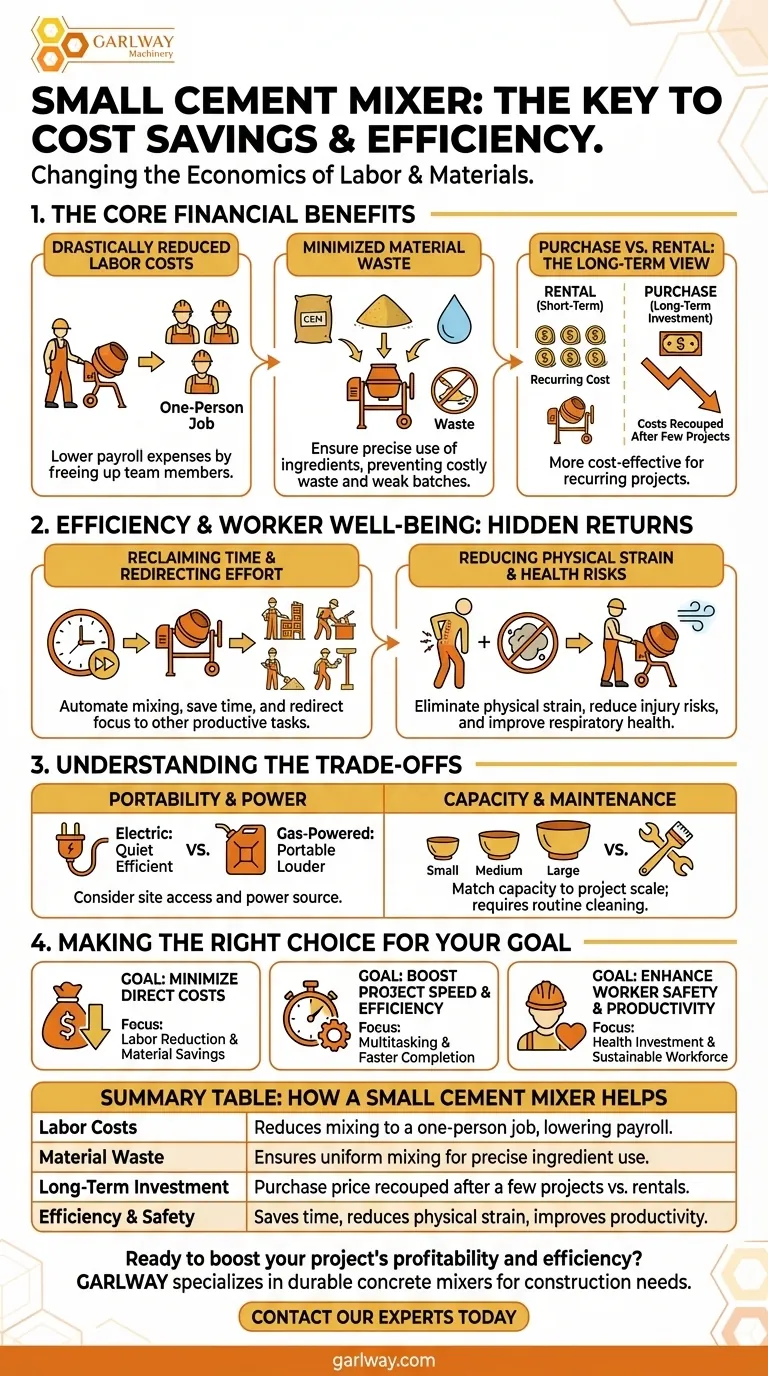
The most visible savings from a small cement mixer are directly tied to your budget for labor and materials. These benefits are immediate and easy to quantify.
Drastically Reduced Labor Costs
Manually mixing cement is a labor-intensive process that often requires a team of two or more people. A small cement mixer transforms this into a one-person job.
One worker can easily manage loading, operating, and discharging the mixer, freeing up other team members to focus on other critical construction tasks. This directly translates to lower payroll expenses for each project.
Minimized Material Waste
Achieving the correct ratio of cement, sand, aggregate, and water is crucial for both structural integrity and cost control. Manual mixing often leads to inconsistent batches and wasted ingredients.
A mixer ensures a thorough and uniform blend, allowing you to use precise, pre-measured portions. This consistency eliminates the guesswork that leads to weak batches or wasted materials, saving money over the course of a project.
Purchase vs. Rental: The Long-Term View
For a single, small project, renting a mixer is an affordable option. However, if you undertake concrete work regularly, purchasing a mixer becomes a cost-effective long-term investment.
The initial purchase price is often recouped after just a few projects when compared to the cumulative cost of repeated rentals.
Efficiency and Worker Well-being: The Hidden Returns
Beyond the balance sheet, a mixer provides significant returns by improving how work gets done and protecting your most valuable asset: your workforce.
Reclaiming Time and Redirecting Effort
A mixer automates the most physically demanding part of creating concrete. This efficiency gain is twofold.
First, it saves significant time compared to the slow process of mixing by hand. Second, it allows workers to redirect their energy and focus toward other productive tasks while the machine handles the mixing.
Reducing Physical Strain and Health Risks
Manual mixing exerts tremendous pressure on a worker's back, shoulders, and muscles, leading to fatigue, pain, and potential long-term injuries.
Using a mixer eliminates this physical strain, creating a more comfortable and safer work environment. It also reduces the risk of inhaling harmful dust, protecting workers' respiratory health and leading to a more productive and reliable team.
Understanding the Trade-offs
While the benefits are clear, making an informed decision requires acknowledging the practical considerations of owning and operating a mixer.
Portability and Power Source
Consider where you will be using the mixer. Electric models are quiet and efficient but require a power source, while gas-powered mixers offer greater portability for remote sites but are louder and produce fumes.
Capacity and Maintenance
The size of the mixer bowl dictates how much concrete you can produce in a single batch. Choosing a size that matches your typical project scale is crucial for efficiency.
Like any piece of equipment, a mixer also requires routine cleaning and maintenance to ensure its longevity and reliable performance.
Making the Right Choice for Your Goal
To maximize your return on investment, align your choice with the primary demands of your work.
- If your primary focus is minimizing direct project costs: A mixer's ability to reduce your labor headcount and prevent material waste offers the most immediate and significant financial savings.
- If your primary focus is project speed and efficiency: The automation of mixing allows your team to multitask, drastically shortening the time required for concrete-related tasks.
- If your primary focus is worker safety and long-term productivity: Investing in a mixer is a direct investment in the health of your team, reducing injury risks and ensuring a more sustainable workforce.
Ultimately, a small cement mixer is a tool that pays for itself by making your entire operation more efficient, consistent, and safe.
Summary Table:
| Key Cost-Saving Area | How a Small Cement Mixer Helps |
|---|---|
| Labor Costs | Reduces mixing from a multi-person task to a one-person job, lowering payroll expenses. |
| Material Waste | Ensures uniform mixing for precise ingredient use, preventing costly waste. |
| Long-Term Investment | Purchase price is often recouped after a few projects vs. cumulative rental fees. |
| Efficiency & Safety | Saves time, reduces physical strain on workers, and improves overall productivity. |
Ready to boost your project's profitability and efficiency?
At GARLWAY, we specialize in durable and reliable construction machinery, including concrete mixers designed for the needs of construction companies and contractors. Our equipment is an investment in reducing your operational costs and enhancing worksite safety.
Contact our experts today to find the perfect small cement mixer for your business and start saving.
Visual Guide
Related Products
- HZS25 Best Cement Mixer for Quick Mix Concrete at Bunnings
- JDC350 Small Cement Concrete Mortar Mixer
- Concrete Cement Mixer Machine Drum Mixer for Construction
- JW1000 Mobile Cement Mixer Concrete Mixer Truck and Batching Plant
- JZC500 Large Cement Mixer Machine Price for Concrete Mix
People Also Ask
- How do cement mixers enhance safety on construction sites? Reduce Strain, Hazards, and Accidents
- What are the main components of a cement mixer? A Guide to Core Parts & Functions
- What are some tips for using a cement mixer effectively? Maximize Your Mixer's Performance & Concrete Quality
- How does cleaning a cement mixer after use benefit its performance? Maximize Lifespan and Mix Quality
- Why is it important to clean the cement mixer after use? Prevent Costly Damage and Ensure Quality Concrete