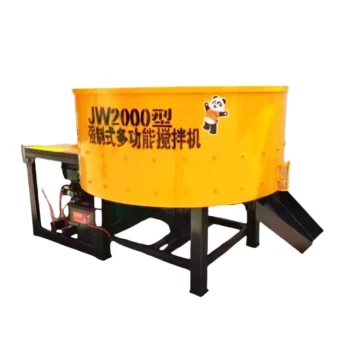
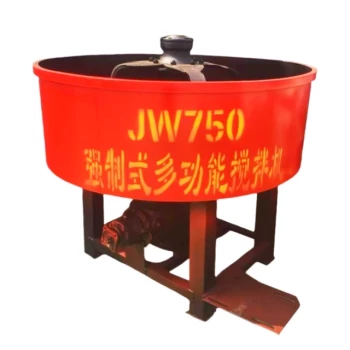
The primary purpose of cement blending equipment is to mechanize the process of mixing cement, aggregates, and water to create a homogenous and consistent material like concrete or mortar. This machinery is fundamental to modern construction, replacing unreliable manual methods to directly influence the quality, speed, and cost-effectiveness of a project.
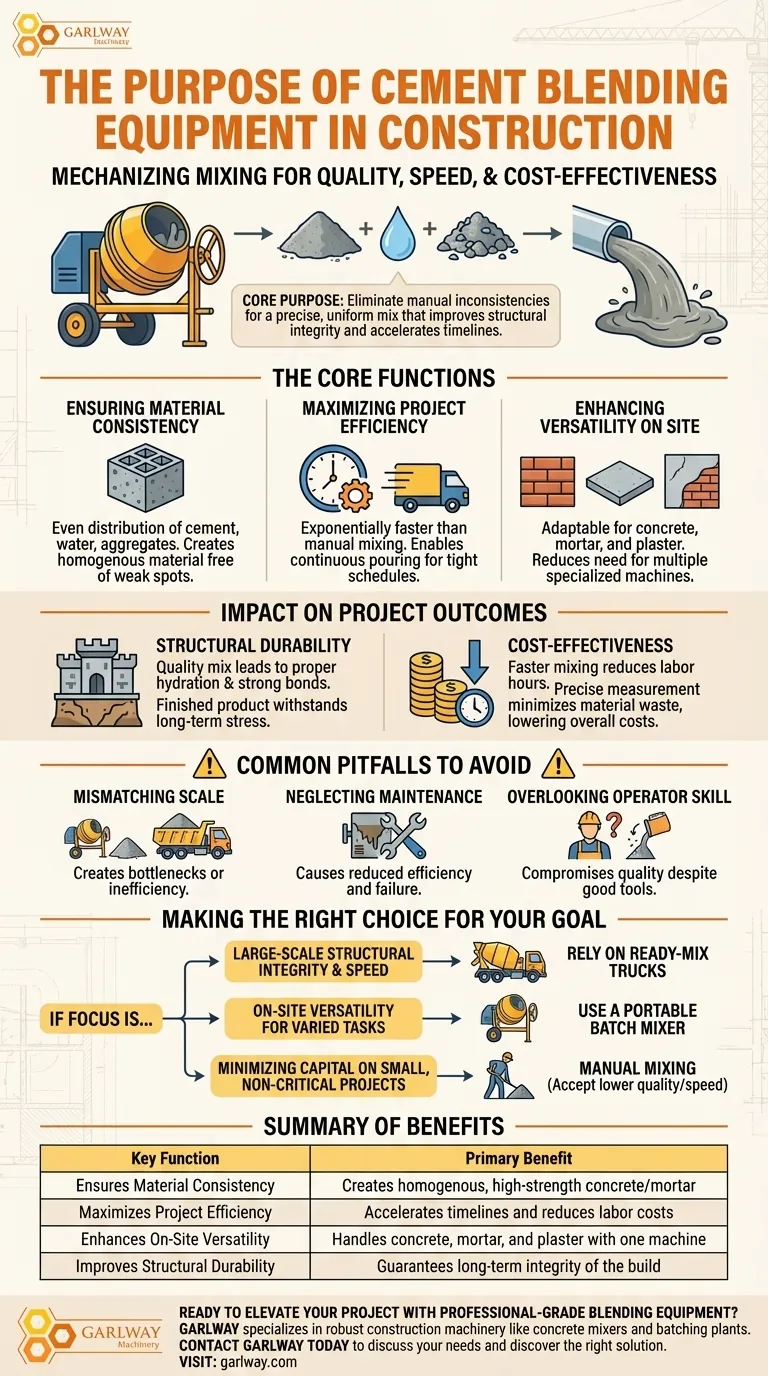
The core function of this equipment is to eliminate the inconsistencies and inefficiencies of manual labor. By ensuring a precise, uniform mix, it directly improves the structural integrity of the final product while accelerating project timelines.
The Core Functions: Beyond Simple Mixing
Cement blending equipment does more than just stir ingredients. Its value lies in the precision and power it brings to a foundational construction process.
Ensuring Material Consistency
A proper mix is critical for strength. Blending equipment ensures that cement, water, and aggregates are evenly distributed, creating a homogenous material free of weak spots. This consistency is nearly impossible to achieve with manual mixing, which often results in variable quality.
Maximizing Project Efficiency
Mechanized blending is exponentially faster than mixing by hand. This speed allows for continuous pouring and application, which is essential for maintaining tight construction schedules. As noted with mixer trucks, it enables quick delivery and helps keep the entire project on track.
Enhancing Versatility on Site
Modern mixers are not limited to a single material. They can be used to prepare concrete, mortar, and plaster, making them highly adaptable tools. This versatility reduces the need for multiple specialized machines, streamlining equipment logistics on the job site.
The Impact on Project Outcomes
The choice to use blending equipment has a direct and measurable effect on the success of a construction project.
The Link to Structural Durability
The long-term durability of a structure begins with the quality of its concrete and mortar. A perfectly blended mix ensures proper hydration of the cement and a strong bond with aggregates, leading to a finished product that can withstand environmental stress and load-bearing demands over decades.
The Effect on Cost-Effectiveness
While there is an upfront equipment cost, the return on investment is clear. Faster mixing reduces labor hours, and precise ingredient measurement minimizes material waste. This efficiency translates directly into lower overall project costs.
Common Pitfalls to Avoid
While highly beneficial, simply having the equipment does not guarantee success. Understanding its limitations is key to leveraging its advantages.
Mismatching Equipment to Scale
Using a small, portable batch mixer for a large foundation pour will create bottlenecks and inconsistencies. Conversely, ordering a large mixer truck for minor patching work is inefficient and wasteful. The scale of the equipment must match the scale of the task.
Neglecting Proper Maintenance
Blending equipment operates in a harsh environment. Without regular cleaning and maintenance, hardened cement can build up, reducing mixing efficiency and eventually causing mechanical failure. This can lead to costly downtime and project delays.
Overlooking Operator Skill
Operating blending equipment, especially larger systems, requires a degree of skill. An inexperienced operator may use incorrect water-to-cement ratios or fail to mix for the appropriate duration, compromising the quality of the final material despite having the right tools.
Making the Right Choice for Your Goal
Selecting the appropriate mixing method depends entirely on your project's specific needs and priorities.
- If your primary focus is large-scale structural integrity and speed: Rely on ready-mix concrete delivered by mixer trucks for guaranteed consistency and high-volume output.
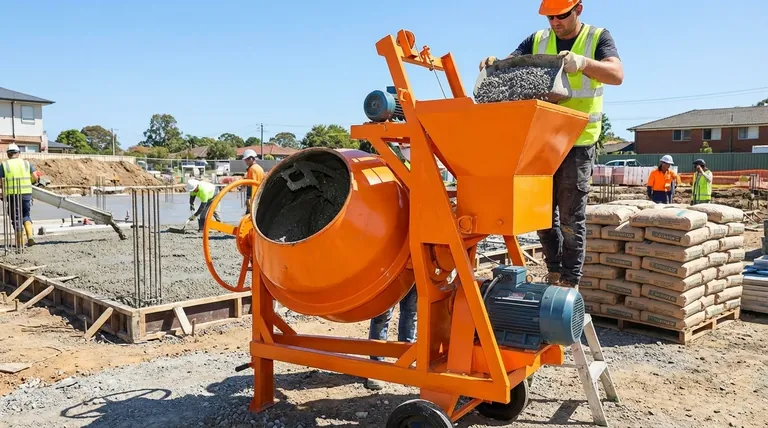
- If your primary focus is on-site versatility for varied tasks: A portable batch mixer is ideal for handling smaller, specific jobs like mortar for masonry or concrete for patching.
- If your primary focus is minimizing capital expense on a small, non-critical project: Manual mixing is a possibility, but you must accept the trade-off of lower quality, inconsistency, and slower progress.
Ultimately, integrating the right blending equipment is a strategic decision that elevates a project from manual labor to professional-grade execution.
Summary Table:
| Key Function | Primary Benefit |
|---|---|
| Ensures Material Consistency | Creates homogenous, high-strength concrete/mortar |
| Maximizes Project Efficiency | Accelerates timelines and reduces labor costs |
| Enhances On-Site Versatility | Handles concrete, mortar, and plaster with one machine |
| Improves Structural Durability | Guarantees long-term integrity of the build |
Ready to elevate your construction project with professional-grade blending equipment?
GARLWAY specializes in providing robust and efficient construction machinery, including concrete mixers and batching plants, designed for construction companies and contractors worldwide. Our equipment ensures the material consistency and project efficiency your builds demand.
Contact GARLWAY today to discuss your project needs and discover the right blending solution for you.
Visual Guide
Related Products
- Hydraulic Concrete Mixer Machine Cement Mixing Equipment for Mixture Concrete
- HZS25 Best Cement Mixer for Quick Mix Concrete at Bunnings
- Portable Electric Small Cement Mixer Concrete Machine
- Auto Concrete Cement Mixer Machine New
- Portable Concrete Mixer Machine Equipment for Mixing Concrete
People Also Ask
- How does the hydraulic system function in these mixers? Unlock the Power Behind Heavy-Duty Mixing
- What are hydraulic concrete mixers used for? Powering Large-Scale Construction Projects
- What are hydraulic cement mixers best used for? Powering Large-Scale Construction Projects
- What are some recent innovations in concrete mixing equipment? Boost Efficiency & Quality Now
- What are the four factors to consider when selecting a concrete mixer? Optimize Your Construction Project