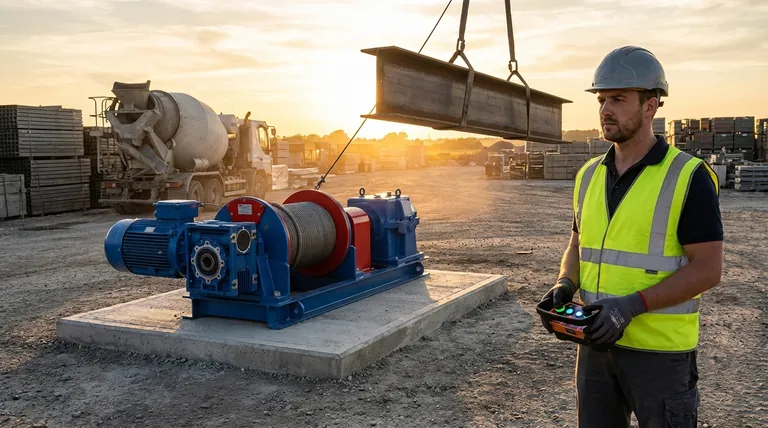
The single greatest safety enhancement from remote control capabilities on an electric winch is the creation of physical distance. By allowing the operator to manage lifting and pulling operations from a safe position, it fundamentally removes them from the immediate danger zone surrounding the winch, the cable, and the heavy load.
Winching operations are inherently hazardous due to immense forces and heavy loads. A remote control's primary function is to transform the operator's role from a participant within the hazard zone to an observer outside of it, dramatically reducing exposure to catastrophic equipment failure.
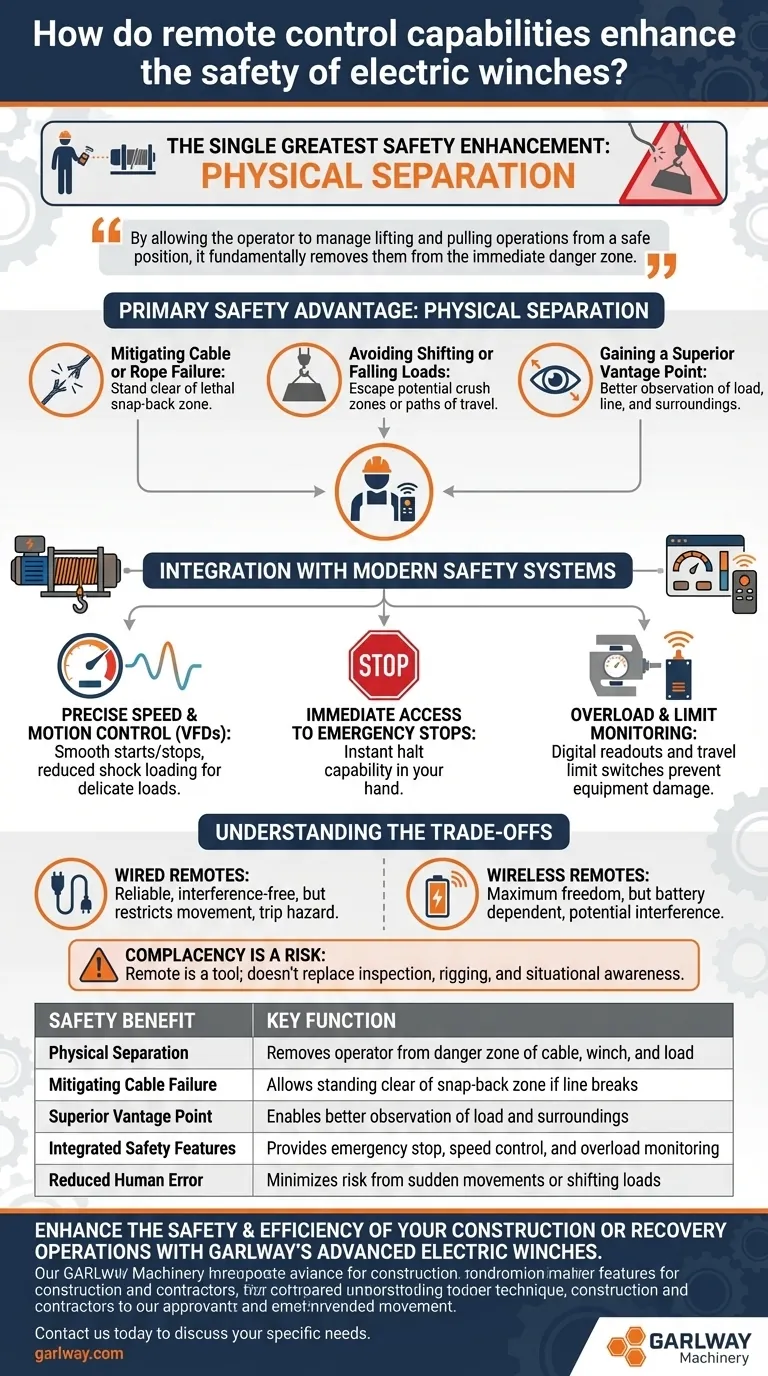
The Primary Safety Advantage: Physical Separation
Moving the operator away from the immediate vicinity of the winch and its load is the most critical safety improvement. This distance directly mitigates the most severe risks associated with winching operations.
Mitigating Cable or Rope Failure
A wire rope or synthetic line under extreme tension stores a tremendous amount of kinetic energy. If the line snaps, it can whip back with lethal force, creating a highly dangerous, unpredictable trajectory.
Operating the winch via remote control allows you to stand clear of this potential snap-back zone.
Avoiding Shifting or Falling Loads
Heavy loads can shift, swing, or fall unexpectedly during a lift or pull. Being physically close to the operation puts the operator at direct risk of being crushed or struck by the object being moved.
A remote provides the freedom to find a secure position away from the load's potential path of travel or failure.
Gaining a Superior Vantage Point
Being tethered to the winch limits your field of view. A remote control, especially a wireless one, allows the operator to move freely to the best possible vantage point.
This superior perspective enables better observation of the load, the line, and any surrounding obstacles, allowing for proactive adjustments and safer overall control.
How Remotes Integrate with Modern Safety Systems
Modern electric winches are more than just a motor and drum. The remote control serves as the primary interface for a suite of advanced features that ensure controlled, predictable operation.
Precise Speed and Motion Control
Many remote systems are connected to Variable Frequency Drives (VFDs), which allow for precise management of speed and direction. This enables soft starts and stops, reducing shock loading on the equipment and the object being moved.
This level of fine control is critical for delicately maneuvering heavy or fragile loads, preventing accidents caused by sudden jerks or movements.
Immediate Access to Emergency Stops
Remote controls integrate features like emergency shut-off switches and load-stop buttons. Having the ability to instantly halt all winch operations in your hand is a crucial safety layer.
If a dangerous situation develops, the operator can react immediately without needing to rush toward the winch itself.
Overload and Limit Monitoring
Advanced controls can provide digital readouts that monitor speed and load. They also work with load travel limit switches to prevent the winch from over-traveling or exceeding its rated capacity.
These features, managed via the remote interface, act as automated safety checks that prevent human error and equipment damage.
Understanding the Trade-offs
While remote operation is a massive safety benefit, it's essential to understand its context and limitations. The feature itself does not guarantee safety without proper procedure.
Wired vs. Wireless Controls
Wired remotes offer a reliable, interference-free connection but restrict the operator's movement by the length of the cord, which can also become a trip hazard.
Wireless remotes provide maximum freedom of movement but are dependent on battery life and can be susceptible to signal interference in certain environments.
Complacency is a Risk
The safety distance provided by a remote can sometimes lead to a false sense of security. It does not replace the need for thorough equipment inspection, proper rigging techniques, and constant situational awareness.
A remote control is a tool to mitigate risk, not eliminate it. Operator training and focus remain paramount.
Applying This to Your Operation
Your operational needs will determine which remote control benefits are most critical for your safety protocols.
- If your primary focus is construction or industrial lifting: Prioritize systems with VFDs for precise, smooth control and integrated load monitoring to protect valuable assets and personnel.
- If your primary focus is vehicle recovery: The key benefit is the ability to operate the winch from a superior vantage point, clear of the vehicles and any potential cable snap-back path.
Ultimately, a remote control enhances winch safety by placing you in a position of control, not in a position of risk.
Summary Table:
| Safety Benefit | Key Function |
|---|---|
| Physical Separation | Removes operator from danger zone of cable, winch, and load |
| Mitigates Cable Failure | Allows standing clear of snap-back zone if line breaks |
| Superior Vantage Point | Enables better observation of load and surroundings |
| Integrated Safety Features | Provides emergency stop, speed control, and overload monitoring |
| Reduced Human Error | Minimizes risk from sudden movements or shifting loads |
Enhance the safety and efficiency of your construction or recovery operations with GARLWAY's advanced electric winches. Our winches feature robust remote control capabilities, including precise Variable Frequency Drives (VFDs) for smooth operation and integrated safety systems like emergency stops and load monitoring. Designed for construction companies and contractors globally, GARLWAY's reliable equipment helps you maintain control while keeping your team safe. Contact us today to discuss your specific needs and discover how our winches, concrete mixers, and batching plants can add value to your projects.
Visual Guide
Related Products
- Electric 120V Boat Winch by Badlands
- Electric and Hydraulic Winch for Heavy Duty Applications
- Small Electric Winch 120V and 240V for Compact Applications
- 12000 lb Electric Boat Trailer Winch with Windlass Anchor Warn
- Electric Hoist Winch Boat Anchor Windlass for Marine Applications
People Also Ask
- How do electric boat winches work? Unlock Effortless Launching & Retrieval
- How much current does an electric boat winch draw? Plan Your Electrical System for Peak Performance
- Can I run a winch straight from a battery? Essential Power Setup for Safe Operation
- What are the types of electric winches available? Choose the Right Winch for Your Job
- What are the uses of electric winches in mining and tunneling? Enhance Safety and Efficiency Underground