
At their core, electric winches and hoists improve operational efficiency by replacing strenuous manual labor with automated power. They allow smaller teams to move substantial loads faster, more precisely, and with a significantly lower risk of injury or damage, directly translating to reduced operating costs and increased productivity.
The true gain in efficiency comes not just from using an electric motor, but from applying the right tool to the right job. A winch offers versatile pulling power, while a hoist provides specialized precision for vertical lifting.
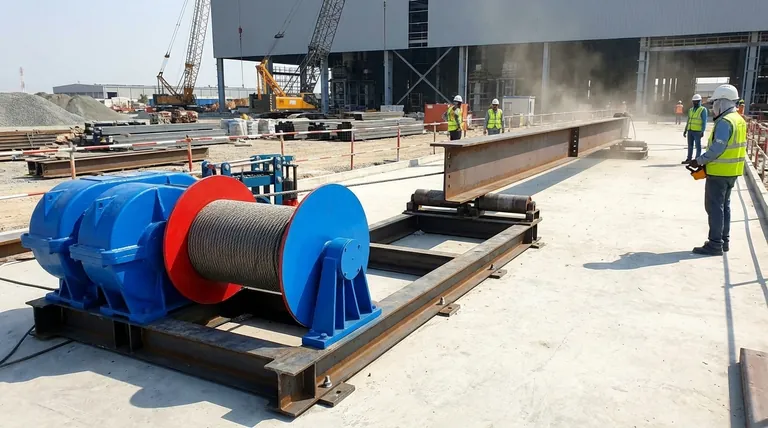
The Core Mechanisms of Efficiency
Understanding how these tools generate efficiency requires looking beyond the motor. The gains come from a combination of power, precision, and a fundamental reduction in physical strain.
Drastically Reduced Manual Effort
An electric winch or hoist automates the most physically demanding part of any heavy-load operation. This immediately reduces the manpower required for a task and minimizes the risk of worker fatigue and injury, which are significant sources of inefficiency and downtime.
Enhanced Speed and Power
These devices leverage an electric motor and a gearbox to multiply torque, providing immense power. Higher horsepower motors deliver more pulling or lifting power, accomplishing tasks in a fraction of the time it would take manually.
Unmatched Precision and Control
Advanced control systems are central to operational efficiency. They allow operators to manage the speed and direction of a load with high accuracy, ensuring precise placement and minimizing the risk of costly errors or damage during delicate maneuvers.
Feature-Driven Gains: Winch vs. Hoist
While both tools lift and pull, their designs are optimized for different applications. Choosing the correct one is critical for maximizing efficiency.
Winch: Versatility in Motion
A winch is the more flexible tool, designed to pull loads vertically, horizontally, or at any angle. This makes it ideal for dynamic situations like vehicle recovery or repositioning heavy materials across a worksite. Features like free spooling allow for rapid cable deployment, saving valuable time.
Hoist: Specialization in Vertical Lifting
An electric hoist is engineered exclusively for vertical lifting and lowering. Its design ensures controlled, stable movement, making it the superior choice for workshop or warehouse environments requiring repetitive and precise positioning. Using a hoist for angled pulling can damage the rope guide and compromise safety.
Safety Systems as an Efficiency Multiplier
Safety is not separate from efficiency; it is essential to it. Accidents cause catastrophic delays and costs. Electric winches and hoists have integrated safety features that protect people, equipment, and the load itself.
Automatic Braking Systems
Both devices typically include automatic, load-holding brakes. These systems engage the moment the motor stops, locking the drum and preventing the load from slipping. This fail-safe is crucial for preventing accidents.
Overload Protection
Many modern units feature overload protection, which automatically shuts down the device if the load exceeds its rated capacity. This prevents catastrophic failure of the equipment and protects the asset being moved.
Remote Operation
The ability to operate the device from a safe distance via remote control is a major advantage. It removes personnel from the immediate vicinity of a heavy, suspended load, drastically reducing the potential for injury.
Making the Right Choice for Your Goal
To truly harness the efficiency of these tools, your selection must align with your primary operational need.
- If your primary focus is versatile pulling and recovery: A winch is the correct tool, offering the flexibility to pull loads horizontally and at various angles.
- If your primary focus is precise, repetitive vertical lifting: A hoist provides the specialized control and safety features necessary for controlled vertical movement in a fixed location.
- If your primary focus is reducing energy consumption: An efficient electric motor and gearbox combination ensures optimal power transfer, lowering operating costs by minimizing energy waste.
Ultimately, integrating the correct electric lifting or pulling device transforms demanding physical tasks into controlled, efficient, and safe procedures.
Summary Table:
| Efficiency Factor | Electric Winch | Electric Hoist |
|---|---|---|
| Primary Use | Versatile pulling (horizontal/vertical) | Precise vertical lifting |
| Key Benefit | Rapid cable deployment, flexibility | Stable, controlled movement |
| Ideal For | Recovery, material repositioning | Workshop, warehouse lifting |
Ready to enhance your operational efficiency with the right equipment? At GARLWAY, we specialize in high-performance construction machinery, including durable electric winches and hoists designed for construction companies and contractors worldwide. Our solutions help you move heavy loads faster, safer, and with greater precision—reducing labor costs and minimizing downtime. Contact us today to find the perfect lifting or pulling tool for your project!
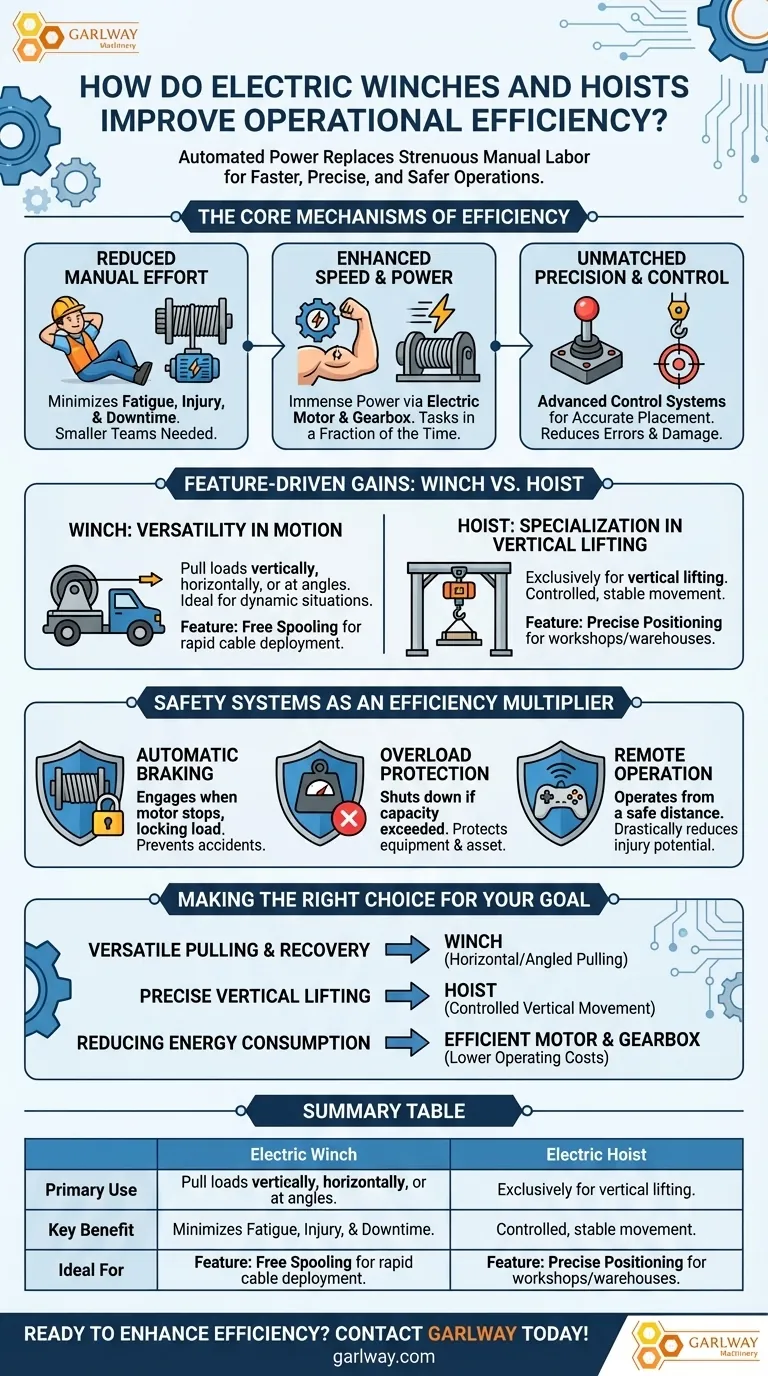
Visual Guide
Related Products
- Electric 120V Boat Winch by Badlands
- Electric and Hydraulic Winch for Heavy Duty Applications
- Small Electric Winch 120V and 240V for Compact Applications
- 12000 lb Electric Boat Trailer Winch with Windlass Anchor Warn
- Electric Hoist Winch Boat Anchor Windlass for Marine Applications
People Also Ask
- How do electric boat winches work? Unlock Effortless Launching & Retrieval
- How much current does an electric boat winch draw? Plan Your Electrical System for Peak Performance
- Can I run a winch straight from a battery? Essential Power Setup for Safe Operation
- What are the types of electric winches available? Choose the Right Winch for Your Job
- What are the uses of electric winches in mining and tunneling? Enhance Safety and Efficiency Underground





