
At its core, a hydraulic towing winch achieves precise control by manipulating the flow of a nearly incompressible fluid. This hydraulic system allows operators to make minute, real-time adjustments to line speed, direction, and tension, eliminating the abrupt movements or sudden jerks that can cause equipment damage and create hazardous situations.
The fundamental advantage of a hydraulic winch isn't just its power, but its use of fluid dynamics to provide a smooth, continuous, and highly responsive transfer of energy, which translates directly into superior operational control.
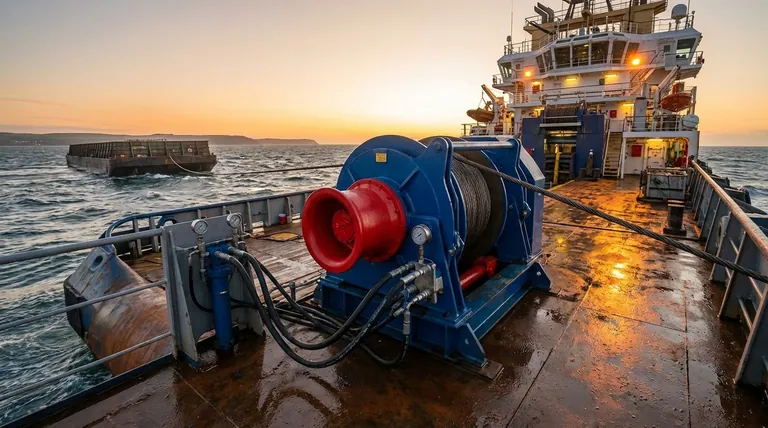
The Core Principle: Manipulating Incompressible Fluid
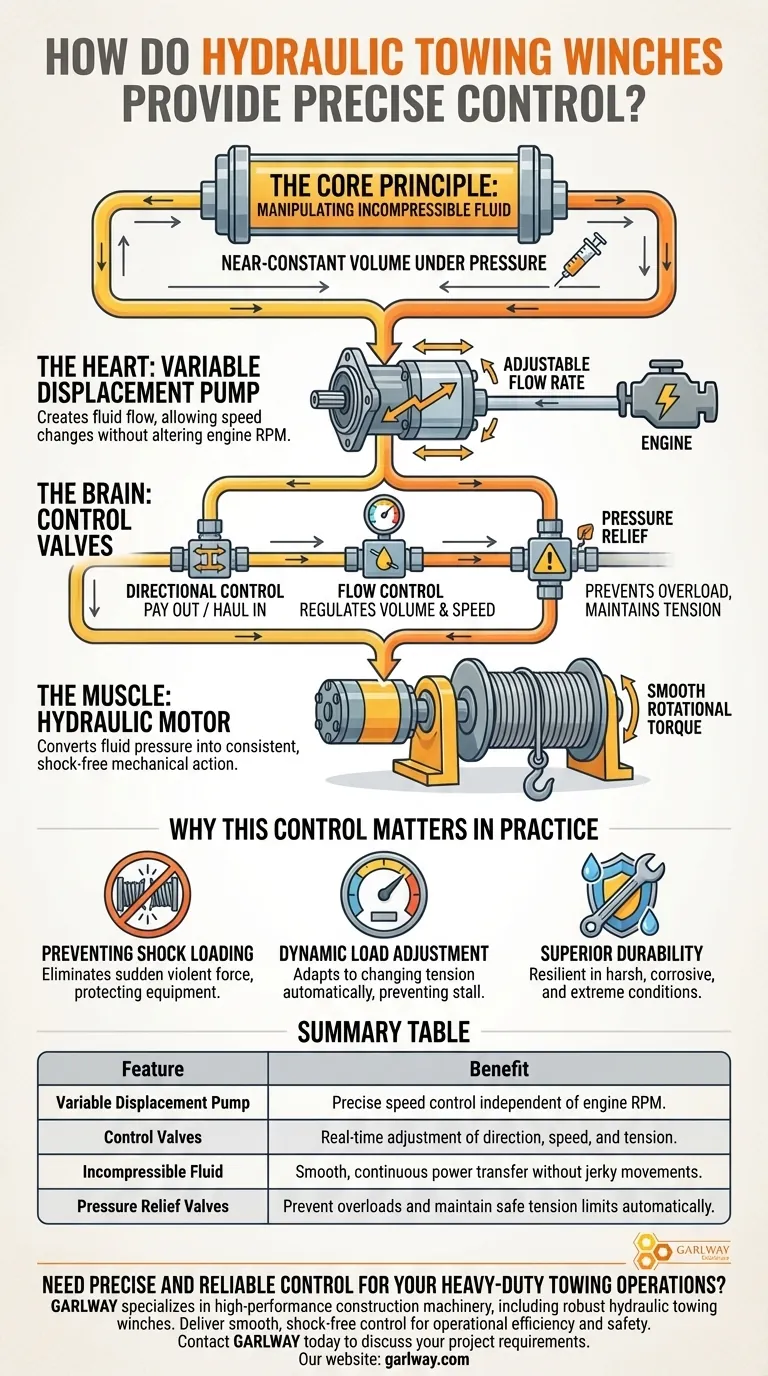
The precision of a hydraulic system begins with the physical properties of hydraulic fluid. Unlike air, which can be compressed, this fluid maintains a near-constant volume under pressure.
The Role of the Hydraulic Pump
The pump is the heart of the system, creating the flow of hydraulic fluid. In advanced winches, a variable displacement pump is often used, allowing the operator to change the fluid flow rate without changing the engine's speed, which is the first layer of control.
The Function of Control Valves
Control valves are the brain, directing the fluid with exceptional accuracy.
- Directional control valves determine whether the winch pays out line or hauls it in by switching the path of the fluid to the hydraulic motor.
- Flow control valves regulate the volume of fluid moving through the system per second, which directly governs the winch's line speed.
- Pressure relief valves act as a safety and tension control mechanism, automatically bleeding off excess pressure to prevent overload and maintain a set tension.
The Hydraulic Motor's Response
The pressurized fluid acts on the internal components (gears, pistons, or vanes) of the hydraulic motor. This converts the fluid's pressure and flow into smooth, consistent rotational torque that turns the winch drum, providing direct and immediate mechanical action without the backlash found in geared systems.
Why This Control Matters in Practice
This level of control isn't just a technical feature; it's a critical operational and safety advantage, especially when handling heavy or sensitive loads.
Preventing Shock Loading
The system's ability to smoothly accelerate and decelerate the line is crucial. It prevents shock loading—the sudden, violent application of force—which can snap cables and damage both the winch and the object being towed.
Dynamic Load Adjustment
Hydraulic systems can inherently adapt to changing loads. If the tension on the line suddenly increases, the pressure in the system rises, and the winch can adjust its pull or stall safely without damaging components, unlike some mechanical systems.
Superior Durability in Harsh Conditions
The sealed, self-lubricating nature of hydraulic systems makes them exceptionally resilient. They excel in the extreme temperatures, corrosive conditions, and moisture-heavy environments common in marine and offshore applications, ensuring control remains reliable over time.
Understanding the Trade-offs
While offering unparalleled control, hydraulic systems are not without their complexities. Acknowledging these trade-offs is key to making an informed decision.
System Complexity and Maintenance
Hydraulic systems consist of pumps, motors, hoses, seals, and filters. This complexity requires a rigorous preventative maintenance schedule to ensure reliability and prevent component failure.
Potential for Leaks
Any breach in a hose or seal can result in a fluid leak. This not only poses an environmental risk but can also lead to a loss of system pressure and control, requiring immediate attention.
Lower Energy Efficiency
Compared to a direct-drive electric system, hydraulic systems can suffer from greater energy losses, primarily as heat. This can result in slightly lower overall energy efficiency, which may be a consideration in applications focused on minimizing power consumption.
Making the Right Choice for Your Application
Selecting the right winch technology depends entirely on your operational priorities.
- If your primary focus is maximum safety and precise load handling: The smooth, shock-free control of a hydraulic winch is the definitive choice.
- If your primary focus is reliability in harsh marine or industrial environments: The sealed and robust nature of a hydraulic system provides unmatched durability.
- If your primary focus is lower initial cost and simpler maintenance for light-duty tasks: A high-quality electric winch might be a sufficient alternative, provided you don't require the fine control of hydraulics.
Ultimately, the precision of a hydraulic winch stems from its ability to translate fluid dynamics into smooth, powerful, and adaptable mechanical work.
Summary Table:
| Feature | Benefit |
|---|---|
| Variable Displacement Pump | Enables precise speed control independent of engine RPM. |
| Control Valves | Provide real-time adjustment of direction, speed, and tension. |
| Incompressible Fluid | Ensures smooth, continuous power transfer without jerky movements. |
| Pressure Relief Valves | Prevent overloads and maintain safe tension limits automatically. |
Need precise and reliable control for your heavy-duty towing operations?
GARLWAY specializes in high-performance construction machinery, including robust hydraulic towing winches designed for construction companies and contractors globally. Our winches deliver the smooth, shock-free control you need to protect your equipment and ensure job site safety.
Contact GARLWAY today to discuss your project requirements and discover how our hydraulic solutions can enhance your operational efficiency and safety.
Visual Guide
Related Products
- Electric and Hydraulic Winch for Heavy Duty Applications
- Hydraulic Winding Engine Harbor Freight Winch
- Warn Winch Windlass Boat Trailer Winch
- 12000 lb Electric Boat Trailer Winch with Windlass Anchor Warn
- Portable Small Trailer Winch
People Also Ask
- What are the differences between electric and hydraulic winches? Choose the Right Winch for Your Job
- What are some common uses for a heavy-duty winch? Power Your Construction & Industrial Projects
- What are electro-hydraulic winches and their applications? The Integrated Power Solution for Heavy-Duty Operations
- How do winches assist in bridge launching? Accelerate Bridge Placement with Controlled Pulling Power
- What are the benefits of using heavy-duty winches for large projects? Boost Efficiency & Safety




