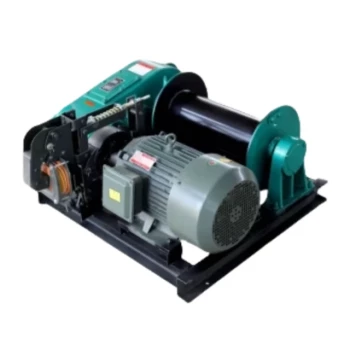
At its core, an electric winch generates power through a simple but effective partnership. An electric motor provides the initial high-speed energy, which is then fed into a gearbox that converts this speed into low-speed, high-torque pulling force. This combination allows a compact motor to move incredibly heavy loads with precision.
The true performance of an electric winch comes not just from raw power, but from the sophisticated interplay between its motor, its gear reduction system, and its control electronics, which together deliver force, precision, and safety.

The Core Components of Power Generation
To understand an electric winch's performance, you must first understand its two primary components: the motor and the gearbox. They work in tandem to create immense mechanical advantage.
The Electric Motor: The Heart of the Winch
The electric motor is the source of all power. It’s a relatively high-speed device that draws electrical current from a power source to create rotational energy.
Higher horsepower motors can deliver more pulling power while putting less strain on the electrical system, making them more effective under demanding conditions. Power sources vary, from the common 12-volt or 24-volt DC batteries found on vehicles to AC wall outlets for industrial applications.
The Gearbox: The Torque Multiplier
The motor's raw speed is not useful for pulling. The gearbox, often a multi-stage gear reducer, is the critical component that transforms this speed into force.
It uses a series of gears to slow down the rotation from the motor significantly. This reduction in speed results in a proportional and massive increase in torque, which is the rotational force that actually pulls the load.
The Drivetrain: Putting Power to Work
The torque from the gearbox is transferred through couplings to the winch drum. As the drum rotates with this high-torque, low-speed force, it winds the cable and pulls the load. The entire system is designed to handle immense stress efficiently.
Translating Power into Performance and Control
Raw power is useless without the ability to manage it. Modern electric winches integrate advanced systems to provide operators with exceptional control and safety.
Precision and Speed Control
Unlike purely mechanical systems, electric winches offer variable speed control. Advanced electronic systems allow an operator to manage the line speed and direction with incredible accuracy. This is crucial for safely maneuvering delicate or heavy loads into precise positions.
The Role of Braking Systems
A key performance feature is the braking mechanism, which is often an automatic electromagnetic brake. This system engages the moment the motor stops, securely holding the load in place. This prevents accidental slippage and is a non-negotiable safety feature for any lifting or pulling operation.
Built-in Safety Mechanisms
To ensure safe operation, most electric winches include additional safety features. Overload protection prevents the winch from attempting to pull a load beyond its rated capacity, protecting the motor and gears from damage. Emergency shut-off switches provide an immediate way to stop all operations.
Understanding the Trade-offs
While highly versatile, electric winches have specific characteristics and limitations that you must consider for your application.
Power Source Limitations
A winch is only as strong as its power source. Vehicle-mounted DC winches are limited by the vehicle's battery and alternator capacity. Heavy, prolonged use can drain a battery quickly if the engine isn't running to replenish it.
AC-powered industrial winches offer continuous use capability but sacrifice portability, as they must be connected to a grid power source.
The Duty Cycle
Electric motors generate significant heat under load. The duty cycle refers to the amount of time a winch can operate before it needs to cool down. Exceeding this can cause the motor to overheat and fail. This is a critical difference from hydraulic systems, which can often run continuously under heavy load.
Versatility vs. Extreme Force
Electric winches are celebrated for their compact size, versatility, and ease of installation. However, for the absolute most demanding, heavy-duty industrial applications, hydraulic winches can often generate higher, more sustained pulling forces, albeit with more complex and expensive systems.
Matching the Winch to Your Application
Choosing the right type of electric winch depends entirely on your primary goal.
- If your primary focus is vehicle recovery or intermittent heavy pulling: A DC-powered winch (12V for light duty, 24V for heavier workloads) is your best choice for its portability and integration.
- If your primary focus is industrial manufacturing or construction: An AC-powered winch is necessary for its continuous duty cycle and high-capacity pulling power in a fixed location.
- If your primary focus is precision and operational safety: Prioritize a winch with advanced electronic controls, a reliable automatic brake, and certified overload protection.
Ultimately, understanding how these components work together empowers you to select a tool that is not just powerful, but perfectly suited to the task at hand.
Summary Table:
| Component | Role in Power & Performance |
|---|---|
| Electric Motor | Converts electrical energy into high-speed rotational force. |
| Gearbox | Reduces motor speed to multiply torque for heavy pulling. |
| Control Electronics | Enables variable speed, direction, and safety features like overload protection. |
| Braking System | Automatically holds loads securely when the motor stops. |
Need a powerful and reliable electric winch for your construction or industrial project?
GARLWAY specializes in high-performance construction machinery, offering durable electric winches, concrete mixers, and batching plants designed for contractors and construction companies worldwide. Our winches deliver the precise control and safety features detailed in this article, ensuring efficient and secure operations on your job site.
Contact GARLWAY today to discuss your specific needs and get a tailored solution that boosts your productivity!
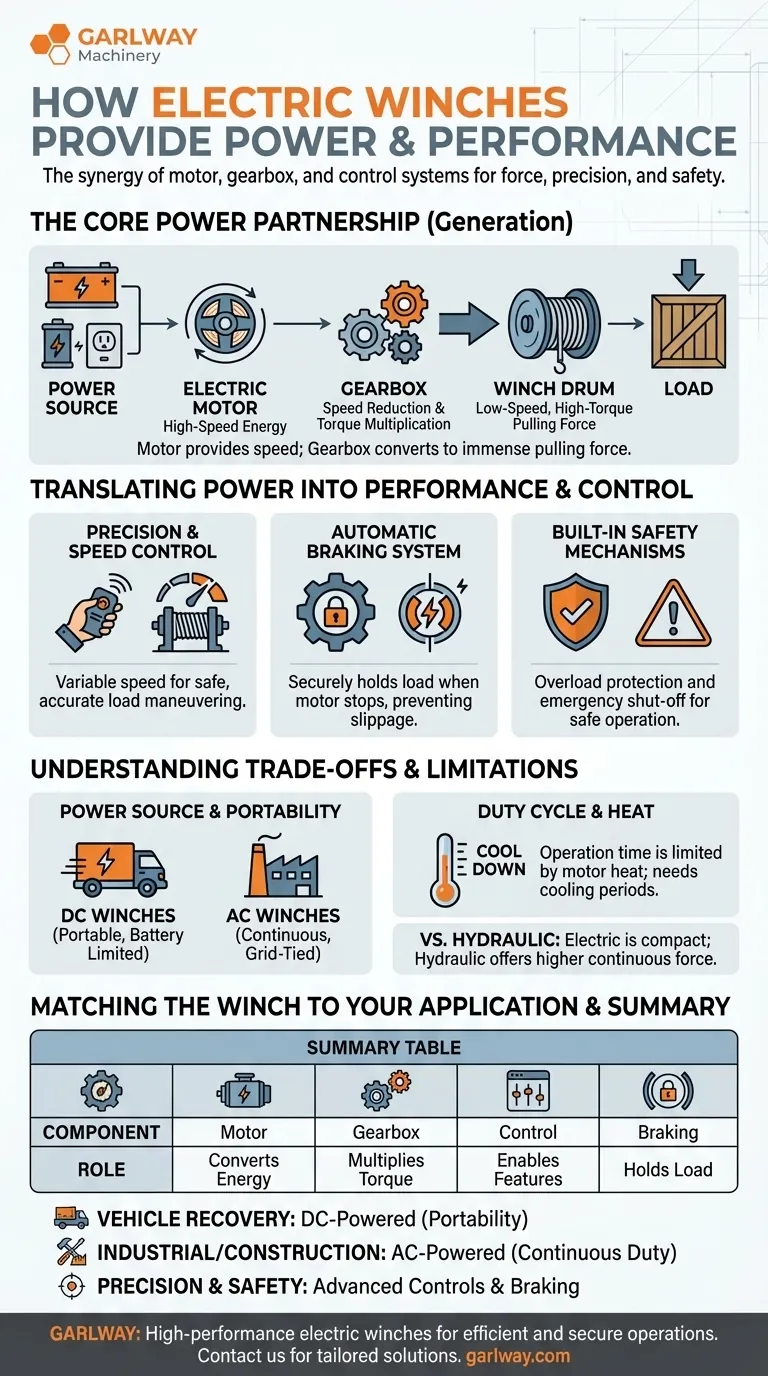
Visual Guide
Related Products
- Electric 120V Boat Winch by Badlands
- Electric and Hydraulic Winch for Heavy Duty Applications
- Small Electric Winch 120V and 240V for Compact Applications
- 12000 lb Electric Boat Trailer Winch with Windlass Anchor Warn
- Electric Hoist Winch Boat Anchor Windlass for Marine Applications
People Also Ask
- How do electric boat winches work? Unlock Effortless Launching & Retrieval
- How much current does an electric boat winch draw? Plan Your Electrical System for Peak Performance
- Can I run a winch straight from a battery? Essential Power Setup for Safe Operation
- What are the types of electric winches available? Choose the Right Winch for Your Job
- What are the uses of electric winches in mining and tunneling? Enhance Safety and Efficiency Underground