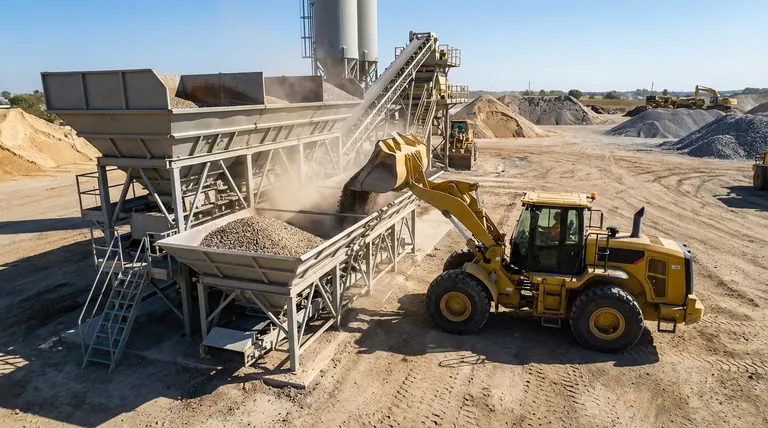
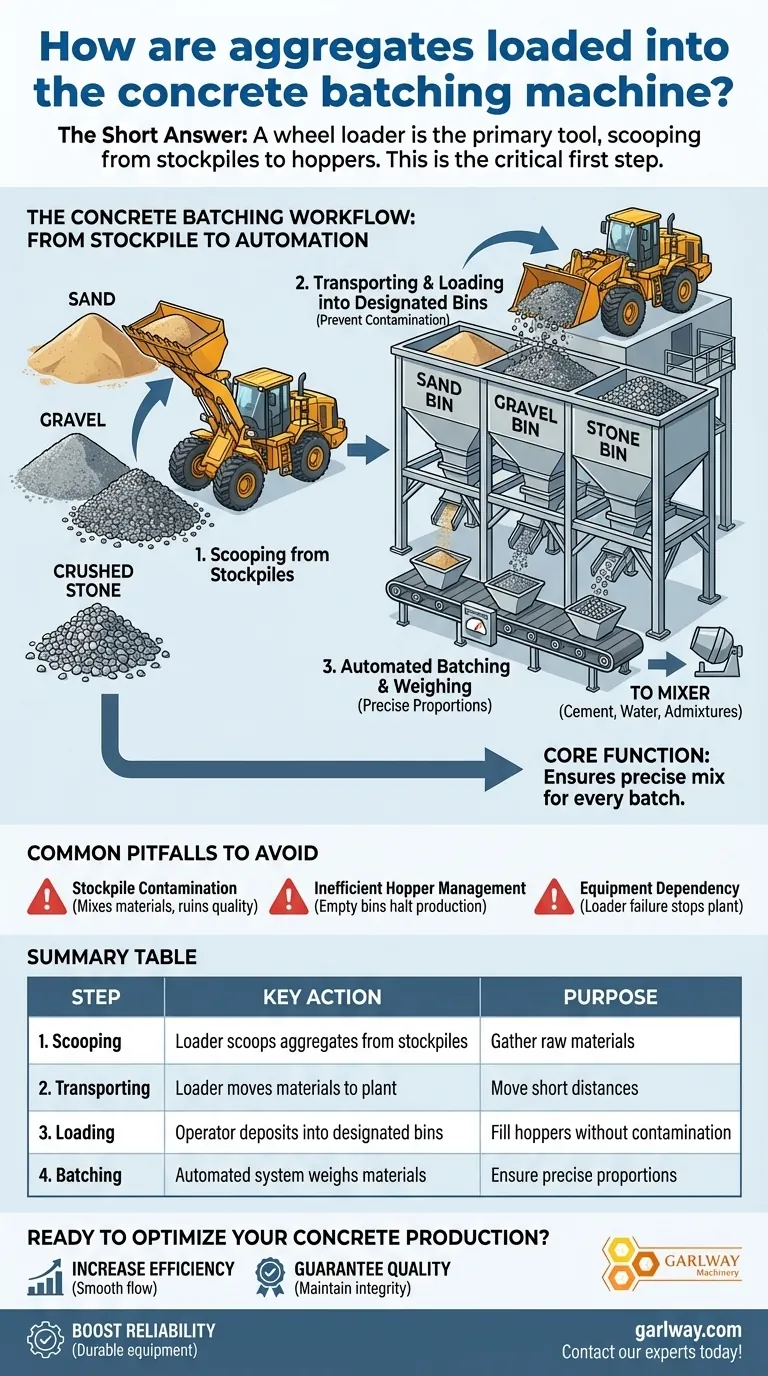
The short answer is: a wheel loader is the primary piece of equipment used for this task. This machine scoops different types of aggregates, such as sand, gravel, and crushed stone, from stockpiles on the ground and deposits them into the appropriate storage bins of the concrete batching machine.
The physical act of loading aggregates with a wheel loader is the critical first step that feeds the entire automated concrete production process, directly impacting the plant's efficiency and the final product's quality.
The Role of Loading in the Concrete Batching Workflow
To understand the importance of this initial step, it's helpful to see where it fits within the larger concrete manufacturing process. The goal is to combine raw materials with absolute precision.
The Key Machine: The Wheel Loader
A wheel loader is a heavy construction vehicle with a large front-mounted bucket. Its primary job is to move bulk materials like soil, sand, and gravel from one place to another over short distances.
In this context, it acts as the shuttle, transporting aggregates from large, separate stockpiles on the site to the batching plant's receiving hoppers.
The Destination: Aggregate Storage Bins
The wheel loader doesn't just dump all the materials into one pile. A concrete batching machine has a series of large bins or hoppers, with each one designated for a specific type of aggregate (e.g., fine sand, 10mm gravel, 20mm crushed stone).
The operator must carefully load the correct material into the corresponding bin to prevent contamination of the mix.
From Loading to Automated Batching
Once the bins are filled, the manual part of the process is largely complete. An automated system takes over, opening gates at the bottom of the bins to release precise, weighed amounts of each aggregate onto a conveyor belt.
This weighing process, known as batching, is the core function of the plant. It ensures that every single batch of concrete has the exact proportions of materials required by the engineering specifications. These weighed aggregates are then mixed with cement, water, and any admixtures to create the final concrete.
Common Pitfalls to Avoid
While straightforward, the loading process is a critical control point where errors can compromise the entire operation.
Stockpile Contamination
The most significant risk is cross-contamination. If a wheel loader picks up some sand while scooping gravel, or introduces dirt from the yard, it can throw off the mix design and compromise the concrete's strength and durability.
Inefficient Hopper Management
Failing to keep the storage bins adequately filled can halt the entire plant's production. The automated system cannot create a batch if one of the required aggregate bins is empty, leading to costly delays.
Equipment Dependency
The entire batching plant is dependent on the wheel loader. If this single piece of equipment breaks down or requires maintenance, the flow of raw materials stops, and concrete production ceases.
Making the Right Choice for Your Goal
Understanding this process allows for better planning and management of a concrete production operation.
- If your primary focus is operational efficiency: Ensure the wheel loader's capacity and speed can consistently keep the batching plant's bins supplied, preventing any production bottlenecks.
- If your primary focus is concrete quality: Implement strict yard management protocols to maintain clean, separate stockpiles and train operators to prevent any cross-contamination during loading.
- If your primary focus is production reliability: Recognize the wheel loader as a critical point of failure and establish a rigorous preventative maintenance schedule for it.
Ultimately, the simple task of loading aggregates is the foundational step that enables the precision and speed of modern concrete manufacturing.
Summary Table:
| Step | Key Action | Purpose |
|---|---|---|
| 1. Scooping | Wheel loader scoops aggregates from stockpiles. | To gather raw materials (sand, gravel, stone). |
| 2. Transporting | Loader transports materials to the batching plant. | To move materials over short distances. |
| 3. Loading | Operator deposits aggregates into designated bins. | To fill hoppers without contamination. |
| 4. Batching | Automated system weighs materials for the mix. | To ensure precise proportions for quality concrete. |
Ready to Optimize Your Concrete Production?
The right equipment is the foundation of an efficient and reliable batching plant. GARLWAY specializes in providing robust construction machinery, including concrete batching plants, mixers, and winches, for construction companies and contractors worldwide.
We can help you:
- Increase Efficiency: Ensure a smooth, uninterrupted flow of materials.
- Guarantee Quality: Maintain the integrity of your mix design from the very first step.
- Boost Reliability: Depend on durable equipment built for demanding environments.
Contact our experts today to discuss how our solutions can power your projects!
Visual Guide
Related Products
- Commercial Electric Concrete Mixer Machine HZS 50 Small Batch Plant for Sale
- HZS120 Ready Mix Concrete Batching Plant Commercial Mud Cement Mixer
- HZS90 Large Multiquip Concrete Mixers for Construction
- HZS75 Concrete Batching Plant Cement Mixer Price Concrete Mixer Bunnings Mixing Plant
- Construction Products Concrete Plant Machine Mixing Concrete Mixer
People Also Ask
- What are the types of concrete mixers used in batching plants? Choose the Right Mixer for Your Project
- What is the core component of a concrete batching plant? The Mixer Unit Defines Your Concrete Quality
- Why is proper maintenance important for a concrete batch mix plant? Maximize Uptime & Profitability
- Why buy concrete batch plant parts only from the manufacturer? Protect Your Investment and Maximize Uptime
- What are the two main types of concrete batch mixers? Choose the Right Mixer for Your Project