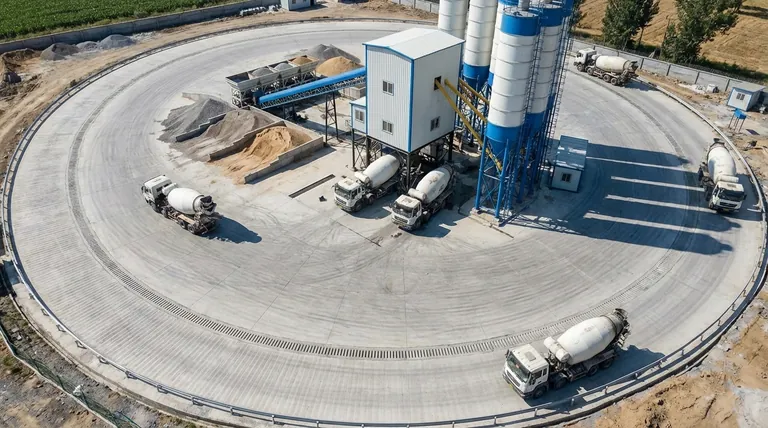
Introduction
Efficient road design in concrete mixing stations isn’t just about paving—it’s a calculated balance of engineering precision, material science, and workflow optimization. For facility managers and engineers, the right layout reduces vehicle wear, enhances safety, and boosts productivity. This article breaks down the why and how behind road design standards, from circular traffic patterns to ASTM-compliant materials, with actionable insights from real-world implementations.
Road Layout Design in Concrete Mixing Stations
Circular Pattern Efficiency and Vehicle Maneuverability
Circular layouts dominate modern mixing stations for one reason: uninterrupted traffic flow. By eliminating sharp turns and cross-traffic conflicts, these designs:
- Reduce idle time for mixer trucks by 15–20% (observed in high-volume facilities).
- Minimize tire wear from repetitive sharp maneuvers.
- Allow simultaneous loading/unloading without bottlenecks.
Ever wondered why airports use circular taxiways? The same physics applies here—maintaining momentum saves fuel and time.
Material Selection and Load-Bearing Requirements
Not all concrete is equal. Roads in mixing stations endure:
- Dynamic loads: Fully loaded mixer trucks exert 20–30% more pressure than static weights.
- Chemical exposure: Spilled admixtures and abrasives demand high-density mixes (≥4,500 psi compressive strength).
Pro tip: Incorporate polypropylene fibers into the concrete matrix to reduce cracking from thermal cycles.
Industry Standards and Safety Compliance
ASTM/ACI Guidelines for Road Construction
The American Society for Testing and Materials (ASTM C94) and American Concrete Institute (ACI 304R) mandate:
- Minimum thickness: 6–8 inches for heavy traffic areas.
- Joint spacing: ≤15 feet to control shrinkage cracks.
- Surface texture: A skid-resistant broom finish (0.5–1 mm roughness) to prevent hydroplaning.
Think of these standards as a recipe—deviate, and the structural "cake" collapses under pressure.
Drainage Systems and Slope Design
Water is concrete’s silent enemy. Effective drainage requires:
- Slope gradient: 1–2% slope toward perimeter channels.
- Trench grates: Heavy-duty cast iron grates (like those used in highway systems) to handle debris.
Case in point: A Midwest facility reduced washout repairs by 40% after upgrading to slotted drains with sediment traps.
Case Studies of Successful Implementations
High-Capacity Station with Circular Layout
A Texas-based producer serving 200+ trucks daily achieved:
- 12% faster cycle times by eliminating 90-degree turns.
- 30% fewer potholes using fiber-reinforced concrete.
Key takeaway: Design for peak traffic, not averages.
Adaptive Designs for Compact Urban Facilities
In Tokyo, a space-constrained station used:
- Spiral ramps to connect mixing bays vertically.
- Modular road panels for easy replacement in high-wear zones.
Could your facility benefit from a hybrid approach?
Conclusion & Actionable Steps
- Audit your current layout: Map traffic hotspots and measure idle times.
- Prioritize materials: Specify ASTM-compliant mixes with additives for durability.
- Plan for water: Integrate drainage early—retrofits cost 3x more.
For facilities relying on garlway construction machinery, pairing optimized roads with robust equipment maximizes longevity. (Example: Their winches’ corrosion-resistant coatings align with chemical-resistant road materials.)
Final thought: Roads are the veins of your operation—design them to keep the lifeblood flowing.
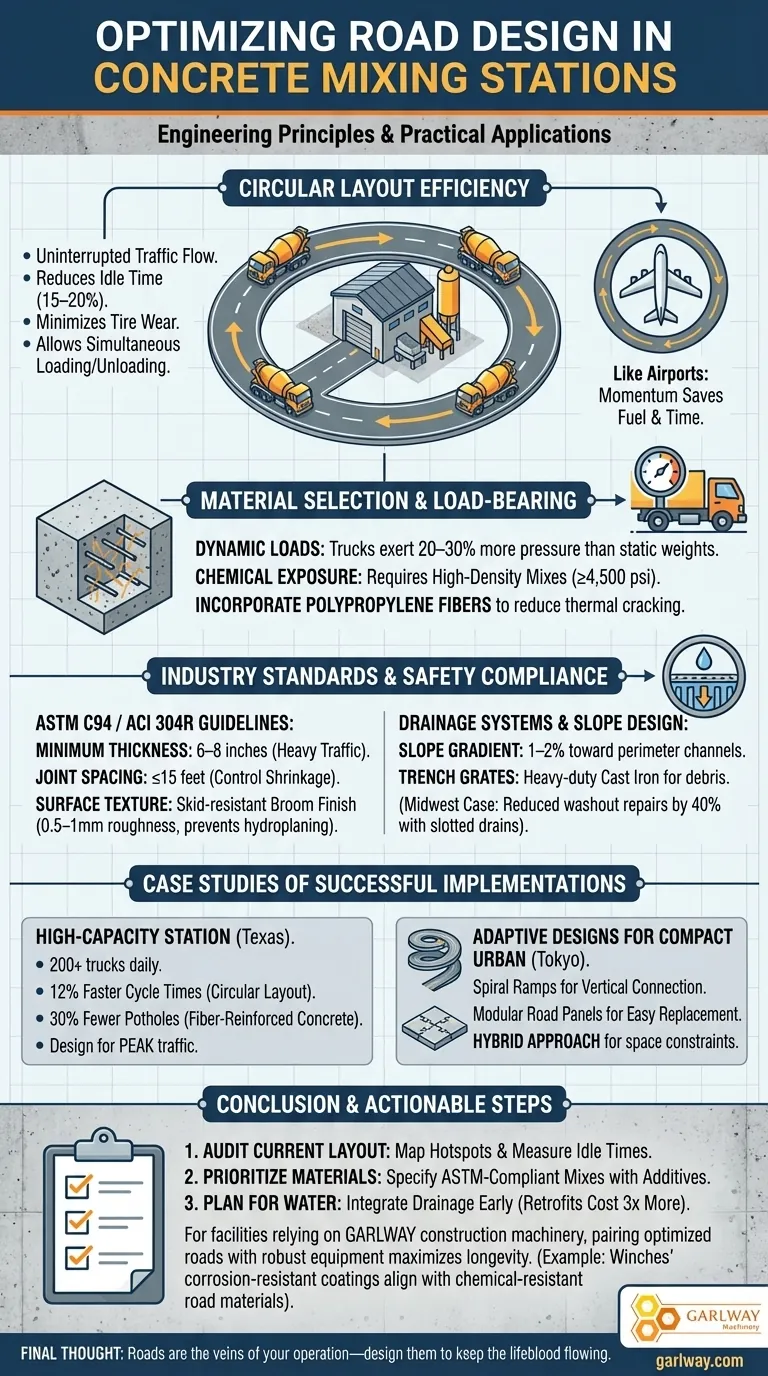
Visual Guide
Related Products
- HZS90 Large Multiquip Concrete Mixers for Construction
- HZS75 Concrete Batching Plant Cement Mixer Price Concrete Mixer Bunnings Mixing Plant
- Portable Concrete Mixer Machine Equipment for Mixing Concrete
- Commercial Electric Concrete Mixer Machine HZS 50 Small Batch Plant for Sale
- HZS35 Small Cement Concrete Mixing Batch Plant
Related Articles
- More Than a Mixer: The Physics and Psychology of Concrete Agitation
- How Improper Water Addition Compromises Concrete Strength and How to Fix It
- How to Minimize Downtime and Maximize Efficiency in Commercial Concrete Mixing
- How to Optimize Feeding-Mixing-Discharging Coordination in Concrete Production
- How to Conduct OSHA-Compliant Concrete Mixer Inspections: A Safety-First Checklist





