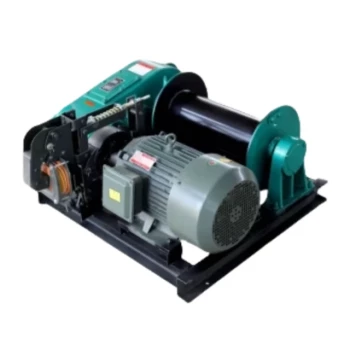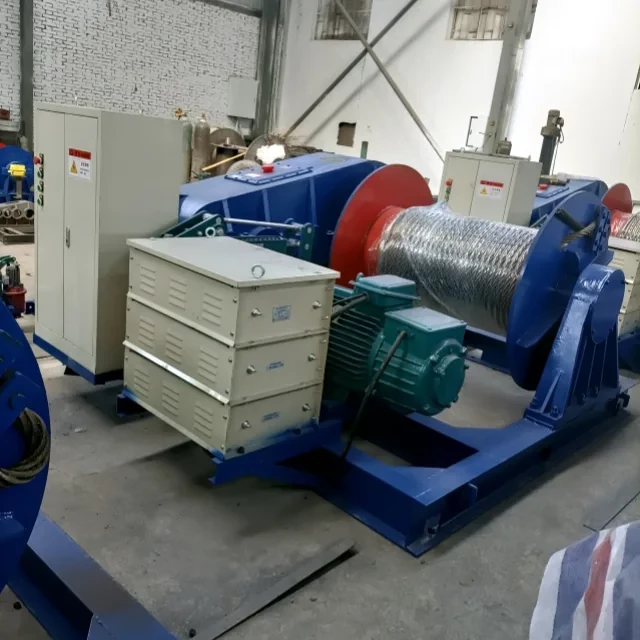
Lifting operations demand precision, and winch installations are no exception. Whether you're handling construction loads or industrial materials, ensuring your winch system meets safety standards isn't just about compliance—it's about preventing catastrophic failures. This guide dives into the critical aspects of winch safety, from anchor system design to pulley configuration, backed by OSHA/ISO standards and real-world lessons.
Safe Winch Installation Fundamentals
Anchor System Design and Regulatory Compliance
A winch is only as strong as what holds it down. Improper anchoring accounts for nearly 40% of winch-related failures, often due to inadequate load calculations or subpar materials.
Key Steps for Compliance:
- Load Capacity Matching: Ensure anchor points exceed the winch’s maximum load by at least 1.5x.
- Material Integrity: Use high-grade steel anchors resistant to shear forces.
- Regulatory Alignment: OSHA 1926.1413 mandates annual inspections for anchor systems in construction.
Ever wondered why some anchors fail under dynamic loads? It’s often a mix of corrosion and fatigue—issues avoided through galvanized coatings and routine stress testing.
Precision Alignment of Wire Rope and Drum
Misalignment accelerates wear and increases the risk of wire rope slippage. Even a 2-degree deviation angle can cause uneven spooling, leading to rope fraying or sudden detachment.
Mitigation Tactics:
- Laser Alignment Tools: Verify drum-and-rope parallelism within 0.5-degree tolerance.
- Regular Spooling Checks: Inspect for "birdcaging" (twisted strands) before each operation.
- Lubrication Protocols: Reduce friction with ISO-compliant wire rope grease.
Advanced Guide Pulley Configuration
Calculating Deviation Angles for Reduced Wear
Pulleys redirect force, but incorrect angles strain the system. Exceeding a 2-degree deviation angle (per ISO 4308) can:
- Increase Rope Wear: Abrasion spikes by 30% at 3-degree deviations.
- Compromise Braking: As referenced in industry studies, improper angles may hinder brake engagement.
Formula for Safety:
Related Products
- Warn Winch Windlass Boat Trailer Winch
- Electric and Hydraulic Winch for Heavy Duty Applications
- Small Electric Winch 120V and 240V for Compact Applications
- 12000 lb Electric Boat Trailer Winch with Windlass Anchor Warn
- Quick Windlass Portable Winch for Truck and Boat Best Boat Winch
Related Articles
- Beyond the Bumper: The Critical System Choice in Powering Your Trailer Winch
- Force vs. Mass: The Critical Difference in Sizing a Boat Winch
- Lines of Force: The Unseen Geometry of a Boat Winch
- More Than a Number: The Engineering Psychology of Choosing a Boat Winch
- How to Choose and Optimize Winch Speed for Maximum Efficiency