Selecting the right winch isn’t just about power—it’s about matching capabilities to real-world demands. Whether you’re lifting heavy loads on an offshore rig or executing precision pulls in construction, the wrong choice can lead to inefficiency or even safety hazards. This guide breaks down winch mechanisms, application-specific solutions, and key decision metrics to help you optimize performance and safety.
Winch Mechanisms Demystified
Core Components and Working Principles
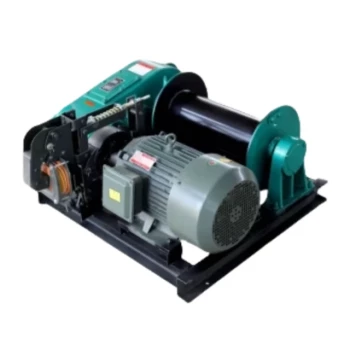
At its core, a winch consists of a drum, motor (or manual crank), gear system, and braking mechanism. The drum spools the cable or rope, while the motor provides the torque needed to move loads. Gear ratios determine speed vs. power tradeoffs—higher ratios offer more lifting force but slower operation.
Key Takeaway:
- Drum design impacts cable longevity (smooth surfaces reduce wear).
- Gear systems dictate whether the winch prioritizes speed or brute strength.
Power Source Variations: Electric vs. Hydraulic vs. Manual
-
Electric Winches
- Pros: Easier to install, lower maintenance, and ideal for intermittent use.
- Cons: Less consistent under heavy, continuous loads; sensitive to extreme temperatures.
- Best for: Construction sites, vehicle recovery, and indoor applications.
-
Hydraulic Winches
- Pros: Deliver steady power, excel in corrosive/moist environments (e.g., offshore platforms).
- Cons: Require existing hydraulic systems; higher upfront complexity.
- Best for: Marine, mining, and heavy industrial settings.
-
Manual Winches
- Pros: No power dependency; portable for remote jobs.
- Cons: Labor-intensive; limited to lighter loads.
- Best for: Small-scale repairs or backup scenarios.
Did you know? Hydraulic winches dominate offshore work because seawater and temperature swings don’t compromise their performance.
Application-Specific Winch Solutions
Heavy-Duty Industrial Lifting Requirements
Industries like mining and oil rigs demand winches that handle multi-ton loads daily. Key features:
- Load Capacity: Calculate maximum working load (MWL) by adding a 25–50% safety buffer to expected weights.
- Durability: Look for corrosion-resistant materials (e.g., stainless steel) and sealed motors.
Example: A Garlway winch with a 20-ton MWL and IP67 waterproofing suits offshore crane operations.
Precision-Critical Pulling Scenarios
In tasks like pipeline alignment or theater rigging, control matters more than raw power:
- Variable Speed Controls: Enable millimeter-perfect adjustments.
- Remote Operation: Allows safer, more precise positioning.
Mobile vs. Fixed Installation Tradeoffs
- Mobile Winches: Mounted on vehicles or trailers; prioritize compactness and quick deployment.
- Fixed Winches: Permanently installed (e.g., factory ceilings); emphasize durability and integration with existing systems.
Pro Tip: Mobile units benefit from synthetic ropes—lighter and safer if cables snap.
Decision Metrics for Winch Selection
Load Capacity Calculation Methods
- Determine the worst-case load (including friction, angles, and dynamic forces).
- Multiply by a safety factor (typically 1.25–2.0 for industrial use).
Formula:
Required Winch Capacity = (Load Weight × Angle Factor) × Safety Margin
(Angle Factor: 1.0 for vertical lifts; up to 2.0 for diagonal pulls.)
Environmental Adaptation Features
- Temperature Range: Hydraulic winches outperform in -40°F to 120°F extremes.
- Moisture Resistance: Look for IP ratings (e.g., IP66 for dust/water resistance).
- Explosion-Proofing: Necessary for chemical plants or grain silos.
Safety and Maintenance Considerations
- 100% Load Holding: Prevents dangerous rollback during pauses.
- Inspection Intervals: Lubricate gears every 500 hours; check cables for fraying monthly.
- Safety Brakes: Non-negotiable for overhead lifts to avoid catastrophic failures.
Remember: A Garlway winch with automatic braking ensures compliance with OSHA standards.
Final Recommendations
- Match Power to Frequency: Electric for occasional use; hydraulic for continuous heavy loads.
- Prioritize Control in Precision Tasks: Remote-operated winches reduce human error.
- Plan for the Environment: Saltwater? Choose hydraulic. Remote site? Keep a manual backup.
Winches are the unsung heroes of industries—when chosen wisely, they become force multipliers for productivity and safety.
Next Steps:
- Audit your current load requirements and environmental challenges.
- Consult with Garlway experts to tailor a solution to your operational demands.
Related Products
- Warn Winch Windlass Boat Trailer Winch
- Electric and Hydraulic Winch for Heavy Duty Applications
- Small Electric Winch 120V and 240V for Compact Applications
- 12000 lb Electric Boat Trailer Winch with Windlass Anchor Warn
- Quick Windlass Portable Winch for Truck and Boat Best Boat Winch
Related Articles
- Beyond the Bumper: The Critical System Choice in Powering Your Trailer Winch
- Force vs. Mass: The Critical Difference in Sizing a Boat Winch
- Lines of Force: The Unseen Geometry of a Boat Winch
- More Than a Number: The Engineering Psychology of Choosing a Boat Winch
- How to Choose and Optimize Winch Speed for Maximum Efficiency