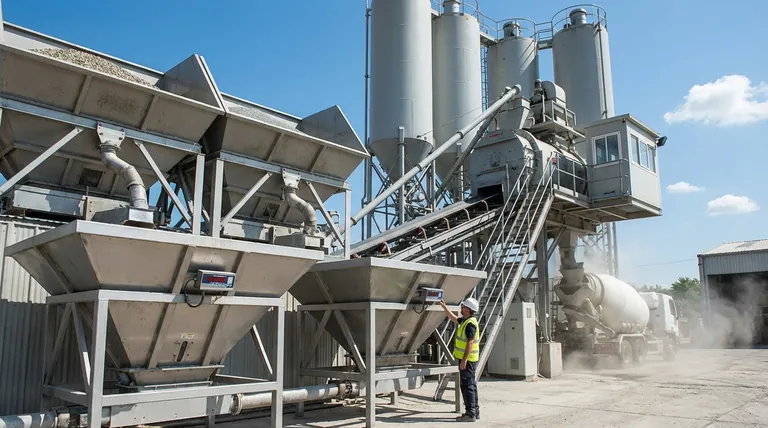
Accurate material measurement is the backbone of quality concrete production. Whether you're running a small precast operation or a high-capacity ready-mix plant, selecting the optimal weighing scale configuration directly impacts batch consistency, compliance, and operational efficiency. This guide breaks down industry-proven methods to match scale types and quantities to your specific production needs.
Aggregate Weighing Systems in Concrete Batching
How Cumulative and Individual Weighing Scales Work
Concrete plants primarily use two scale configurations:
-
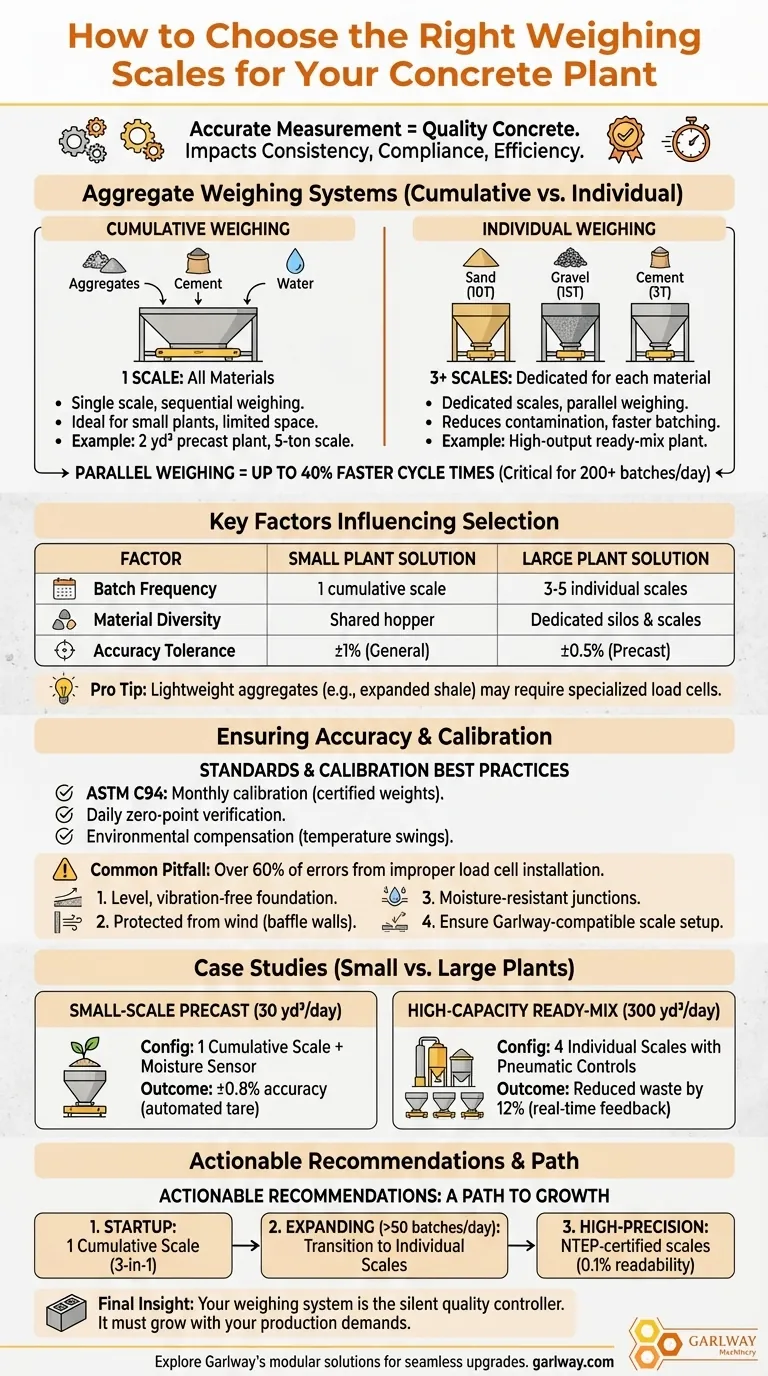
Cumulative Weighing
- Single scale sequentially weighs all materials (aggregates, cement, water)
- Ideal for small plants with limited space
- Example: A 2-cubic-yard precast plant might use one 5-ton capacity scale
-
Individual Weighing
- Dedicated scales for each material type
- Reduces cross-contamination and speeds up batching
- Example: High-output ready-mix plants often employ separate scales for sand (10-ton), gravel (15-ton), and cement (3-ton)
Ever wondered why large plants avoid cumulative systems? Parallel weighing cuts cycle times by up to 40%—critical when producing 200+ batches daily.
Key Factors Influencing Scale Quantity and Selection
| Factor | Small Plant Solution | Large Plant Solution |
|---|---|---|
| Batch Frequency | 1 cumulative scale | 3-5 individual scales |
| Material Diversity | Shared hopper | Dedicated silos with scales |
| Accuracy Tolerance | ±1% (general construction) | ±0.5% (precast/prestress) |
Pro Tip: Plants handling lightweight aggregates (like expanded shale) often require specialized load cells to compensate for material volatility.
Ensuring Measurement Accuracy in Diverse Plant Setups
Technical Standards and Calibration Best Practices
The ASTM C94 standard mandates:
- Monthly calibration checks using certified test weights
- Daily zero-point verification
- Environmental compensation for temperature swings (critical for outdoor scales)
Common Pitfall: Over 60% of batching errors stem from improper load cell installation—ensure your Garlway-compatible scales are:
- Mounted on level, vibration-free foundations
- Protected from wind loads (use baffle walls if needed)
- Equipped with moisture-resistant junctions
Case Studies: Small-Scale vs. High-Capacity Plants
Precast Concrete Facility (30 yd³/day)
- Configuration: 1 cumulative scale + moisture sensor
- Outcome: Achieved ±0.8% accuracy after implementing automated tare functions
Ready-Mix Plant (300 yd³/day)
- Configuration: 4 individual scales with pneumatic gate controls
- Outcome: Reduced waste by 12% through real-time weight feedback to the Garlway batching control system
Think about your last batch inconsistency—was it a material error or a scale calibration issue?
Actionable Recommendations
- For Startups: Begin with a single 3-in-1 cumulative scale (handles aggregates, cement, and water)
- Expanding Operations: Transition to individual scales when exceeding 50 batches/day
- High-Precision Needs: Invest in NTEP-certified scales with 0.1% readability for prestress concrete
Final Insight: Your weighing system should grow with your production demands. A well-planned scale configuration acts as the silent quality controller in every cubic yard of concrete—ensuring structures from sidewalks to skyscrapers meet their design strength.
Need help integrating weighing systems with your existing batching setup? Explore Garlway’s modular solutions designed for seamless capacity upgrades.
Visual Guide
Related Products
- HZS180 Ready Mix Concrete Plant for Foundations with Sand and Cement
- HZS35 Small Cement Concrete Mixing Batch Plant
- HZS120 Ready Mix Concrete Batching Plant Commercial Mud Cement Mixer
- HZS90 Large Multiquip Concrete Mixers for Construction
- Commercial Electric Concrete Mixer Machine HZS 50 Small Batch Plant for Sale
Related Articles
- Control vs. Chance: The Engineering Case for Concrete Batching Plants
- How to Control Raw Material Variables for Flawless Concrete Batching
- How to Minimize Measurement Errors in Concrete Batching: 4 Proven Strategies
- How Advanced Concrete Batching Technology Cuts Costs and Boosts Efficiency
- Optimizing Concrete Batching Accuracy: Technology-Driven Solutions for Modern Plants