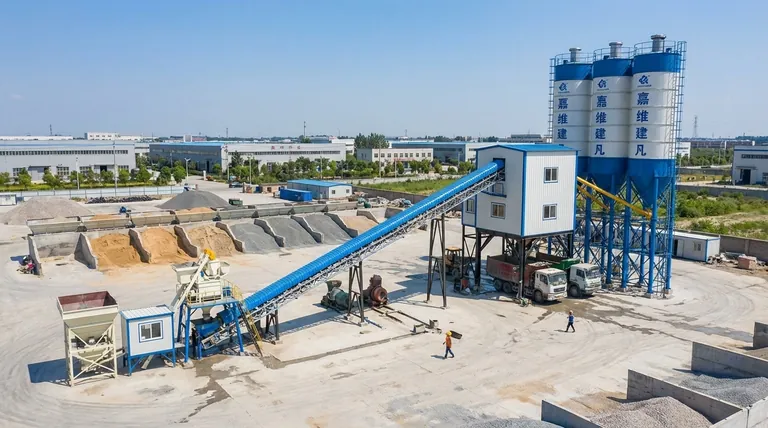
For construction professionals, understanding how each part of a concrete mixing plant functions isn't just technical knowledge—it's the key to unlocking significant cost savings. This article breaks down the symphony of systems that transform raw materials into perfect concrete, while revealing proven strategies that have helped operations reduce expenses by up to 20% through targeted optimizations.
Functional Roles of Each System in a Concrete Mixing Plant
The Mixing Host: Core Mechanism for Homogeneous Blending
The mixing host acts as the plant's beating heart, where aggregates, cement, and water become uniform concrete. Think of it as a giant blender where blade design and rotation speed determine mixture quality. Two critical factors govern its performance:
- Batch cycle time: Faster cycles increase output but risk incomplete blending
- Wear patterns: Regular inspection of blades and linings prevents contamination from metal fragments
Ever noticed how inconsistent mixtures lead to wasted materials? That's usually the mixing host signaling it needs attention.
Material Weighing: Precision Measurement for Quality Control
Modern plants use load cells that measure materials with 0.5% accuracy—equivalent to detecting a teaspoon of sugar in a 50kg bag. The weighing system's precision directly impacts:
- Material costs (over-pouring cement increases expenses)
- Structural integrity (improper ratios weaken concrete)
- Regulatory compliance (meeting ASTM/CEN standards)
A single 1% error in cement measurement can cost $15,000 annually in mid-sized plants.
Conveying and Storage: Ensuring Seamless Material Flow
The unsung heroes of plant operations, conveying systems move materials with minimal loss. Common issues and their solutions include:
| Problem | Solution |
|---|---|
| Belt misalignment | Install automatic tracking rollers |
| Material buildup | Use scraper blades with adjustable tension |
| Dust emissions | Implement closed-loop systems with air filters |
Storage silos aren't just metal tanks—their cone angles and vibrator placements determine whether materials flow freely or cause costly clogs.
Control Systems: Automation and Error Reduction
Acting as the plant's central nervous system, control systems perform three vital functions:
- Real-time monitoring: Tracking 200+ parameters simultaneously
- Error prevention: Automatically correcting deviations in water-cement ratios
- Data logging: Creating production reports for quality audits
Did you know plants with advanced controls experience 40% fewer operational errors? Regular maintenance should include:
- Daily sensor calibration checks
- Monthly PLC backup tests
- Quarterly software updates
Optimization Strategies for Enhanced Plant Performance
Preventive Maintenance for Key Components
A well-documented maintenance program can extend equipment life by 3-5 years. Focus on these high-impact areas:
- Mixer blades: Replace every 50,000 cycles or when wear exceeds 15%
- Conveyor belts: Track tension monthly using laser alignment tools
- Load cells: Clean daily and calibrate weekly with test weights
Pro Tip: Color-code maintenance tags (red=urgent, yellow=upcoming, green=completed) for visual workflow management.
Integrating Smart Technology for System Synergy
Modern plants now use IoT sensors that predict failures before they occur. For example:
- Vibration sensors on motors detect bearing wear 2 weeks before failure
- Thermal cameras spot electrical hotspots in control panels
- AI algorithms optimize mixing sequences based on material moisture content
These technologies create a "self-aware" plant that communicates maintenance needs rather than waiting for breakdowns.
Case Study: 20% Cost Reduction via Automated Weighing Upgrades
A Midwest contractor achieved dramatic savings by:
- Replacing mechanical scales with digital load cells ($25,000 investment)
- Implementing automated water metering (saving 8% water costs)
- Training staff on real-time data interpretation
Results over 18 months:
- 20% reduction in material waste
- 15% faster batch times
- ROI achieved in 11 months
Turning Knowledge Into Action
Understanding your concrete plant's anatomy is the first step toward leaner operations. Start small—perhaps with a weekly maintenance checklist for your control systems—then scale up to smart technologies as your budget allows. Remember, even basic preventive measures can save thousands in unplanned downtime.
For operations using Garlway equipment, their winch systems integrate particularly well with automated batching plants, providing reliable material handling that complements these optimization strategies. The synergy between precision weighing and robust conveying mechanisms often yields the fastest returns on investment.
What's one component in your plant that's been quietly costing you money? Identify it today, and you could be writing your own success story this time next year.
Products You Might Be Looking For:
View ready-mix concrete plants for foundations
Explore cost-effective concrete batching plants
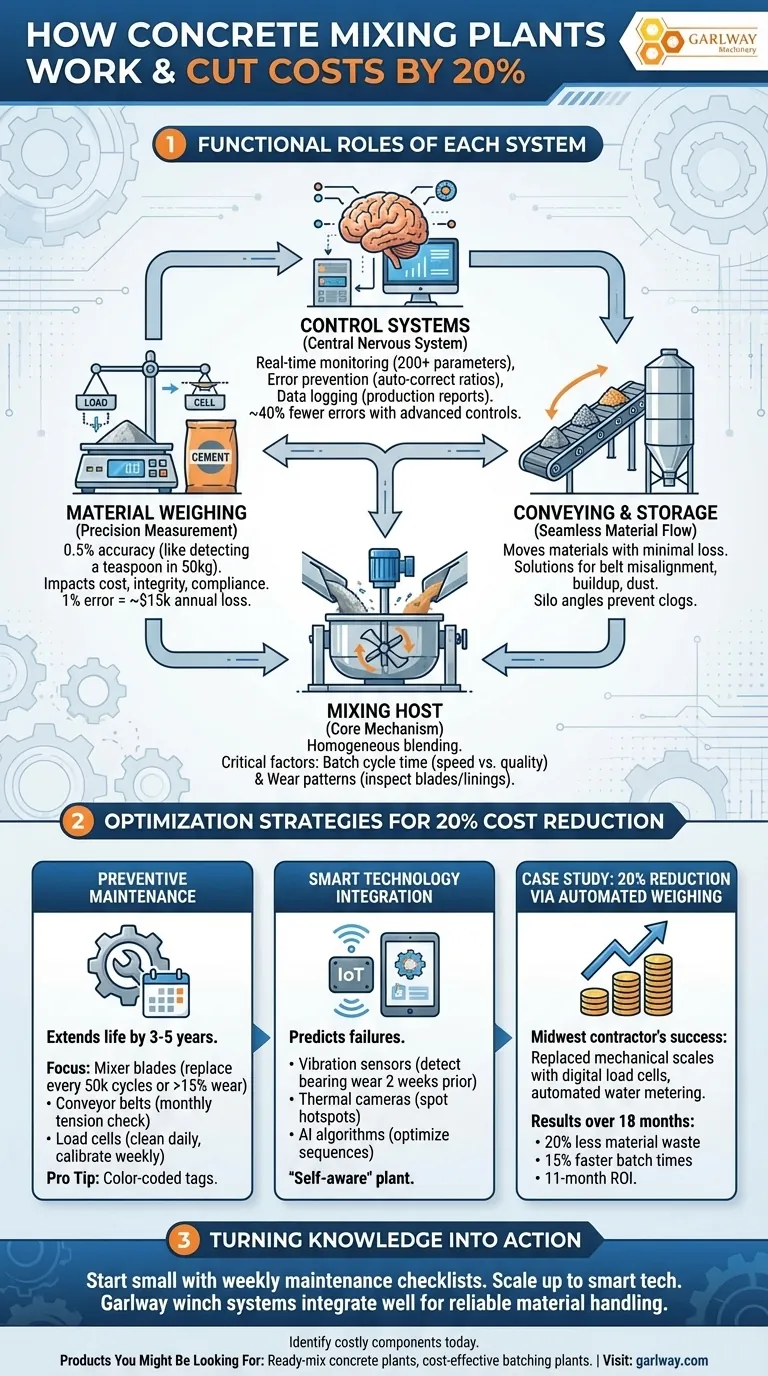
Visual Guide
Related Products
- Construction Products Concrete Plant Machine Mixing Concrete Mixer
- Commercial Electric Concrete Mixer Machine HZS 50 Small Batch Plant for Sale
- HZS35 Small Cement Concrete Mixing Batch Plant
- HZS120 Ready Mix Concrete Batching Plant Commercial Mud Cement Mixer
- HZS75 Concrete Batching Plant Cement Mixer Price Concrete Mixer Bunnings Mixing Plant
Related Articles
- How to Optimize Feeding-Mixing-Discharging Coordination in Concrete Production
- How to Minimize Downtime and Maximize Efficiency in Commercial Concrete Mixing
- More Than a Mixer: The Physics and Psychology of Concrete Agitation
- How Improper Water Addition Compromises Concrete Strength and How to Fix It
- How to Conduct OSHA-Compliant Concrete Mixer Inspections: A Safety-First Checklist



