
In material handling systems, the 120-degree outlet design is intentionally engineered to provide an optimal balance between gravitational force and flow control. This specific obtuse angle ensures materials exit smoothly and consistently, directly preventing the blockages, splashing, and waste commonly associated with sharper or steeper angles.
The 120-degree outlet is not an arbitrary choice; it is a fundamental design principle that solves the core problem of inefficient material transfer by creating a path that is steep enough to ensure flow but gentle enough to maintain control.
The Physics of Controlled Material Flow
Understanding why the 120-degree angle is effective requires looking at the forces at play when moving materials like powders, grains, or even liquids from one point to another.
Overcoming the Angle of Repose
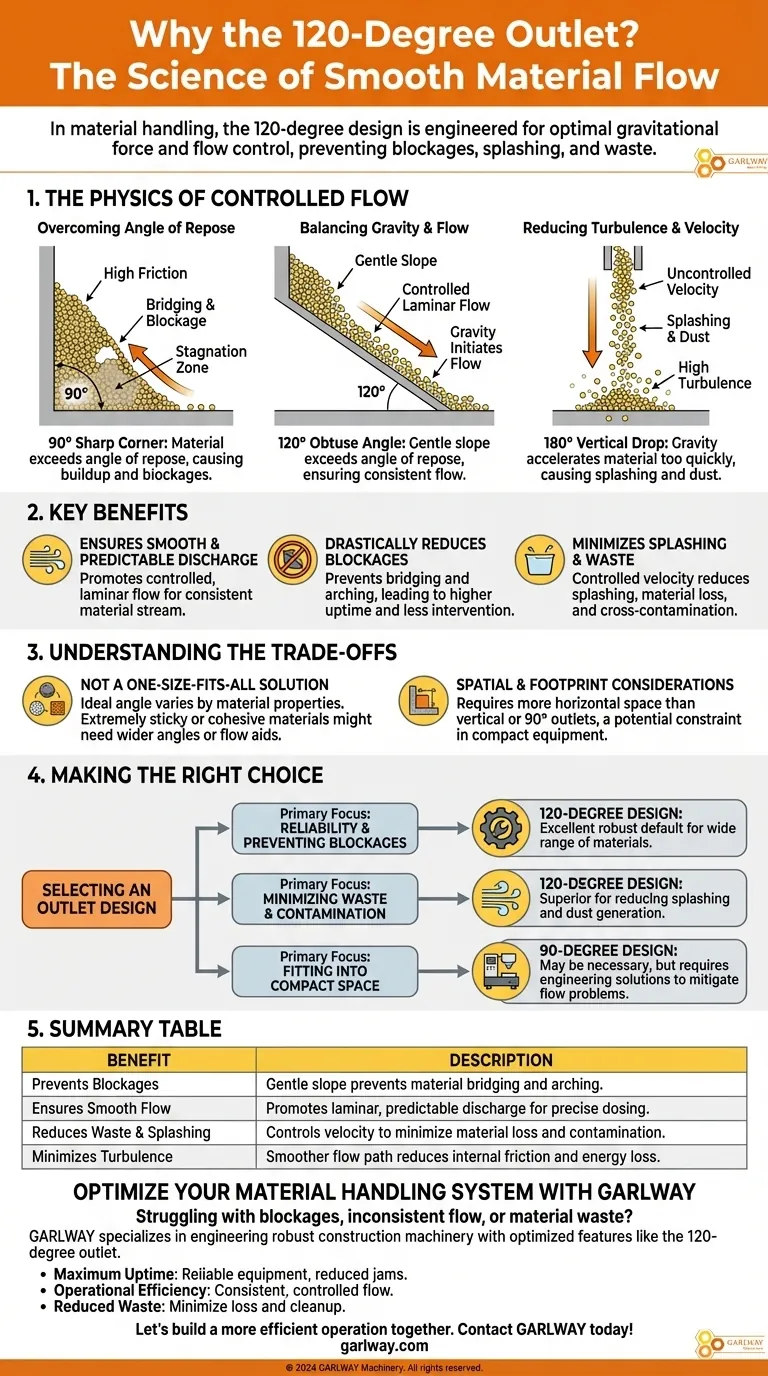
Most granular materials have a natural "angle of repose"—the steepest angle at which they can be piled without slumping. A 90-degree outlet creates a sharp corner where material can easily build up and bridge, exceeding this angle and causing a blockage.
The 120-degree obtuse angle provides a gentle slope that is almost always greater than the material's angle of repose, ensuring gravity can consistently initiate and maintain flow.
Balancing Gravity and Flow Velocity
A straight vertical drop (180 degrees) allows gravity to accelerate material too quickly, leading to splashing, dust clouds, and potential damage to the product or container.
Conversely, a 90-degree angle can create a "dead zone" in the corner where material flow stagnates. The 120-degree design provides enough of a downward vector for reliable flow without the uncontrolled velocity of a vertical chute.
Reducing Turbulence and Friction
Sharp angles create high-friction points and turbulent flow patterns. This turbulence can cause particles to collide, segregate, or get stuck.
A wider, 120-degree transition offers a smoother, more laminar flow path. This minimizes internal friction and resistance, allowing material to discharge cleanly with less energy loss and a lower chance of getting hung up.
Key Benefits of the 120-Degree Design
The underlying physics directly translates into tangible operational advantages that enhance system reliability and efficiency.
Ensures Smooth and Predictable Discharge
By promoting a controlled, laminar flow, the 120-degree outlet delivers a consistent and predictable stream of material. This is critical for applications requiring precise dosing or packaging.
Drastically Reduces Blockages
This is the most significant benefit. The design actively prevents the bridging and arching that plague systems with 90-degree outlets, especially when handling cohesive powders or irregularly shaped solids. This leads to higher uptime and less manual intervention.
Minimizes Splashing and Waste
For liquids and fine powders, the controlled discharge velocity prevents splashing on impact. This not only reduces material waste but also minimizes cleanup and potential cross-contamination in sensitive environments.
Understanding the Trade-offs
While highly effective, the 120-degree design is not a universal panacea. Objectivity requires acknowledging its limitations.
Not a One-Size-Fits-All Solution
The ideal angle can vary based on material properties. Extremely sticky or cohesive materials might require an even wider angle or additional flow aids like vibrators. Very free-flowing liquids might not see a significant benefit over a steeper design.
Spatial and Footprint Considerations
An outlet with a 120-degree slope requires more horizontal space than a simple vertical or 90-degree outlet. In extremely compact equipment, this larger footprint can be a significant design constraint.
Making the Right Choice for Your Application
Selecting an outlet design should be based on your material's properties and your primary operational goals.
- If your primary focus is reliability and preventing blockages: The 120-degree design is an excellent and robust default choice for a wide range of materials.
- If your primary focus is minimizing waste and contamination: The controlled flow of the 120-degree outlet is superior for reducing splashing and dust generation.
- If your primary focus is fitting into a compact space: A 90-degree outlet may be necessary, but be prepared to engineer solutions to mitigate its inherent flow problems.
Ultimately, choosing the correct outlet geometry is a critical engineering decision that directly impacts your system's efficiency and reliability.
Summary Table:
| Benefit | Description |
|---|---|
| Prevents Blockages | Gentle slope prevents material bridging and arching at the outlet. |
| Ensures Smooth Flow | Promotes laminar, predictable discharge for precise dosing. |
| Reduces Waste & Splashing | Controls velocity to minimize material loss and contamination. |
| Minimizes Turbulence | Smoother flow path reduces internal friction and energy loss. |
Optimize your material handling system with GARLWAY.
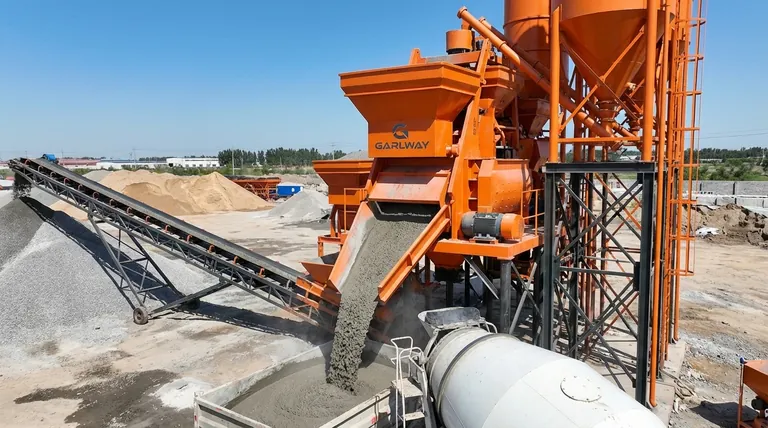
Struggling with blockages, inconsistent flow, or material waste in your operations? The right equipment design is critical. GARLWAY specializes in engineering robust construction machinery, including concrete batching plants and mixers, with optimized features like the 120-degree outlet to solve these exact problems.
We help construction companies and contractors globally achieve:
- Maximum Uptime: Reliable equipment designed to prevent jams and reduce maintenance.
- Operational Efficiency: Consistent, controlled material flow for precise batching and mixing.
- Reduced Waste: Minimize material loss and cleanup time, saving you money.
Let's build a more efficient operation together. Contact GARLWAY today to discuss your specific needs!
Visual Guide
Related Products
- HZS120 Ready Mix Concrete Batching Plant Commercial Mud Cement Mixer
- Electric 120V Boat Winch by Badlands
People Also Ask
- What is a ready mix concrete batching plant? The Engine of Modern Construction
- What is the name of the machine used in ready mix? Unpacking the Complete Concrete System
- What is the core component of a concrete batching plant? The Mixer Unit Defines Your Concrete Quality
- What are the types of concrete mixers used in batching plants? Choose the Right Mixer for Your Project
- What are the advantages and disadvantages of concrete batching plants? Maximize Quality & Efficiency

