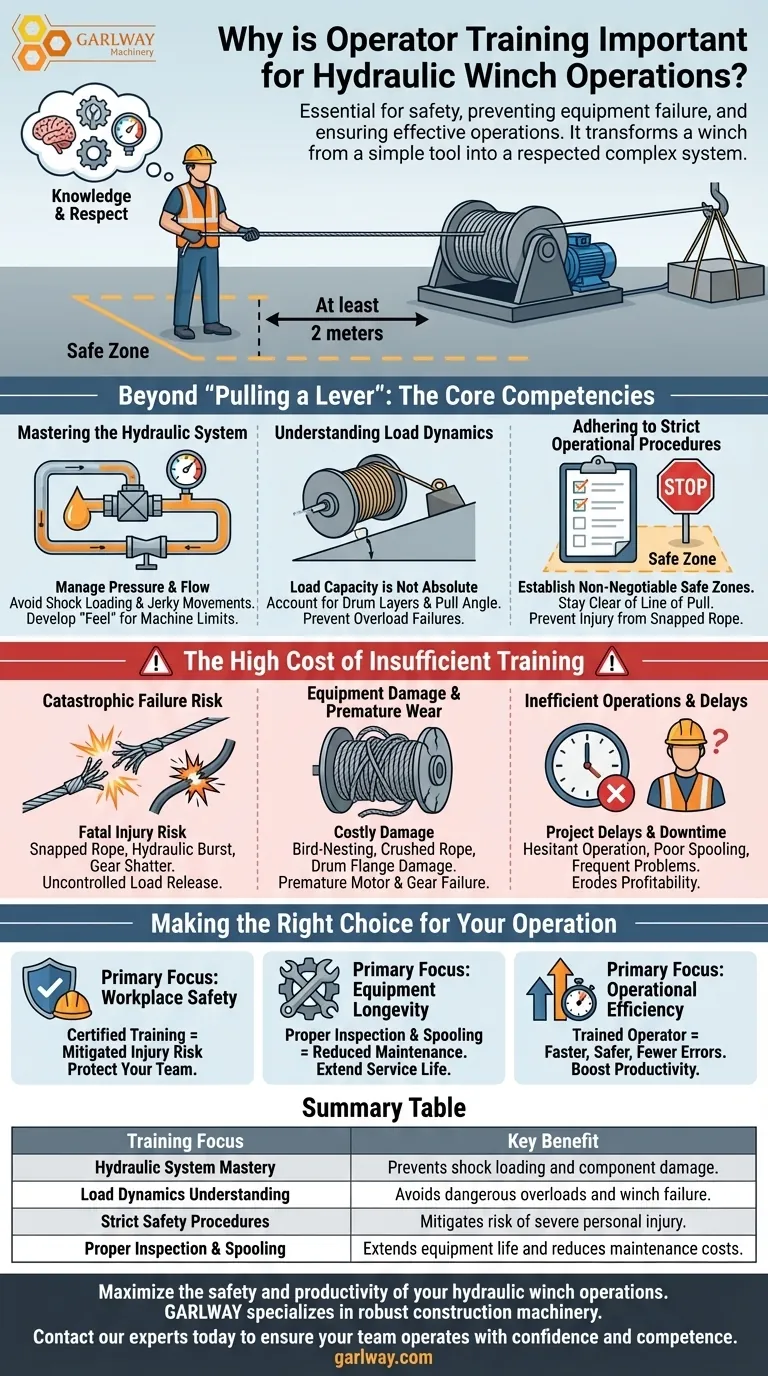
At its core, operator training is essential for hydraulic winches because it instills the critical knowledge of hydraulic systems, load capacities, and disciplined operational procedures. This combination is the absolute foundation for conducting winch operations safely and effectively, preventing catastrophic equipment failure and severe personal injury.
An untrained operator sees a hydraulic winch as a simple tool for pulling. A trained operator understands it as a complex system where forces must be respected, procedures are non-negotiable, and a single mistake can have devastating consequences.
Beyond "Pulling a Lever": The Core Competencies
Effective winch operation is a technical skill, not an intuitive one. Proper training moves an operator from basic function to genuine proficiency.
Mastering the Hydraulic System
A hydraulic winch is not a simple on/off device. Its power and speed are governed by hydraulic pressure and flow.
A trained operator learns to manage these forces smoothly, avoiding jerky movements and shock loading, which can damage the rope and winch components. This develops a "feel" for the machine's limits.
Understanding Load Dynamics
A winch's stated load capacity is not an absolute guarantee. It is a figure calculated under ideal conditions.
Training covers how factors like the amount of rope on the drum (pulling power decreases with each layer) and the angle of the pull drastically alter the winch's effective capacity. Ignoring these variables is a primary cause of overload failures.
Adhering to Strict Operational Procedures
Rigid procedures are what separate professional operations from dangerous gambles. These are not optional guidelines.
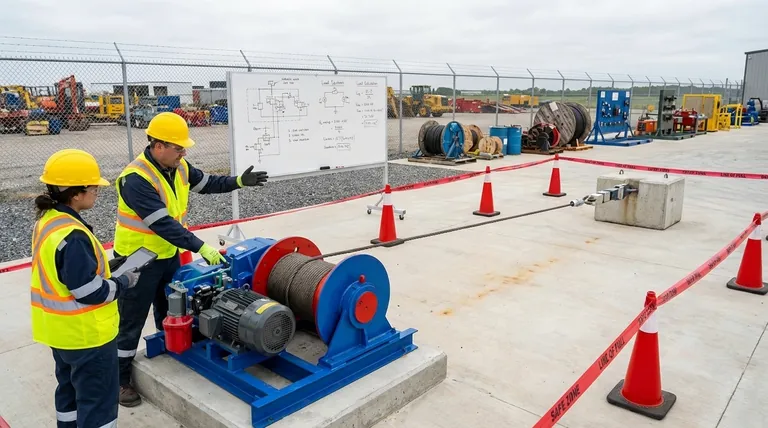
A critical, non-negotiable rule is establishing a safe zone. For example, the operator must always stand well clear of the line of pull—often at least two meters to the side. This ensures they are not in the path of a snapped rope or a shifting load, which can release tremendous and lethal energy.
The High Cost of Insufficient Training
Skipping or rushing operator training introduces unacceptable risks to personnel, equipment, and the entire project timeline.
Risk of Catastrophic Failure
The most severe consequence is the failure of a component under extreme tension. A snapped wire rope can whip back with enough force to cause fatal injury.
Overloading the winch can also cause hydraulic lines to burst or mechanical gears to shatter, leading to an uncontrolled release of the load.
Equipment Damage and Premature Wear
Improper use is a direct cause of costly damage. Allowing the rope to spool unevenly (bird-nesting) can crush the rope and damage the drum flanges.
Repeated shock loading puts immense stress on the winch's motor, gearing, and mounting points, leading to premature failure and expensive repairs.
Inefficient Operations and Delays
An untrained operator is often hesitant and slow. They are more likely to create problems, like a poorly wrapped drum, that require significant downtime to correct.
Proper training builds the confidence and competence needed to perform complex pulls smoothly and efficiently, keeping the project on schedule.
Making the Right Choice for Your Operation
Investing in training is not an expense; it is a fundamental requirement for responsible winch ownership and operation.
- If your primary focus is workplace safety: Certified, hands-on training is the only way to mitigate the significant risk of injury associated with high-tension pulling operations.
- If your primary focus is equipment longevity: Training on proper inspection, spooling, and load management will drastically reduce maintenance costs and extend the winch's service life.
- If your primary focus is operational efficiency: A professionally trained operator completes tasks faster, safer, and with fewer errors, preventing the costly downtime that erodes profitability.
Ultimately, investing in operator training is the single most effective way to ensure your hydraulic winch operates as a productive asset, not a potential liability.
Summary Table:
| Training Focus | Key Benefit |
|---|---|
| Hydraulic System Mastery | Prevents shock loading and component damage. |
| Load Dynamics Understanding | Avoids dangerous overloads and winch failure. |
| Strict Safety Procedures | Mitigates risk of severe personal injury. |
| Proper Inspection & Spooling | Extends equipment life and reduces maintenance costs. |
Maximize the safety and productivity of your hydraulic winch operations. GARLWAY specializes in providing robust construction machinery, including winches, for contractors and construction companies globally. Proper training ensures our equipment performs as a reliable asset, not a liability. Contact our experts today to discuss your needs and ensure your team operates with confidence and competence.
Visual Guide
Related Products
- Hydraulic Winding Engine Harbor Freight Winch
- Electric and Hydraulic Winch for Heavy Duty Applications
- Small Electric Winch 120V and 240V for Compact Applications
- Electric 120V Boat Winch by Badlands
- 12000 lb Electric Boat Trailer Winch with Windlass Anchor Warn
People Also Ask
- What role does hydraulic fluid play in hydraulic winches? It's the Lifeblood of Your Heavy-Duty Pulling Power
- What vehicles commonly use hydraulic winches? For Industrial Trucks Needing Unmatched Power
- What are the features of hydraulic winches? Unmatched Power and Continuous Duty for Heavy Loads
- What preventive measures can be taken to avoid oil leakage in hydraulic winches? Ensure Long-Term Reliability
- What does 'power out' mean in a hydraulic winch? Achieve Absolute Control When Lowering Heavy Loads