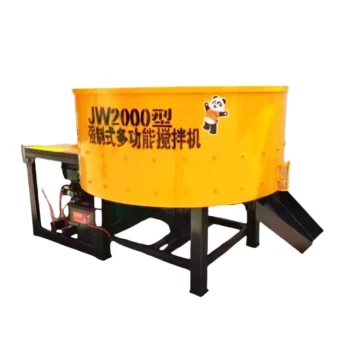
In short, a concrete reclaimer transforms waste into a valuable asset. It provides a direct economic return by recovering and reusing materials like sand, aggregate, and water, which dramatically cuts costs on new material purchases and waste disposal fees. Environmentally, this process significantly reduces landfill use and conserves the natural resources required for new concrete production.
The fundamental impact of a concrete reclaimer is its ability to shift a ready-mix or precast operation from a linear "use and dispose" model to a circular one, turning the financial liability of waste concrete into a measurable economic and environmental benefit.
The Economic Case for Reclaiming Concrete
Investing in a reclaimer is primarily a financial decision. The return on investment (ROI) is driven by recovering materials that would otherwise be discarded, leading to direct and compounding cost savings.
Direct Material Cost Savings
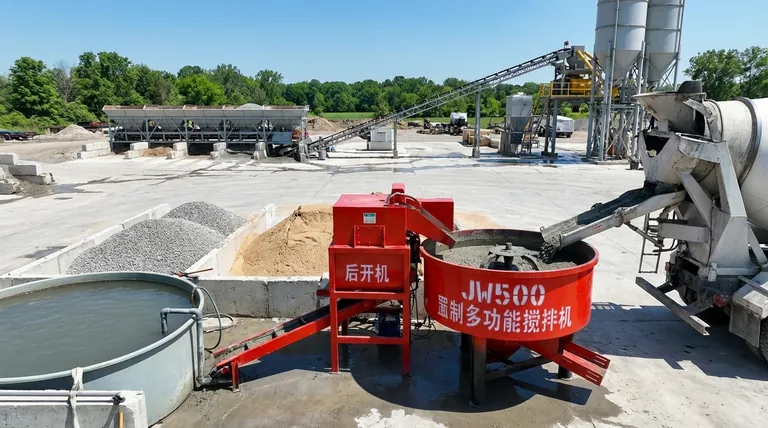
A reclaimer works by washing out returned or unused concrete from mixer trucks. It mechanically separates the sand and stone (aggregate) from the cement and water slurry.
These recovered aggregates are clean and can be immediately reused in new concrete batches, directly reducing the amount of virgin material you need to purchase.
Reduced Disposal and Landfill Fees
Disposing of wet concrete washout is expensive and logistically complex. It often involves dedicated washout pits and paying significant fees for hauling and landfilling.
By processing this material on-site, a reclaimer nearly eliminates these disposal costs, which can represent a substantial operational expense over the course of a year.
Water Conservation and Reuse
The process also separates out the cement-rich water, often called "greywater." This water can be collected and reused in the production of new concrete or for washing out trucks.
This cycle reduces the facility's reliance on fresh water, lowering utility bills and conserving a critical resource.
The Environmental Imperative
Beyond the clear financial incentives, concrete reclaimers are a cornerstone of modern, sustainable construction practices. They address several critical environmental pressures facing the industry.
Diverting Waste from Landfills
Unused concrete is a major contributor to construction and demolition waste streams. Every ton of material processed by a reclaimer is a ton of waste that is diverted from a landfill.
This extends the life of local landfills and reduces the overall environmental footprint of a construction project or a concrete production facility.
Conserving Virgin Resources
Sand and gravel are not infinite resources. Their extraction through mining and quarrying has its own significant environmental impact.
By reusing aggregates, the industry lessens the demand for newly mined materials, promoting resource conservation and responsible stewardship.
Protecting Waterways
Raw concrete washout is highly alkaline and can be toxic to aquatic life if it leaches into the ground or enters storm drains.
A reclaimer provides a closed-loop system for managing this washout, preventing soil contamination and protecting local water systems from harmful pH imbalances.
Understanding the Trade-offs and Considerations
While the benefits are significant, adopting this technology requires a clear-eyed assessment of its own requirements. Objectivity is key to making a sound decision.
Initial Capital Investment
Concrete reclaimers represent a significant upfront capital expenditure. The financial viability depends on calculating the payback period based on your volume of returned concrete and local disposal costs.
Operational and Maintenance Needs
These are industrial machines that require energy to run, a consistent water supply, and a preventative maintenance schedule to ensure reliability and efficiency. These operational costs must be factored into any ROI calculation.
Physical Footprint and Logistics
A reclaimer system requires dedicated space at your plant. You must consider site logistics, including how mixer trucks will access the unit and how recovered materials will be stored and reintegrated into your production flow.
Making the Right Choice for Your Operation
A concrete reclaimer is a strategic investment that aligns financial performance with environmental responsibility. Your primary goal will determine how you weigh its benefits.
- If your primary focus is maximizing profitability: The reclaimer offers a clear path to reducing daily operating costs through material reuse and eliminated disposal fees, providing a strong long-term ROI.
- If your primary focus is meeting sustainability targets: This technology is one of the most effective tools for reducing waste, conserving water, and minimizing the environmental impact of your operations.
- If your primary focus is operational efficiency: A reclaimer automates and standardizes the truck washout process, leading to faster turnaround times and a cleaner, more organized site.
Ultimately, integrating a concrete reclaimer is a decisive step toward a more efficient, profitable, and sustainable future for any concrete producer.
Summary Table:
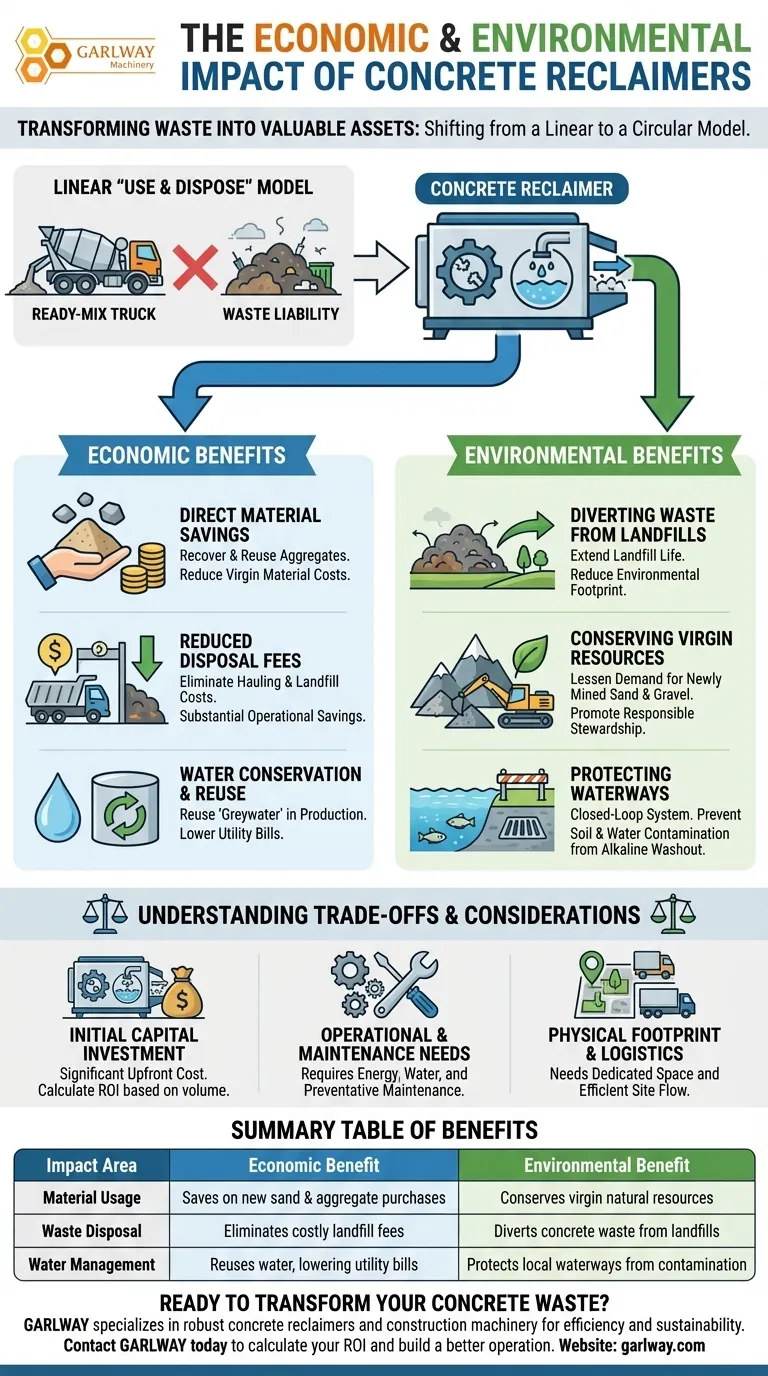
| Impact Area | Economic Benefit | Environmental Benefit |
|---|---|---|
| Material Usage | Saves on new sand & aggregate purchases | Conserves virgin natural resources |
| Waste Disposal | Eliminates costly landfill fees | Diverts concrete waste from landfills |
| Water Management | Reuses water, lowering utility bills | Protects local waterways from contamination |
Ready to transform your concrete waste into profit and sustainability?
GARLWAY specializes in robust construction machinery, including concrete reclaimers, winches, mixers, and batching plants. Our solutions are designed for construction companies and contractors seeking to maximize efficiency and minimize environmental impact.
Contact GARLWAY today to calculate your potential ROI and build a more sustainable, cost-effective operation.
Visual Guide
Related Products
- Portable Cement Mixer with Lift Concrete Machine
- Portable Electric Small Cement Mixer Concrete Machine
- Portable Concrete Mixer Machine Equipment for Mixing Concrete
- Commercial Electric Concrete Mixer Machine HZS 50 Small Batch Plant for Sale
- Construction Products Concrete Plant Machine Mixing Concrete Mixer
People Also Ask
- What are the size and portability options for portable cement mixers? Find Your Perfect Match for Any Job
- Why is it necessary to use a portable concrete mixer? Gain Total Control & Efficiency
- How much concrete can you pour with a portable mixer? Find the Perfect Fit for Your Project
- What is a portable cement mixer? Achieve Consistent, On-Demand Concrete Mixing
- What are the power sources for portable cement mixers? Choose the Right Power for Your Job Site