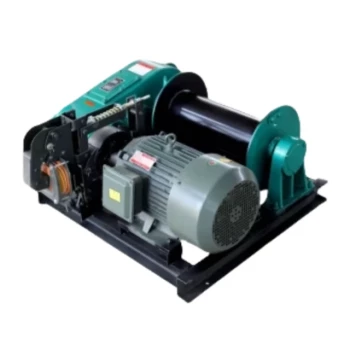
From an environmental standpoint, electric winches hold a significant advantage over their hydraulic and engine-driven counterparts primarily because of what they lack. They operate without hydraulic fluids, eliminating the risk of toxic spills; they produce zero direct emissions at the point of use; and they run with far less noise, minimizing disturbance to the surrounding environment.
The core environmental benefit of an electric winch is its inherent cleanliness. By design, it eliminates the two primary sources of worksite pollution from traditional winches: the potential for toxic hydraulic fluid leaks and the certainty of exhaust emissions from a combustion engine.
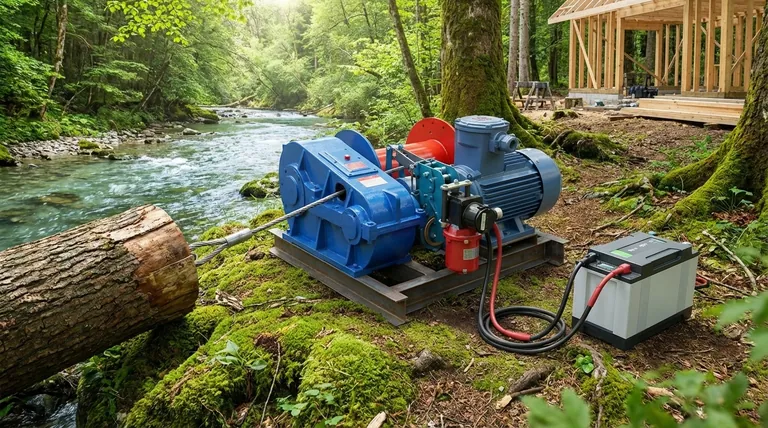
The Three Pillars of Eco-Friendliness
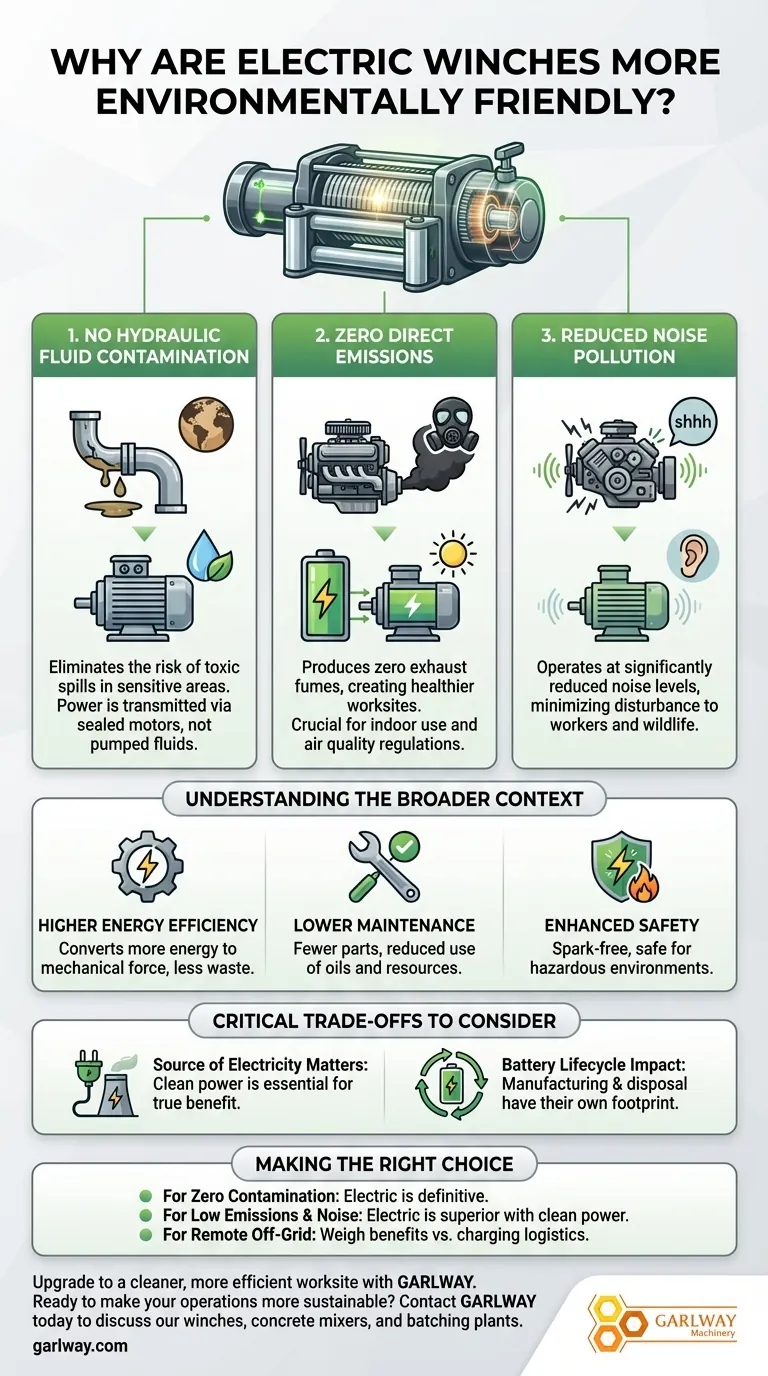
An electric winch's positive environmental impact can be broken down into three fundamental advantages over conventional alternatives.
1. Elimination of Hydraulic Fluid Contamination
Hydraulic winches rely on high-pressure fluids to operate. Any leak from a hose or fitting releases this oil directly into the environment.
This is a significant risk, especially in marine applications or ecologically sensitive areas, where a single leak can contaminate soil and water.
Electric winches completely remove this risk. Their power is transmitted electrically through sealed copper motors, not through pumped fluids.
2. Zero Direct Emissions
Many heavy-duty winches are powered by internal combustion engines. Like any engine, they produce exhaust fumes containing pollutants.
Electric winches, by contrast, produce zero direct emissions. This creates a healthier worksite for operators and prevents air pollutants from being released into the atmosphere at the job site.
This feature is critical for indoor use or in areas with strict air quality regulations.
3. Reduced Noise Pollution
The loud operation of engines and hydraulic pumps is a major source of noise pollution.
This noise can disturb local communities and, particularly in marine or wilderness settings, negatively impact wildlife behavior.
Electric motors operate at substantially reduced noise levels, creating a quieter, less disruptive, and less stressful environment.
Understanding the Broader Context
Beyond the main three points, other operational characteristics contribute to the electric winch's standing as a more sustainable choice.
Higher Energy Efficiency
Electric motors are highly efficient at converting electrical energy into mechanical force. This means less energy is wasted as heat compared to combustion engines.
This operational efficiency contributes to lower overall energy consumption for the same amount of work performed.
Lower Maintenance and Resource Use
With fewer moving parts than their hydraulic or engine-driven counterparts, electric winches generally require less maintenance.
This reduces the long-term need for consumable resources like lubricating oils, filters, and replacement parts, lowering the winch's lifetime environmental footprint.
Enhanced Safety in Sensitive Environments
A key operational benefit is that many electric motors are spark-free.
This makes them significantly safer to use in hazardous environments where flammable materials are present, preventing accidents that could lead to environmental disasters.
The Critical Trade-offs to Consider
To make a fully informed decision, it's essential to look at the complete picture. The "eco-friendly" label is not without its own set of considerations.
The Source of Electricity Matters
An electric winch is only as clean as the electricity that powers it.
If the winch is powered by a portable diesel generator, you have simply moved the emissions from the winch to the generator. The true benefit is realized when using power from the grid, a battery system, or a renewable source.
Battery Lifecycle Impact
For portable or vehicle-mounted electric winches, the environmental impact of the battery itself must be considered.
The manufacturing, and especially the disposal or recycling, of high-capacity batteries has its own environmental footprint that should be factored into a lifecycle analysis.
Making the Right Choice for Your Goal
Your specific priority will determine how you weigh these factors.
- If your primary focus is eliminating site contamination: An electric winch is the definitive choice, as it completely removes the risk of hydraulic fluid spills.
- If your primary focus is reducing emissions and noise in a sensitive area: An electric winch is superior, provided your power source is sufficiently clean and quiet.
- If your primary focus is maximum, continuous power in a remote off-grid setting: You must weigh the environmental benefits of electric against the logistical realities of recharging versus the simplicity of refueling a hydraulic or engine-driven system.
Ultimately, choosing an electric winch is a significant step toward operating a cleaner, quieter, and more environmentally responsible worksite.
Summary Table:
| Environmental Advantage | Electric Winch Benefit |
|---|---|
| Fluid Contamination | Eliminates risk of toxic hydraulic fluid leaks |
| Air Pollution | Zero direct emissions at the point of use |
| Noise Pollution | Operates at significantly reduced noise levels |
| Energy Efficiency | Higher efficiency, less wasted energy |
| Safety | Spark-free operation for hazardous environments |
Upgrade to a cleaner, more efficient worksite with GARLWAY.
As a leading provider of construction machinery, GARLWAY specializes in robust and reliable electric winches designed for construction companies and contractors worldwide. Our winches help you eliminate hydraulic spills, reduce on-site emissions, and create a quieter, safer environment for your team and the community.
Ready to make your operations more sustainable? Contact GARLWAY today to discuss how our electric winches, concrete mixers, and batching plants can meet your project's needs while protecting the environment.
Visual Guide
Related Products
- Electric 120V Boat Winch by Badlands
- Small Electric Winch 120V and 240V for Compact Applications
- Electric and Hydraulic Winch for Heavy Duty Applications
- 12000 lb Electric Boat Trailer Winch with Windlass Anchor Warn
- Electric Hoist Winch Boat Anchor Windlass for Marine Applications
People Also Ask
- How do electric boat winches work? Unlock Effortless Launching & Retrieval
- How much current does an electric boat winch draw? Plan Your Electrical System for Peak Performance
- Can I run a winch straight from a battery? Essential Power Setup for Safe Operation
- What are the types of electric winches available? Choose the Right Winch for Your Job
- What are the uses of electric winches in mining and tunneling? Enhance Safety and Efficiency Underground