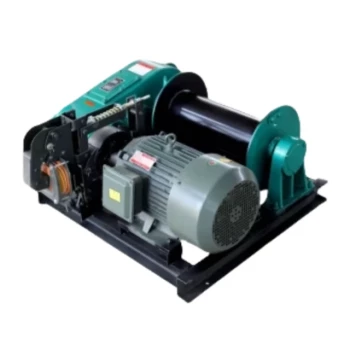
In hazardous environments, the choice of equipment is a matter of safety, not just function. Air winches are preferred in these settings because their pneumatic motors are inherently spark-resistant and do not generate the high heat associated with electric motors, eliminating the two most common ignition sources in an explosive atmosphere.
The core issue in a hazardous location is the presence of flammable fuel and oxygen. Air winches are the safer choice because their compressed air power source fundamentally removes the third element required for a catastrophe: the ignition source.
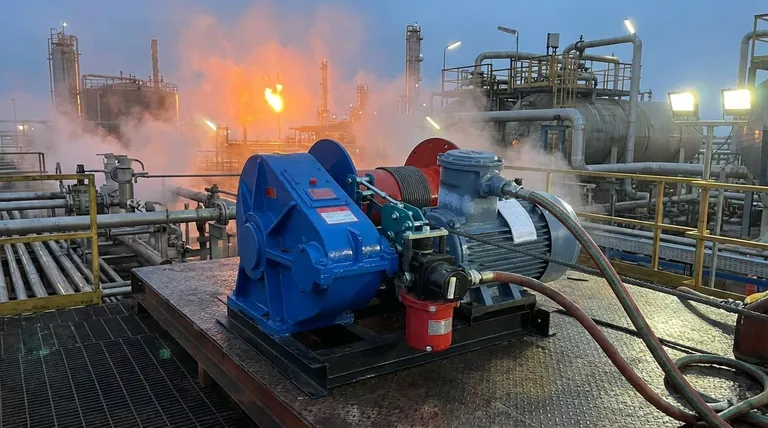
The Core Safety Principle: Breaking the Fire Triangle
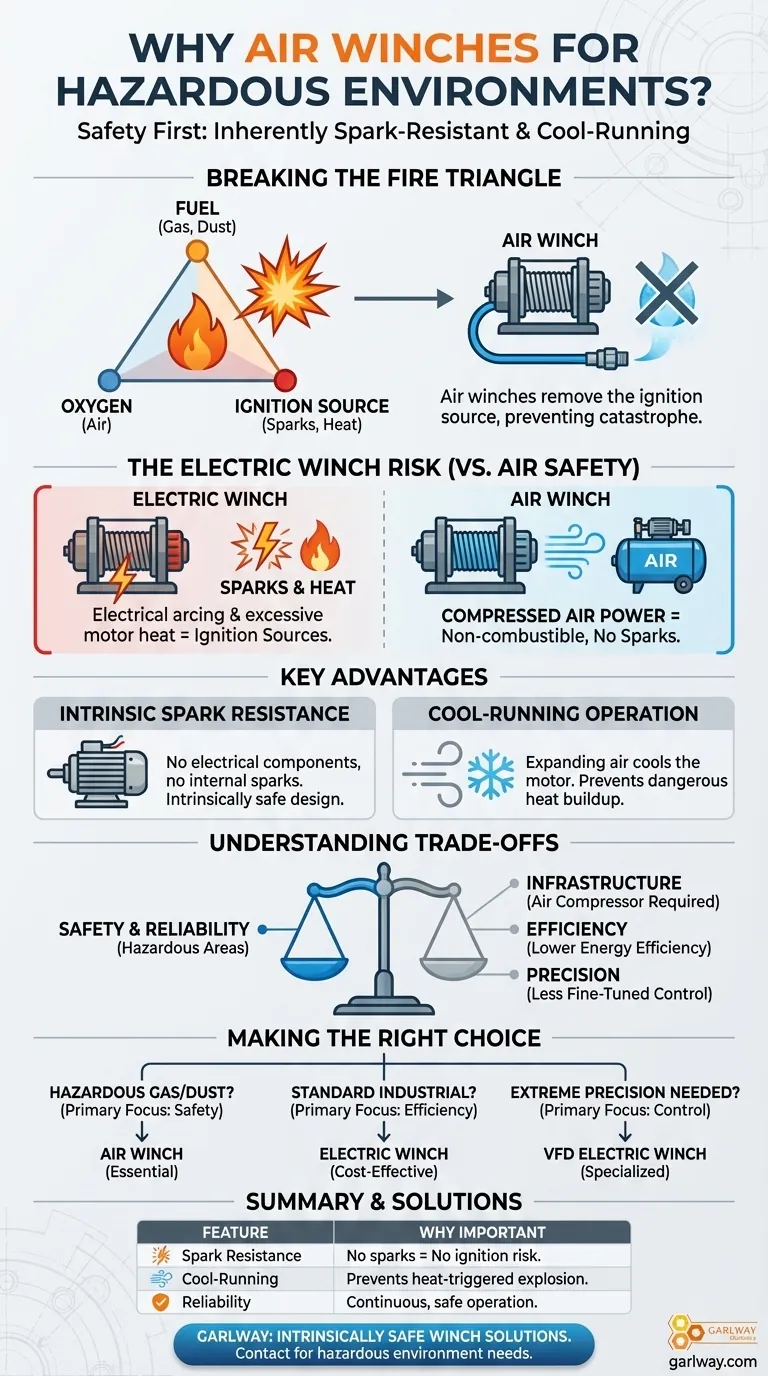
Any explosive event requires three components, often called the fire triangle: fuel (like flammable gas or combustible dust), oxygen (present in the air), and an ignition source (a spark or sufficient heat).
In hazardous industrial environments, the presence of fuel and oxygen is often a given. Therefore, safety protocols focus entirely on controlling and eliminating potential ignition sources.
The Ignition Risk of Electric Winches
Standard electric winches pose a significant risk because they can easily introduce an ignition source.
The primary dangers are electrical arcing from motor brushes, commutators, or switch contacts, and excessive heat generated by the motor during heavy operation. Either of these can be enough to ignite a volatile atmosphere.
How Pneumatic Motors Mitigate Risk
Air winches operate on a fundamentally different and safer principle.
They are powered by compressed air, a non-combustible power source. The pneumatic motor contains no internal electrical components, which completely eliminates the possibility of electrical sparks.
Key Advantages of Air Winches in Hazardous Zones
The preference for air winches comes down to two inherent physical properties of their design.
Intrinsic Spark Resistance
Because the motor is driven by the mechanical force of expanding air, there is no electricity involved in its operation. This design is considered intrinsically safe, as it lacks a mechanism for creating an ignition-capable spark.
Cool-Running Operation
A unique benefit of using compressed air is its cooling effect. As the air expands inside the motor, it undergoes a thermodynamic process that causes its temperature to drop significantly.
This means that an air winch motor not only avoids generating dangerous heat but actually becomes cool during operation, providing an additional layer of safety.
Understanding the Trade-offs
While unmatched for safety in hazardous areas, air winches are not the universal solution. Their primary limitations must be considered for any application.
The Need for Compressed Air Infrastructure
The most significant requirement is a powerful and reliable source of compressed air. This involves a large industrial air compressor and a network of high-pressure hoses, which can be a substantial infrastructure investment and limit portability.
Power and Efficiency
Compressed air is a less energy-efficient power source than direct electricity. The process of compressing air, transmitting it through hoses, and converting it back to mechanical work involves significant energy loss.
Control and Precision
While modern air winches offer good control, they may not match the fine-tuned, variable-speed precision that can be achieved with advanced electric winches controlled by a Variable Frequency Drive (VFD).
Making the Right Choice for Your Environment
The decision between an air and electric winch must be driven by a clear assessment of your operational environment and safety requirements.
- If your primary focus is operating in any environment with flammable gases, vapors, or combustible dust: An air winch is the only acceptable choice, as its intrinsic safety features are non-negotiable.
- If your primary focus is efficiency and portability in a standard, non-hazardous industrial setting: An electric winch is typically more cost-effective, energy-efficient, and easier to deploy.
- If your primary focus is extremely precise speed and load control in a safe area: A specialized electric winch with a VFD system will likely offer superior performance.
Ultimately, prioritizing an intrinsically safe power source like compressed air is the most reliable way to ensure operational safety in any hazardous location.
Summary Table:
| Feature | Why It's Important in Hazardous Areas |
|---|---|
| Intrinsic Spark Resistance | No electrical components means no risk of sparks that could ignite flammable gases or dust. |
| Cool-Running Operation | Expanding air cools the motor, preventing heat buildup that could trigger an explosion. |
| Compressed Air Power Source | A non-combustible power source fundamentally removes the ignition element from the fire triangle. |
| Reliability in Volatile Atmospheres | Designed to operate safely where standard electric equipment is prohibited, ensuring continuous operations. |
Need a winch solution you can trust in hazardous conditions?
GARLWAY specializes in robust and intrinsically safe air winches designed for construction companies and contractors working in explosive or volatile environments. Our pneumatic winches provide the critical safety and reliability you need to protect your team and assets.
Contact GARLWAY today to discuss your specific requirements and ensure your project's safety with our expert solutions.
Visual Guide
Related Products
- Small Electric Winch 120V and 240V for Compact Applications
- Portable Small Trailer Winch
- Electric and Hydraulic Winch for Heavy Duty Applications
- Quick Windlass Portable Winch for Truck and Boat Best Boat Winch
- Electric Hoist Winch Boat Anchor Windlass for Marine Applications
People Also Ask
- What makes electric winches suitable for off-road use? Key Features for Reliable Vehicle Recovery
- What are the common applications of electric winches? Power Your Lifting & Pulling Tasks
- What are the common uses of an electric winch? A Guide to Safe and Efficient Heavy Lifting
- What are the uses of electric winches in mining and tunneling? Enhance Safety and Efficiency Underground
- How do electric winches contribute to energy savings? Maximize Efficiency and Lower Costs