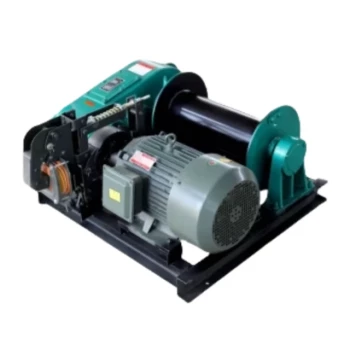
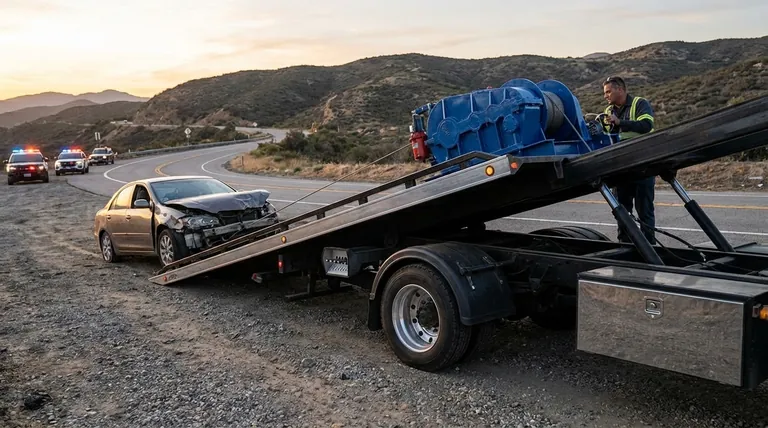
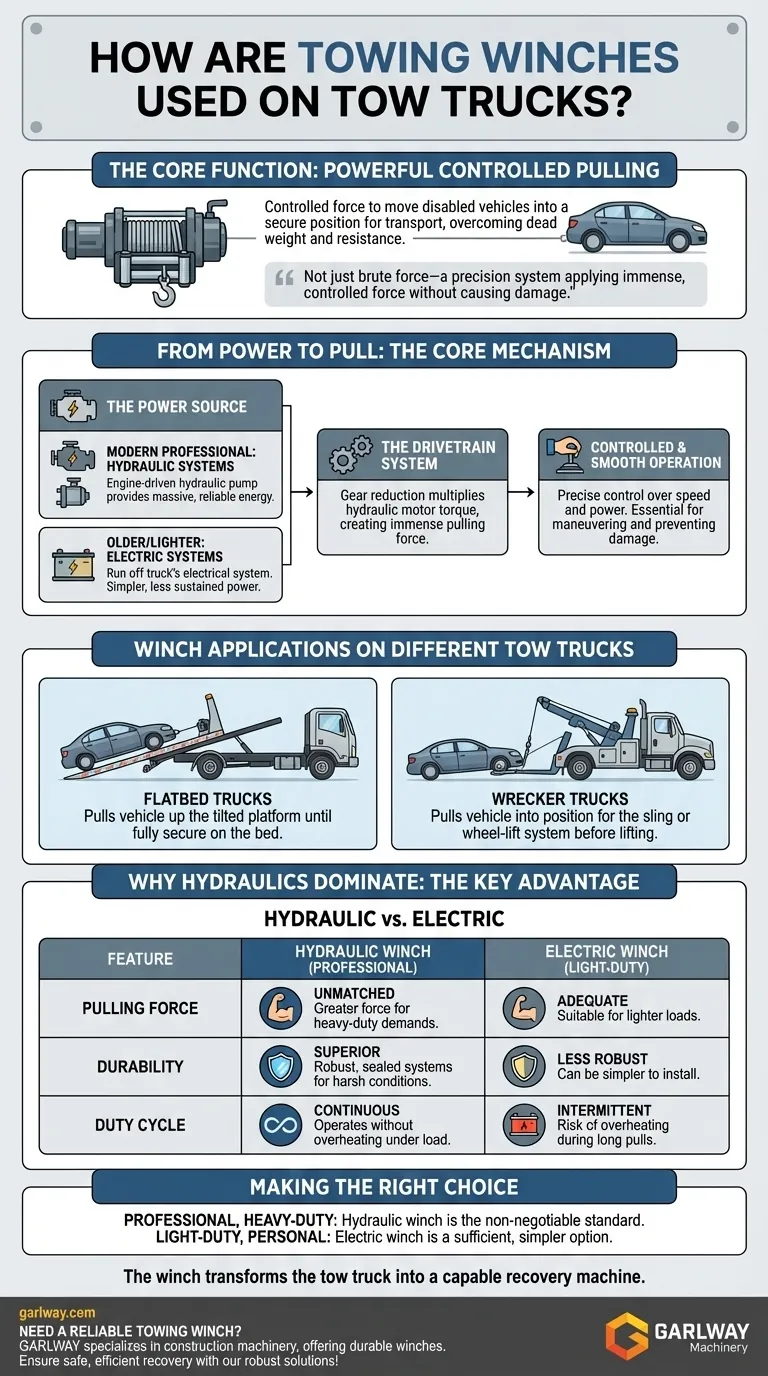
At its core, a towing winch is a powerful pulling device used to move a disabled vehicle into a secure position for transport. Whether loading a car onto a flatbed or lifting the front end for a wrecker-style tow, the winch provides the controlled force necessary for the recovery operation. Its function is to overcome the vehicle's dead weight and any environmental resistance safely and efficiently.
The modern towing winch is not simply a brute-force pulling tool. It is a precision system, most often powered by the tow truck's own hydraulics, designed to apply immense, controlled force to recover vehicles without causing further damage.
The Core Mechanism: From Power to Pull
A tow truck winch translates power from the truck's engine into a focused pulling force. Understanding this conversion is key to appreciating its role in vehicle recovery.
The Power Source
Modern professional tow trucks almost exclusively use hydraulic winches. These systems tap into the truck's powerful hydraulic pump, which is driven by the engine. This provides a massive and reliable source of energy for demanding pulls.
Older or lighter-duty applications might use electric winches, which run off the truck's electrical system. While simpler, they cannot match the sustained power or durability of a hydraulic setup.
The Drivetrain System
The hydraulic motor turns a series of gears within the winch's drivetrain. This gear reduction multiplies the motor's torque, creating the immense pulling force needed to move a vehicle weighing several tons.
Controlled and Smooth Operation
A critical feature of hydraulic systems is their ability to provide smooth and precise control. An operator can finely adjust the winch's speed and power, which is essential for carefully maneuvering a damaged vehicle and preventing jerking motions that could cause additional harm.
Winch Applications on Different Tow Trucks
The specific use of a winch depends on the type of tow truck performing the recovery.
For Flatbed (Platform) Trucks
On a flatbed, the winch's role is straightforward. Its cable is attached to the disabled vehicle, and the winch pulls the car up the tilted platform until it is fully and securely on the bed.
For Wrecker (Sling or Wheel-Lift) Trucks
For wreckers, the process is slightly different. The winch is used to pull the vehicle into position for the towing sling or wheel-lift system. It ensures the vehicle is aligned correctly before the primary lifting mechanism engages to raise one end of the car off the ground for towing.
Understanding the Key Advantage: Why Hydraulics Dominate
While electric winches exist, the professional towing industry relies on hydraulic systems for clear, mission-critical reasons.
Unmatched Pulling Force
Hydraulic systems generate far greater pulling forces than their electric counterparts. This makes them the only viable option for handling the unpredictable and heavy-duty demands of commercial towing and recovery.
Superior Durability
Towing operations happen in all conditions—rain, snow, and extreme heat. Hydraulic winches are robust, sealed systems designed to perform reliably in these harsh, moisture-heavy environments without failing.
Continuous Duty Cycle
An electric winch can overheat if used for long, heavy pulls. A hydraulic winch, powered by the truck's running engine, can operate continuously under maximum load without risk of overheating, a crucial capability during complex recovery scenarios.
Making the Right Choice for the Application
The choice between winch types is dictated entirely by the demands of the job.
- If your primary focus is professional, heavy-duty vehicle recovery: A hydraulic winch is the non-negotiable industry standard, providing the power, control, and reliability required.
- If your primary focus is light-duty, occasional, or personal use: An electric winch can be a sufficient and simpler-to-install option for less demanding situations.
Ultimately, the winch transforms the tow truck from a simple vehicle transporter into a capable recovery machine.
Summary Table:
| Winch Type | Key Features | Ideal Use Case |
|---|---|---|
| Hydraulic Winch | High pulling force, continuous duty, durable in harsh conditions | Professional heavy-duty towing and recovery |
| Electric Winch | Simpler installation, adequate for lighter loads | Light-duty, occasional, or personal use |
Need a reliable towing winch for your fleet? GARLWAY specializes in construction machinery, offering durable winches, concrete mixers, and batching plants for construction companies and contractors worldwide. Ensure safe, efficient vehicle recovery with our robust solutions—contact us today to discuss your needs!
Visual Guide
Related Products
- Warn Winch Windlass Boat Trailer Winch
- Portable Small Trailer Winch
- Quick Windlass Portable Winch for Truck and Boat Best Boat Winch
- Electric and Hydraulic Winch for Heavy Duty Applications
- Best 18000 Pound Drum Anchor Trailer Winch
People Also Ask
- What are the main components of a boat trailer winch? A Guide to Safe & Efficient Boat Loading
- What factors should be considered when choosing a boat trailer winch? Ensure Safe and Effortless Boat Loading
- What is the purpose of boat trailer winches? Safely and Efficiently Load Your Boat
- What are the two main types of boat trailer winches? Manual vs. Electric Explained
- How often should a boat trailer winch be replaced? Your Guide to Safety and Longevity