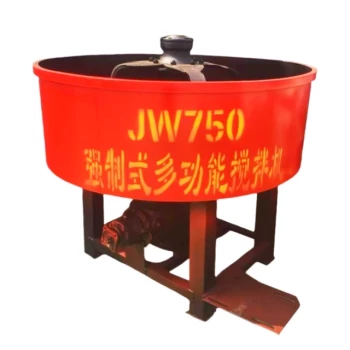
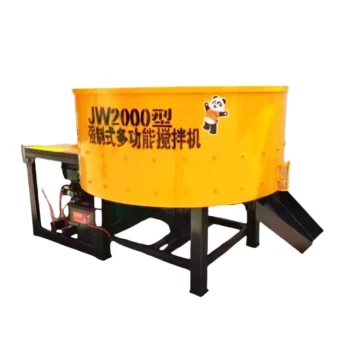
A mortar mixer is specifically required for projects that depend on a smooth, sticky, and consistently blended material. This includes essential masonry and finishing work like bricklaying, applying plaster or stucco, and tiling, where the quality of the mixture is critical for both structural integrity and aesthetic appearance.
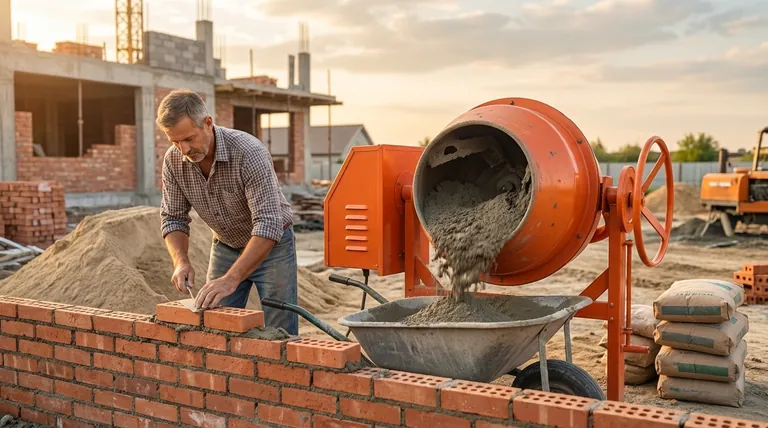
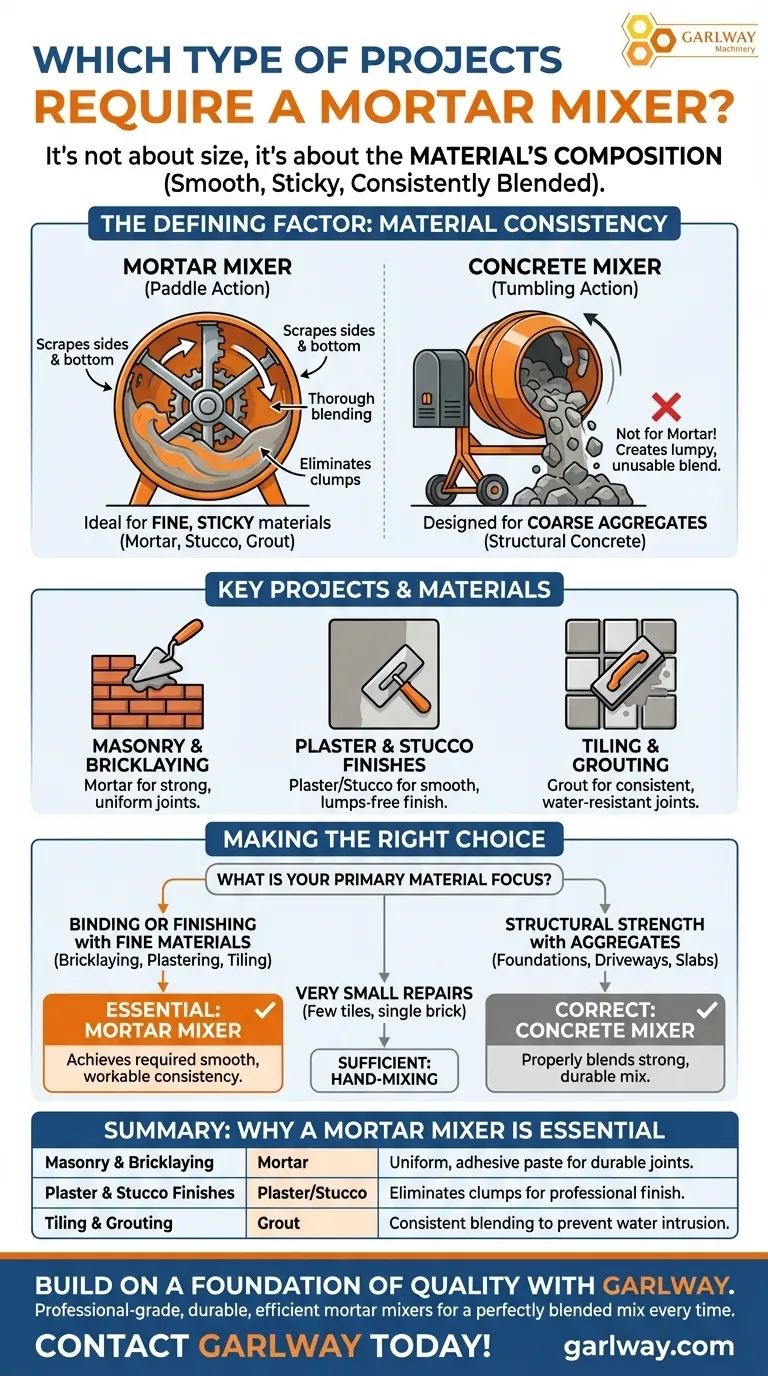
The choice between a mortar mixer and another type is not about the project's size, but the material's composition. Mortar mixers use paddles to blend fine, sticky materials, while concrete mixers tumble coarse aggregates for structural applications.
The Defining Factor: Material Consistency
The fundamental reason for using a mortar mixer is its ability to handle materials that are fundamentally different from concrete. These materials are sticky and lack the large aggregates that help with the mixing process in a standard drum mixer.
Why Mortar Needs a Different Approach
Mortar is a precise blend of cement, sand, and water. It's designed to be a thick, adhesive paste that binds masonry units together or creates a smooth finish.
This sticky consistency means it will simply cling to the sides of a tumbling concrete mixer, resulting in a poor, lumpy, and unusable blend.
The Paddle-Mixing Advantage
A mortar mixer features a stationary drum with a set of rotating internal paddles. This design is intentional and highly effective.
The paddles continuously scrape the material from the sides and bottom of the drum, forcing the fine particles to combine thoroughly. This action eliminates clumps and ensures every grain of sand is coated with cement paste, creating a uniform, workable mix.
Ideal Materials for a Mortar Mixer
This machine is the correct tool for any fine, thick, or adhesive mixture.
These materials include:
- Mortar: For brick, block, and stone laying.
- Stucco & Plaster: For interior and exterior wall finishes.
- Grout: For filling the joints between tiles.
Common Projects That Demand a Mortar Mixer
Using a mortar mixer is non-negotiable for achieving a professional standard in several key construction tasks. The quality of your work begins with the quality of your mix.
Masonry and Bricklaying
For binding bricks and blocks, the mortar must have a consistent texture to create strong, uniform joints. An improper mix can lead to weak spots and structural failure over time.
Plaster and Stucco Finishes
When applying a finish to a wall, the material must be completely free of lumps. A smooth, homogenous mix produced by a mortar mixer is essential for a high-quality, durable surface.
Tiling and Grouting
Consistent grout is necessary to properly fill tile joints, providing support and preventing water intrusion. A paddle mixer ensures the grout is evenly blended for maximum performance.
Understanding the Trade-offs: Mortar vs. Concrete Mixer
Choosing the wrong mixer is a common and costly mistake. While they may look similar, their functions are entirely distinct and tailored to different materials.
The Wrong Tool for Structural Work
A mortar mixer is not designed to handle the large aggregates (gravel or crushed stone) found in concrete. Its paddles are not built for the force required to mix these heavy structural materials.
For foundations, driveways, sidewalks, or patios, a concrete mixer is the only correct choice. Its tumbling action is specifically designed to lift and drop the aggregates, ensuring a strong and durable structural mix.
Capacity and Project Scale
Mortar mixers typically have a smaller capacity, which is well-suited for the pace of masonry or finishing work. Concrete mixers are built for larger volumes needed for pouring slabs and foundations.
Making the Right Choice for Your Project
Selecting the correct equipment is the first step toward ensuring your project is durable, safe, and professional.
- If your primary focus is binding or finishing with fine materials (bricklaying, plastering, tiling): A mortar mixer is essential to achieve the smooth, workable consistency required.
- If your primary focus is structural strength using aggregates (foundations, driveways, slabs): A concrete mixer is the correct tool for properly blending a strong, durable mix.
- If your project is very small (a few tile repairs or pointing a single brick): Careful hand-mixing in a wheelbarrow can be sufficient, but a mixer provides superior consistency for any significant task.
Choosing the right mixer for the material is a foundational principle for quality construction.
Summary Table:
| Project Type | Key Material Mixed | Why a Mortar Mixer is Essential |
|---|---|---|
| Masonry & Bricklaying | Mortar | Creates a uniform, adhesive paste for strong, durable joints. |
| Plaster & Stucco Finishes | Plaster/Stucco | Eliminates lumps for a smooth, professional surface finish. |
| Tiling & Grouting | Grout | Ensures consistent blending to properly fill tile joints and prevent water intrusion. |
Ensure your masonry and finishing projects are built on a foundation of quality.
GARLWAY specializes in durable, efficient mortar mixers designed for construction companies and contractors who demand professional-grade results. Our equipment ensures a perfectly blended mix every time, saving you time and labor on-site.
Contact GARLWAY today to find the right mortar mixer for your specific project needs!
Visual Guide
Related Products
- JDY350 Electric Hydraulic Mortar Mud Concrete Mixer
- JDC350 Small Cement Concrete Mortar Mixer
- Mini Cement Mortar Mixer Truck for Construction
- Belle Mixer Drum Self Loading Mortar Mixers JS3000
- JS1000 Volumetric Concrete Mortar Mixer for Sale Skid Steer Cement Mixer
People Also Ask
- When are electric mortar mixers typically used? Find the Perfect Tool for Small to Medium-Sized Jobs
- What are hydraulic concrete mixers used for? Powering Large-Scale Construction Projects
- How are mortar mixers utilized in concrete and grout projects? Maximize Your Mixing Efficiency
- What are the benefits of electric concrete mixers? Quiet, Clean, and Low-Maintenance Mixing
- What is a mortar mixer and what is its primary use? Master Masonry with the Right Equipment