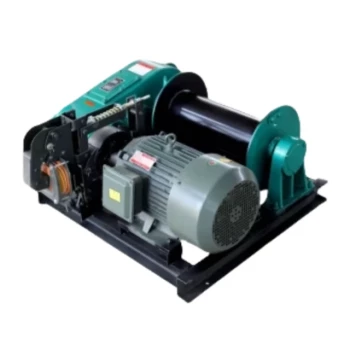
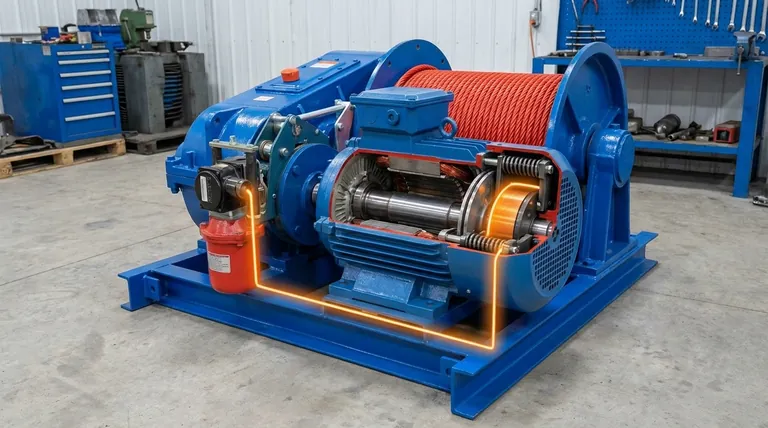
In an electric winch, the brake is an integrated component located inside the motor assembly. It functions as a fail-safe mechanism, automatically engaging to lock the drum and hold the load securely whenever the motor is not actively powered.
The core principle of an electric winch brake is that it is designed to be always on by default. It requires electrical power to release the brake, ensuring that any power loss or operator inaction immediately results in the load being safely held in place.
How the Electric Winch System Operates
An electric winch is a system designed to pull or lift heavy loads using a motor, a drum, and a cable. Understanding the complete power flow provides context for the brake's critical role.
The Power Pathway
An electric motor is the heart of the winch, converting electrical energy into mechanical force. This power can come from a vehicle's DC battery system or a standard AC power outlet.
From Motor to Drum
When the operator activates the control button, electricity flows to the motor. The motor then drives a series of gears which, in turn, rotate the winch drum. This rotation winds the cable onto the drum, pulling the load.
The Mechanics of the Winch Brake
The brake isn't an afterthought; it's a fundamental part of the motor's design, engineered for safety and control.
Brake Location and Type
The braking mechanism is housed directly with the motor. It is often a load-pressure brake or a weight-activated shoe brake, where physical force is used to lock the drivetrain.
The Fail-Safe Principle
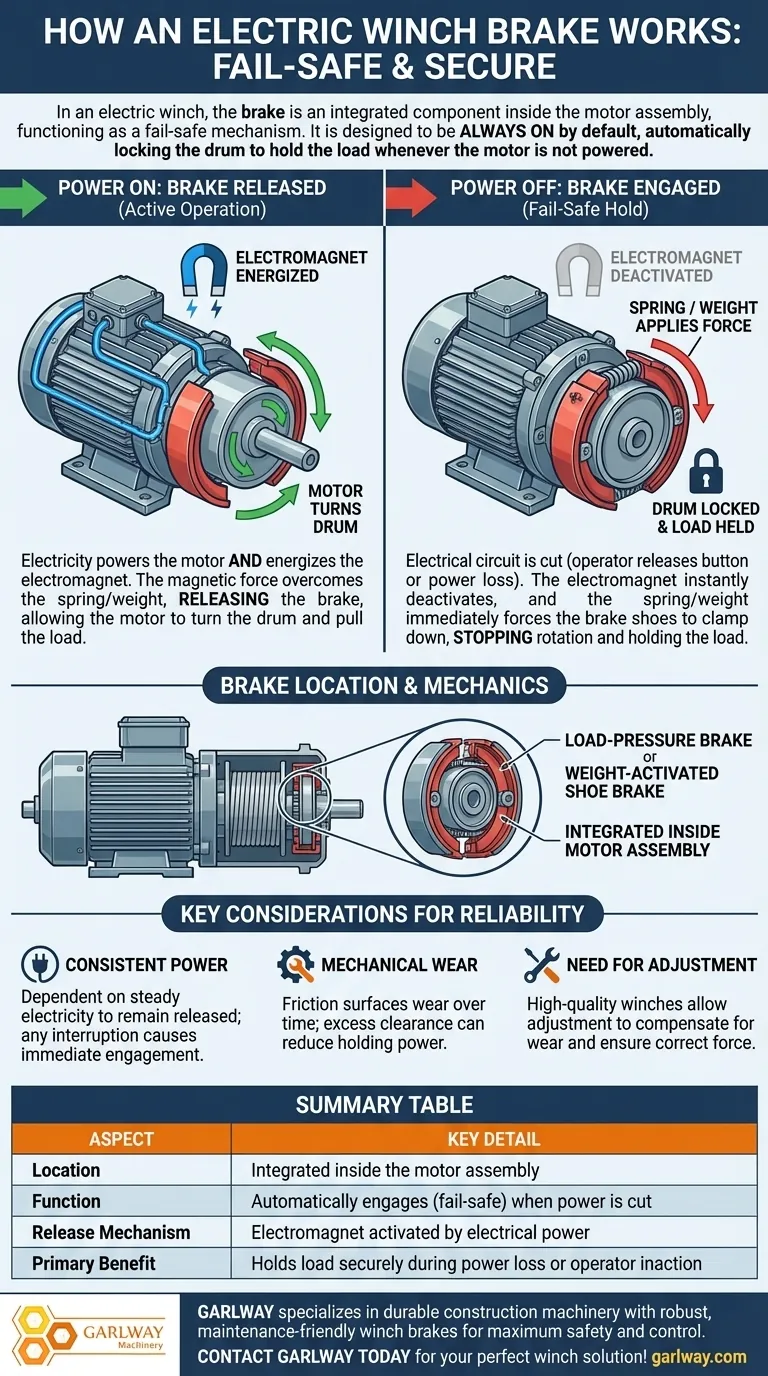
A winch brake is inherently fail-safe. It uses a physical force, such as a spring or weight, to keep the brake shoes clamped down, preventing the drum from turning. It is always engaged when the winch is at rest.
Electromagnetic Release
When you press the "wind" or "unwind" button, electricity does two things simultaneously. It powers the motor to generate torque, and it energizes an electromagnet within the brake assembly.
This electromagnet creates a magnetic field that overcomes the physical spring or weight, pulling the brake shoes away from the drum's drivetrain. This releases the brake, allowing the motor to turn the drum freely.
Instantaneous Engagement
The moment the operator releases the control button, the electrical circuit is cut. The electromagnet deactivates instantly, and the spring or weight immediately forces the brake shoes to clamp back down, stopping the drum's rotation and holding the load securely.
Key Considerations for Brake Reliability
A winch brake is a robust mechanical system, but its reliability depends on proper use and maintenance. Understanding its operational limits is crucial for safety.
The Role of Consistent Power
The brake's release is entirely dependent on a steady supply of electricity to the electromagnet. Any interruption in power—whether intentional or due to a fault—will cause the brake to engage immediately. This is a designed safety feature.
The Impact of Mechanical Wear
Over time, the friction surfaces of the brake shoes can wear down. This can create excess clearance, potentially reducing the brake's holding power.
The Need for Adjustment
High-quality winches include mechanisms for adjusting the brake clearance. This allows you to compensate for wear and ensure the brake continues to engage with the correct amount of force, maintaining its reliability throughout the winch's service life.
Applying This to Your Operations
Choosing and using a winch requires trusting its most critical safety component. Your primary goal will determine what aspect of the brake's function is most important to you.
- If your primary focus is safety: Understand that the brake is a fail-safe system that engages automatically upon power loss, making it inherently secure.
- If your primary focus is precise load handling: Recognize that the electromagnetic release allows for instant engagement, giving you exact control to stop and hold a load at any position.
- If your primary focus is long-term reliability: Prioritize winches that allow for brake inspection and adjustment to account for mechanical wear over time.
Ultimately, the winch brake provides control and security by being designed to work when all other systems are off.
Summary Table:
| Aspect | Key Detail |
|---|---|
| Location | Integrated inside the motor assembly. |
| Function | Automatically engages (failsafe) when power is cut. |
| Release Mechanism | Electromagnet activated by electrical power. |
| Primary Benefit | Holds load securely during power loss or operator inaction. |
Need a reliable winch with a fail-safe brake for your construction or contracting projects?
GARLWAY specializes in durable construction machinery, including electric winches designed with robust, maintenance-friendly braking systems for maximum safety and control. Our equipment ensures your loads are secured, project after project.
Contact GARLWAY today to find the perfect winch solution for your operational needs!
Visual Guide
Related Products
- Electric 120V Boat Winch by Badlands
- Electric and Hydraulic Winch for Heavy Duty Applications
- Small Electric Winch 120V and 240V for Compact Applications
- 12000 lb Electric Boat Trailer Winch with Windlass Anchor Warn
- Electric Hoist Winch Boat Anchor Windlass for Marine Applications
People Also Ask
- How do electric boat winches work? Unlock Effortless Launching & Retrieval
- How much current does an electric boat winch draw? Plan Your Electrical System for Peak Performance
- Can I run a winch straight from a battery? Essential Power Setup for Safe Operation
- What are the types of electric winches available? Choose the Right Winch for Your Job
- What are the uses of electric winches in mining and tunneling? Enhance Safety and Efficiency Underground