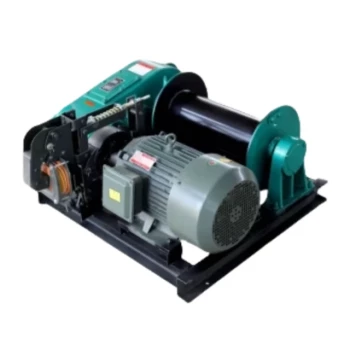
An electric winch is not designed for continuous operation; its use is measured in seconds or brief minutes at a time. While a single pull might last for a minute or two, the total cumulative run time for an entire day's recovery operation might amount to no more than 10 minutes.
The core constraint on winch run time is not a stopwatch, but the immense heat generated by its motor and the severe drain on the vehicle's electrical system. Understanding these thermal and electrical limits is the key to using a winch safely and preventing permanent damage.
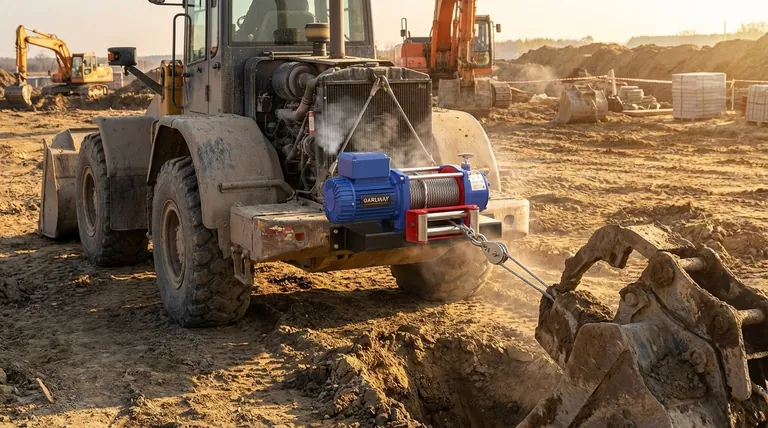
Why Time is a Misleading Metric
Focusing solely on "how long" you can run a winch misses the two critical factors that actually dictate its limits: heat and power consumption. These are the true bottlenecks you must manage.
The Role of Heat (Thermal Limits)
An electric winch motor works incredibly hard, converting electrical energy into mechanical force. A significant byproduct of this process is heat.
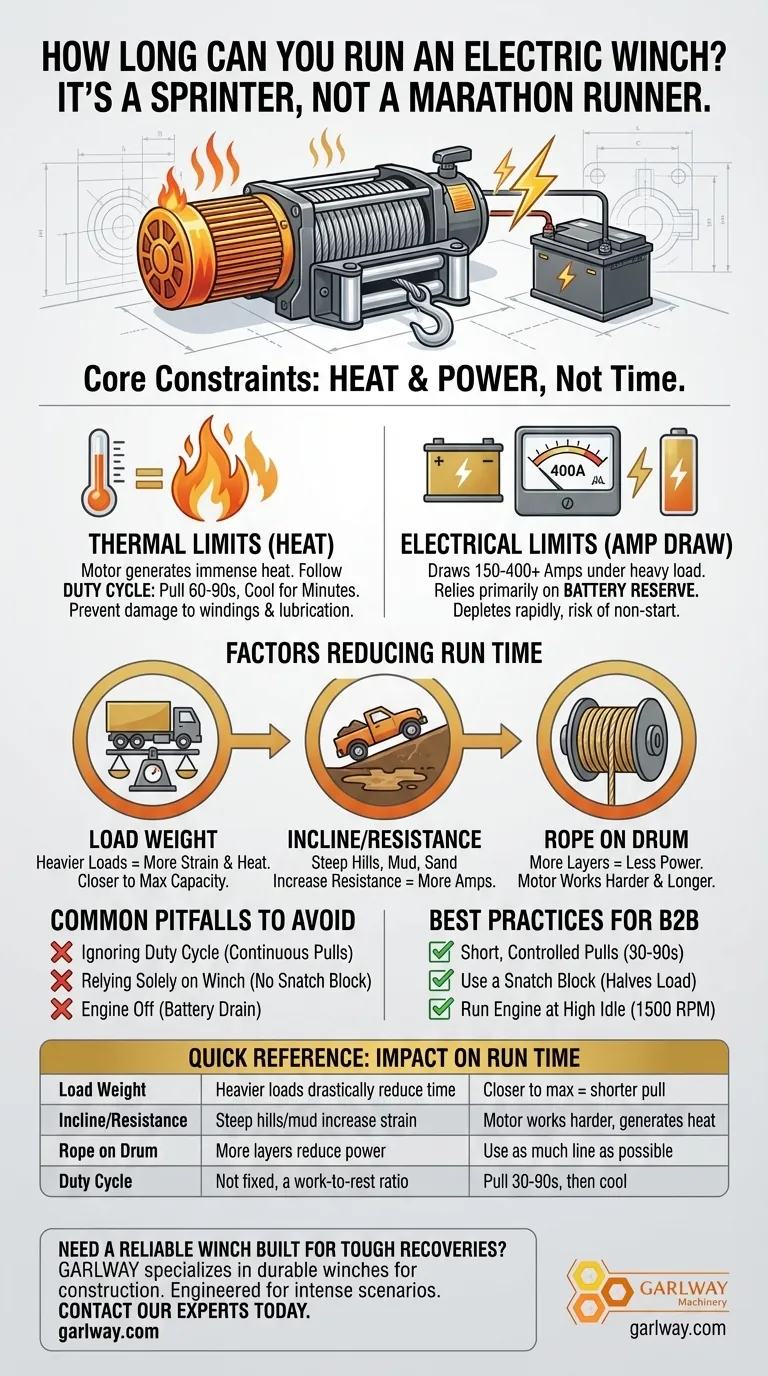
Motors have a duty cycle, which is a recommended work-to-rest ratio. While specific ratings vary, a common principle is to pull for no more than 60-90 seconds before letting the motor cool for several minutes. Ignoring this allows heat to build up, which can damage the motor's internal windings and lubrication.
The Impact of Amp Draw (Electrical Limits)
Under a heavy load, an electric winch can draw 150 to over 400 amps from your vehicle's battery. For context, a typical car alternator only produces 90-150 amps at best, and only when the engine is running above idle.
This means the winch is primarily powered by the battery reserve. A continuous pull will rapidly deplete your battery, potentially leaving you stranded with a vehicle that won't start after the recovery is complete.
Key Factors That Reduce Run Time
Not all pulls are equal. Several real-world variables dramatically increase the strain on your winch, generating more heat and consuming more power, thus shortening your effective run time.
The Weight of the Load
This is the most direct factor. Pulling a light vehicle on flat ground is far less stressful than recovering a heavy truck. The closer you get to the winch's maximum rated capacity, the faster it will heat up and drain the battery.
Incline and Resistance
Pulling a vehicle up a steep hill or extracting it from deep mud or sand adds significant resistance. This forces the motor to work much harder, generating heat and drawing amps as if it were pulling a much heavier load.
Amount of Rope on the Drum
A winch has the most pulling power when only the first layer of rope is wrapped around the drum. With each additional layer of rope, the winch's effective pulling power decreases.
This forces the motor to work harder and longer to achieve the same result, increasing heat and power consumption. Always try to use as much of your winch line as possible for a heavy pull.
Common Pitfalls to Avoid
Understanding the theory is one thing; applying it in the field is another. Avoiding these common mistakes is critical for the longevity of your equipment and your safety.
Ignoring the Duty Cycle
The most common mistake is simply pulling for too long without a break. Get in the habit of short, controlled pulls. Assess your progress, let the motor cool, and ensure your vehicle's charging system has a moment to recover.
Relying Solely on the Winch
A winch is a powerful tool, but it works best as part of a system. Using a snatch block can halve the load on your winch, drastically reducing heat and amp draw. This is the single best way to protect your equipment during a difficult recovery.
Not Running Your Vehicle's Engine
Never operate a winch without your vehicle's engine running, preferably at a high idle (around 1500 RPM). This allows the alternator to provide as much power as possible, slowing the rate at which the battery is drained.
Making the Right Choice for Your Goal
Your approach to winching should be dictated by the situation and your priorities.
- If your primary focus is maximum safety and equipment longevity: Use very short pulls (30-45 seconds), allow for long cooling periods, and always use a snatch block to reduce the load on the winch motor.
- If your primary focus is a straightforward, efficient recovery: Keep the engine running at a high idle, pull for no more than 60-90 seconds at a time, and physically check the winch motor for heat during rest periods.
Treating your winch like a powerful sprinter, not a marathon runner, is the key to reliable and safe vehicle recovery.
Summary Table:
| Factor | Impact on Run Time | Key Takeaway |
|---|---|---|
| Load Weight | Heavier loads drastically reduce run time. | The closer to max capacity, the shorter the pull. |
| Incline/Resistance | Steep hills or mud increase strain, shortening run time. | Motor works harder, generating more heat. |
| Rope on Drum | More layers on the drum reduce power, increasing run time needed. | Use as much line as possible for heavy pulls. |
| Duty Cycle | Not a fixed time, but a work-to-rest ratio. | Pull for 30-90 seconds, then let the motor cool. |
Need a reliable winch built for tough recoveries?
At GARLWAY, we specialize in durable construction machinery, including high-performance electric winches designed for the demanding needs of construction companies and contractors. Our winches are engineered with robust motors and thermal protection to handle intense recovery scenarios safely.
Let us help you equip your fleet with the right tool for the job.
Contact our experts today for a consultation and discover how a GARLWAY winch can be a vital asset for your operations.
Visual Guide
Related Products
- Electric 120V Boat Winch by Badlands
- Electric and Hydraulic Winch for Heavy Duty Applications
- Small Electric Winch 120V and 240V for Compact Applications
- 12000 lb Electric Boat Trailer Winch with Windlass Anchor Warn
- Electric Hoist Winch Boat Anchor Windlass for Marine Applications
People Also Ask
- How do electric boat winches work? Unlock Effortless Launching & Retrieval
- How much current does an electric boat winch draw? Plan Your Electrical System for Peak Performance
- Can I run a winch straight from a battery? Essential Power Setup for Safe Operation
- What are the types of electric winches available? Choose the Right Winch for Your Job
- What are the uses of electric winches in mining and tunneling? Enhance Safety and Efficiency Underground