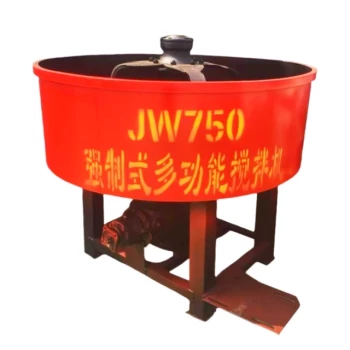
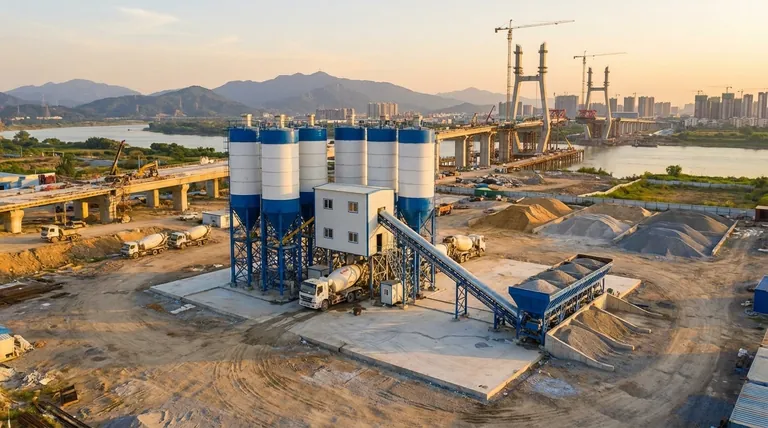
Horizontal concrete mixing plants are a cornerstone for projects demanding significant and consistent volumes of high-quality concrete. They are most frequently utilized in two primary scenarios: as central production hubs for medium or small-sized cities, and as dedicated on-site facilities for large-scale construction projects like bridges, power plants, and water conservancy infrastructure.
The decision to use a horizontal concrete plant is driven by the project's need for sustained, high-volume production at a concentrated site. Its design prioritizes output and quality control over the rapid mobility of smaller batching systems.
The Core Applications for Horizontal Plants
A horizontal plant's layout and mechanics are engineered for large-scale, long-duration work. This makes it the default choice for specific construction environments where lesser solutions would fail to keep pace.
Centralized Production for Major Projects
Horizontal plants excel where the demand for concrete is both massive and prolonged. They are a fixture on sites for major infrastructure.
These projects, such as water conservancy, power generation, and bridge construction, require a steady stream of concrete over many months or years. A dedicated on-site horizontal plant ensures quality control and eliminates the logistical risks of relying on off-site suppliers.
Supplying Urban and Regional Development
Beyond single projects, these plants often serve as the production backbone for medium or small-sized cities.
From a fixed location, a horizontal plant can supply a consistent product to numerous smaller construction sites across a region, supporting commercial building, housing developments, and municipal works.
The Technology Driving Performance
Modern horizontal plants almost universally use forced mixing technology. This is a critical distinction from older, less effective methods.
Forced mixers can homogenize a wide variety of concrete types, including fluid, semi-dry, and dry hard mixes. This versatility is essential for meeting the strict engineering specifications of modern construction.
Understanding the Strategic Trade-offs
Choosing a horizontal plant involves recognizing its inherent strengths and limitations. It is a strategic asset, not a universally applicable tool.
Commitment to a Location
The primary trade-off is mobility. A horizontal plant is a semi-permanent installation that requires significant site preparation and assembly.
It is not designed for rapid deployment or frequent relocation. This makes it unsuitable for a series of small, geographically scattered jobs that would be better served by a mobile batching plant.
Designed for Volume, Not Just-in-Time Agility
The system is optimized for continuous, high-volume runs. While highly efficient at scale, it can be less cost-effective for small, intermittent pours.
The operational focus is on maximizing cubic meters per hour for a large-scale structural pour, not on dispatching a few cubic meters to a minor repair job.
Making the Right Choice for Your Goal
Selecting the correct plant type comes down to matching its capabilities to the core demands of your operation.
- If your primary focus is a large, long-term infrastructure project: A horizontal plant provides the necessary high-volume output and quality assurance for major structural work.
- If your primary focus is supplying a developing city or large commercial park: A centrally located horizontal plant serves as a reliable production hub for multiple concurrent construction sites.
- If your primary focus is a series of short-term jobs in different locations: The semi-permanent nature of a horizontal plant is inefficient; a more mobile concrete solution is the superior choice.
Ultimately, selecting a horizontal concrete plant is a strategic decision to secure a high-capacity, quality-focused production hub for a demanding construction environment.
Summary Table:
| Application | Key Use Case | Plant Type |
|---|---|---|
| Major Infrastructure | Bridges, Power Plants, Water Conservancy | Horizontal Plant |
| Urban Development | Supplying Medium/Small Cities | Central Production Hub |
| Project Duration | Long-Term, Sustained Projects | Semi-Permanent Installation |
Need a reliable, high-volume concrete solution for your next major project? GARLWAY specializes in construction machinery, offering robust horizontal concrete mixing plants designed for construction companies and contractors globally. Our plants deliver consistent, high-quality output for large-scale infrastructure and urban development. Contact us today to discuss how our concrete batching plants can become the cornerstone of your project's success!
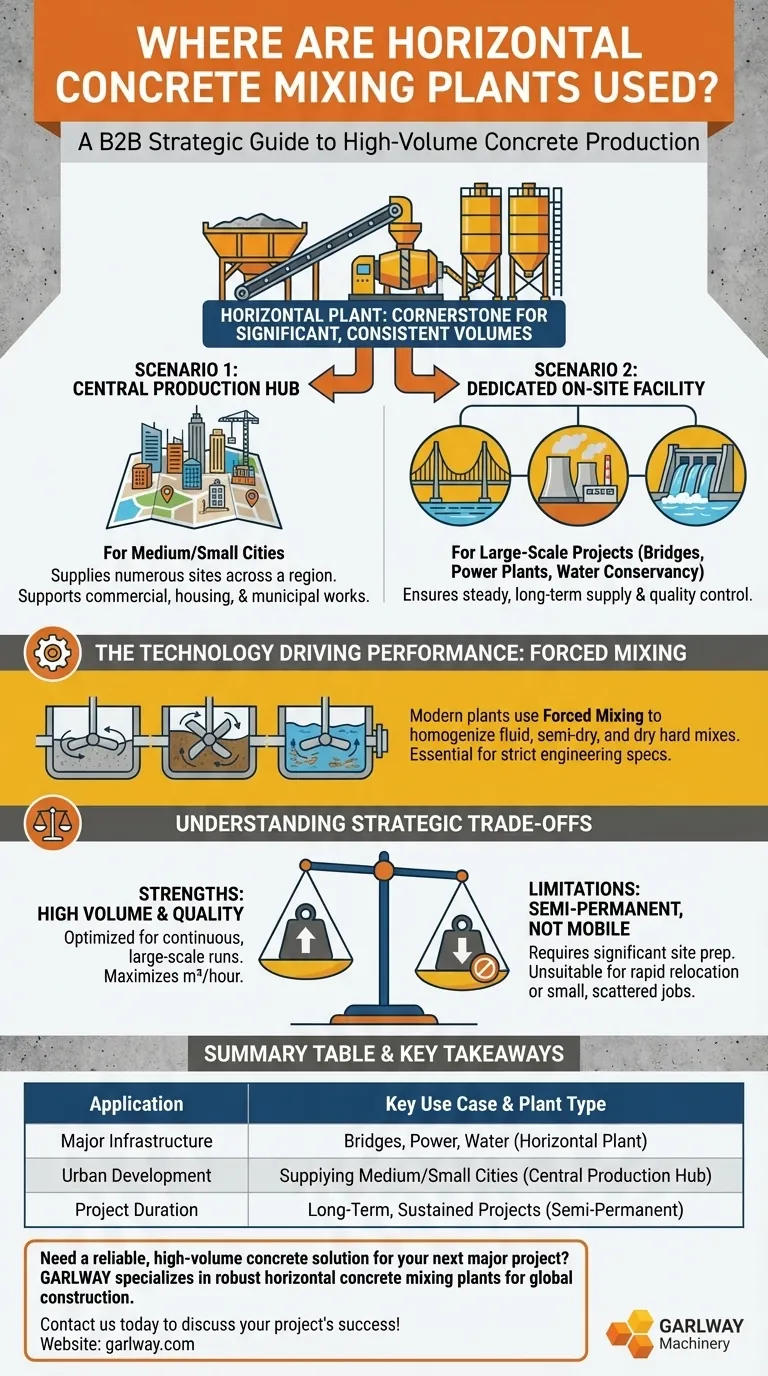
Visual Guide
Related Products
- HZS35 Small Cement Concrete Mixing Batch Plant
- Commercial Electric Concrete Mixer Machine HZS 50 Small Batch Plant for Sale
- HZS180 Ready Mix Concrete Plant for Foundations with Sand and Cement
- HZS75 Concrete Batching Plant Cement Mixer Price Concrete Mixer Bunnings Mixing Plant
- Construction Products Concrete Plant Machine Mixing Concrete Mixer
People Also Ask
- Why buy concrete batch plant parts only from the manufacturer? Protect Your Investment and Maximize Uptime
- Why is proper maintenance important for a concrete batch mix plant? Maximize Uptime & Profitability
- What is the advantage of a mobile concrete batching plant? Achieve On-Site Production & Total Control
- What are the advantages and disadvantages of concrete batching plants? Maximize Quality & Efficiency
- What are the two methods of material charging in a concrete mixing station? Single vs. Multiple Charging Explained