
The water pump on a concrete mixer should be activated to supply water only after the dry mix (cement, sand, and aggregate) has been added to the mixing drum. This specific sequence is critical for achieving a uniform mixture and ensuring the final strength of the concrete.
The core principle is simple: add dry materials to the drum before introducing water. Reversing this order is a common mistake that compromises the quality of the mix by causing cement to clump, preventing proper hydration and creating weak spots in the final concrete.
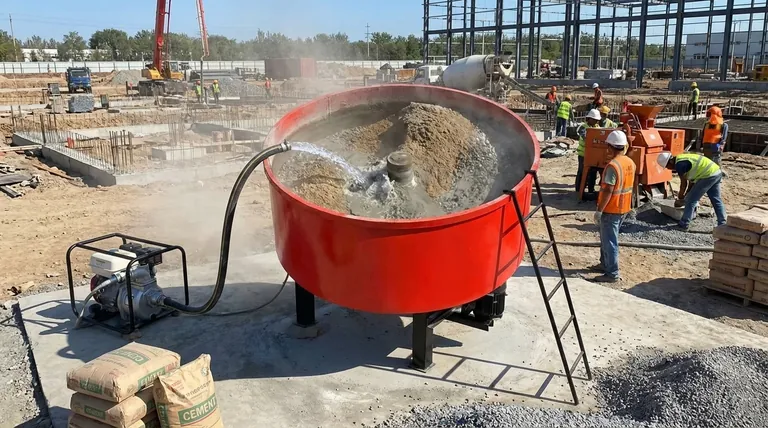
The Correct Sequence for Quality Concrete
Achieving a strong, workable concrete mix depends on a precise and repeatable sequence of operations. Each step builds upon the last, with the timing of water introduction being one of the most critical factors.
Step 1: Pre-Operation Safety Check
Before beginning any mixing, the operator must confirm that key safety systems are functioning. This includes ensuring the hopper lifting mechanism is normal and, most importantly, that the brake is reliable.
Step 2: Adding the Dry Mix
The measured amounts of cement, sand, and aggregate are loaded into the hopper. The hopper is then lifted and its contents are discharged into the rotating drum.
Step 3: Activating the Water Pump
As soon as the dry materials are in the drum, the water pump is activated. This supplies the pre-determined amount of water, allowing it to combine with the dry ingredients as they are actively tumbling.
Why This Specific Order is Critical
The sequence is not arbitrary; it is based on the chemistry of cement and the physics of mixing. Deviating from it directly impacts the concrete's final properties.
Preventing Cement "Balling"
If water is added to the drum first, the cement powder will hit the standing water and instantly form hard, unmixable clumps or "cement balls." These clumps will not break down and will result in a non-uniform, low-strength product.
Ensuring Uniform Hydration
Introducing water to the already-moving dry mix allows every particle of cement to be exposed to water almost simultaneously. This begins the chemical reaction of hydration evenly throughout the entire batch, which is essential for developing consistent strength.
Improving Mix Workability
A properly mixed batch is more "workable," meaning it flows smoothly and is easier to pour, spread, and finish. Starting with dry materials and then adding water produces a more homogenous and cooperative mixture.
Common Pitfalls and Safety Considerations
Mistakes in the mixing process can lead to poor results or, more seriously, create unsafe working conditions.
The Critical Brake Check
The reference emphasizes brake reliability for a crucial reason. A failing brake while lifting a hopper loaded with hundreds of pounds of material is a severe safety hazard. This check must be performed before every single loading cycle.
Incorrect Water-to-Cement Ratio
While this guide focuses on timing, the amount of water is just as critical. Activating the pump is one step; ensuring it delivers the precise volume of water required for the specified mix design is essential for achieving the target strength.
Running the Pump Dry
Always confirm there is an adequate water supply before activating the pump. Running a pump without water (running it dry) can quickly overheat and damage its internal seals and motor.
A Checklist for Consistent Results
To ensure safety and produce high-quality concrete every time, follow these simple guidelines based on your primary goal.
- If your primary focus is operational safety: Always confirm the hopper brake is reliable and secure before you lift the load.
- If your primary focus is concrete quality: Add water only after the dry mix has begun to enter the drum to guarantee a uniform and strong mixture.
- If your primary focus is equipment longevity: Never activate the water pump without a confirmed water supply to avoid causing mechanical damage.
Adhering to this proper operational sequence is the single most effective way to ensure safety, efficiency, and superior concrete quality.
Summary Table:
| Primary Focus | Key Action | Benefit |
|---|---|---|
| Operational Safety | Confirm hopper brake is reliable before lifting. | Prevents accidents and ensures a secure worksite. |
| Concrete Quality | Activate water pump after dry mix is in the drum. | Prevents cement balling, ensures uniform hydration and strength. |
| Equipment Longevity | Never run the water pump without a confirmed water supply. | Avoids damage to the pump's seals and motor. |
Achieve consistent, high-quality concrete batches with reliable machinery from GARLWAY.
As a specialist in construction machinery, GARLWAY provides durable concrete mixers, winches, and batching plants designed for the rigorous demands of construction companies and contractors. Our equipment is engineered to support proper operational sequences, helping you prevent costly mistakes and deliver superior results on every project.
Contact our experts today to find the perfect concrete mixing solution for your business needs and ensure your operations are both safe and efficient.
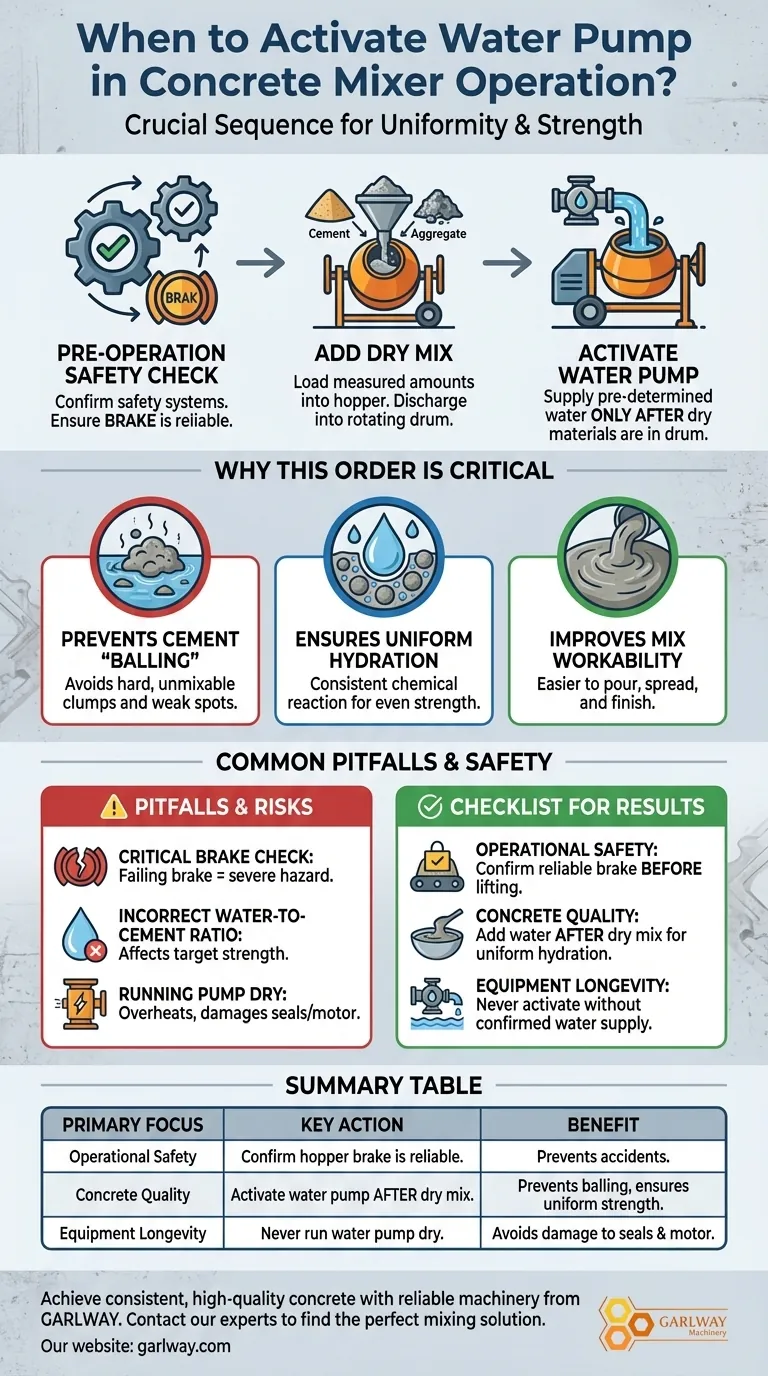
Visual Guide
Related Products
- JDY350 Electric Hydraulic Mortar Mud Concrete Mixer
- Hydraulic Concrete Mixer Machine Cement Mixing Equipment for Mixture Concrete
- Construction Products Concrete Plant Machine Mixing Concrete Mixer
- Portable Concrete Mixer Machine Equipment for Mixing Concrete
- HZS90 Large Multiquip Concrete Mixers for Construction
People Also Ask
- When are electric mortar mixers typically used? Find the Perfect Tool for Small to Medium-Sized Jobs
- What are hydraulic concrete mixers used for? Powering Large-Scale Construction Projects
- How are mortar mixers utilized in concrete and grout projects? Maximize Your Mixing Efficiency
- What are the benefits of electric concrete mixers? Quiet, Clean, and Low-Maintenance Mixing
- What is a mortar mixer and what is its primary use? Master Masonry with the Right Equipment





