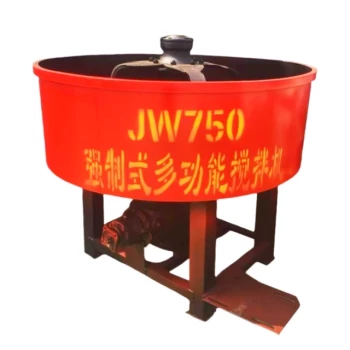
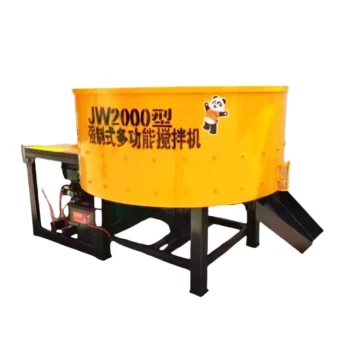
At its core, a compulsory concrete mixer is an integrated system designed for high-intensity, forced mixing. Its main components include a stationary mixing drum with an internal mixing device (paddles or blades), a powerful transmission system (reducer), a reliable shaft-end sealing system, an automated lubrication system, and mechanisms for feeding materials and discharging the final product.
Unlike a common drum mixer that simply tumbles materials, a compulsory mixer uses powerful, rotating blades to shear, fold, and force aggregates and cement paste together. This fundamental difference in action dictates the design of every component, prioritizing power, durability, and control.
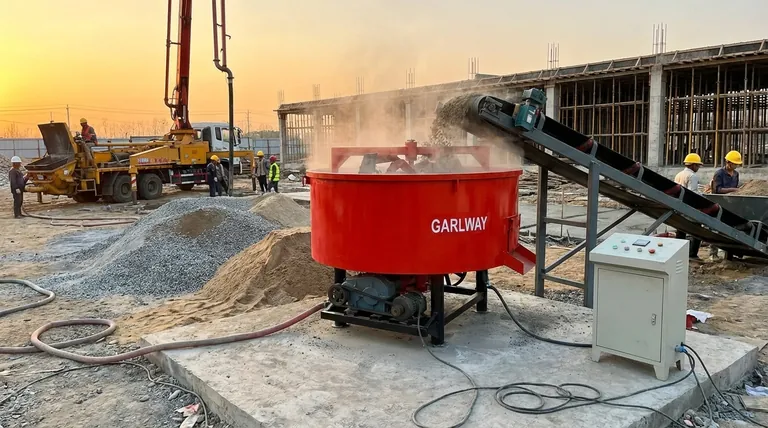
The Three Core Functional Units
A compulsory mixer's operation can be understood by breaking it down into three primary units: how materials get in, what happens to them inside, and how they get out.
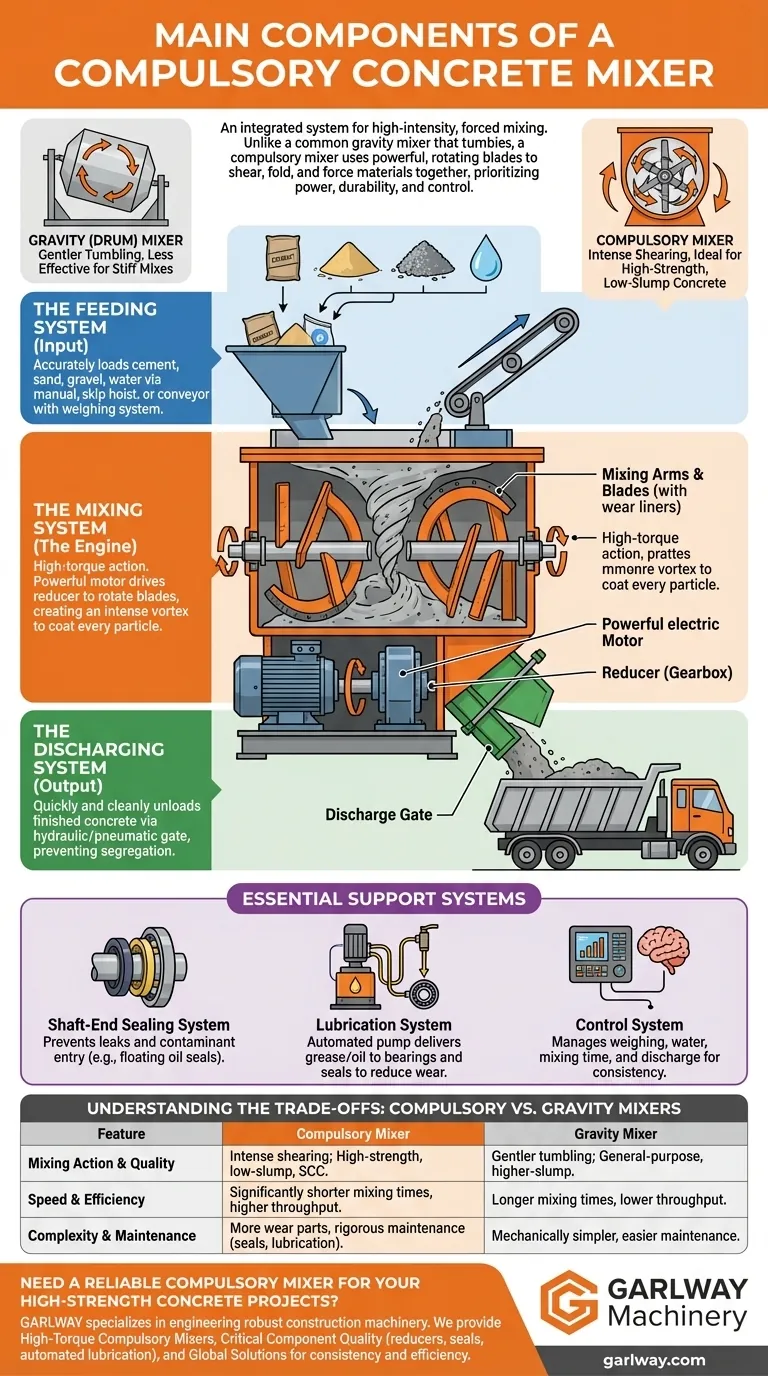
The Feeding System (Input)
The feeding system is responsible for accurately and efficiently loading raw materials like cement, sand, gravel, and water into the mixing drum. This can range from simple manual loading to automated skip hoists or conveyor belts that work in tandem with a weighing system.
The Mixing System (The Engine)
This is the heart of the mixer and what makes it "compulsory." It's not just a passive container but an active, high-torque machine.
Key parts include the mixing device, which consists of arms, paddles, or blades mounted on a rotating shaft. These tools move through the material at high speed, creating an intense vortex that ensures every particle is coated in cement paste.
This action is driven by a prime mover (typically a powerful electric motor) connected to a reducer (gearbox), which translates the motor's high speed into the low-speed, high-torque force needed to churn dense, heavy concrete.
The Discharging System (Output)
Once the mixing cycle is complete, the homogenous concrete must be unloaded quickly and cleanly. The discharging system is typically a hydraulically or pneumatically operated gate at the bottom of the mixer. The size and design of this gate are critical for preventing segregation of the mix during discharge.
Essential Support Systems
To handle the intense forces of compulsory mixing, several critical support systems are required to ensure reliability and longevity.
The Shaft-End Sealing System
Where the rotating mixing shafts exit the stationary drum is a critical failure point. A robust shaft-end sealing system, often using multiple layers including floating oil seals, is essential. Its sole purpose is to prevent concrete slurry from leaking out and to stop contaminants like dust and water from entering the gearbox and bearings.
The Lubrication System
The high-stress environment of the bearings and seals demands constant lubrication. Modern compulsory mixers use an electric lubricating oil pump that automatically delivers grease or oil to these critical points at programmed intervals, drastically reducing wear and preventing catastrophic failure.
The Control System
An electronic control system serves as the brain of the operation. It manages the entire process, from weighing the raw materials and controlling the water supply to setting the mixing time and actuating the discharge gate. This automation ensures batch-to-batch consistency and operational efficiency.
Understanding the Trade-offs: Compulsory vs. Gravity Mixers
The choice of a mixer depends entirely on the required quality and type of concrete. The components of a compulsory mixer are designed for a purpose that a simpler gravity mixer cannot achieve.
Mixing Action and Quality
A compulsory mixer provides a forced, intense shearing action, making it ideal for producing high-strength, low-slump, or specialized concrete like Self-Compacting Concrete (SCC). A gravity (drum) mixer uses a gentler tumbling motion, which is sufficient for general-purpose, higher-slump concrete but less effective at achieving a perfectly homogenous mix with stiff materials.
Speed and Efficiency
The intense action of a compulsory mixer results in significantly shorter mixing times compared to a gravity mixer, leading to higher plant throughput.
Complexity and Maintenance
The power and precision of a compulsory mixer come at a cost. They have more wear parts (blades, liners, seals) and require more rigorous maintenance, particularly for the sealing and lubrication systems. Gravity mixers are mechanically simpler and generally easier to maintain.
Making the Right Choice for Your Goal
Selecting the correct type of mixer begins with understanding the requirements of your final product.
- If your primary focus is high-performance or specialized concrete: The intense, forced mixing action of a compulsory mixer is non-negotiable for achieving consistent, high-quality results.
- If your primary focus is high-volume, standard-grade concrete for general construction: A simpler and more cost-effective gravity (drum) mixer is often the more practical choice.
- If your primary focus is long-term operational reliability: Regardless of mixer type, pay close attention to the design and quality of the sealing, lubrication, and transmission systems, as these are the components that determine its service life.
By understanding how these components function as a cohesive system, you can evaluate a mixer based on its ability to deliver the specific performance your project demands.
Summary Table:
| Component Category | Key Parts | Primary Function |
|---|---|---|
| Mixing System | Mixing Blades/Arms, Reducer, Motor | Provides intense, forced shearing action for a homogenous mix. |
| Feeding System | Skip Hoist, Conveyor, Weighing System | Accurately loads raw materials (cement, sand, aggregate, water). |
| Discharging System | Hydraulic/Pneumatic Discharge Gate | Quickly and cleanly unloads the finished concrete batch. |
| Support Systems | Shaft-End Seals, Lubrication Pump, Control Panel | Ensures reliability, prevents leaks, and automates operation. |
Need a Reliable Compulsory Mixer for Your High-Strength Concrete Projects?
Understanding the components is the first step; owning a durable, high-performance mixer is the next. GARLWAY specializes in engineering robust construction machinery for demanding applications.
We provide:
- High-Torque Compulsory Mixers designed for superior mixing of stiff, high-performance, and specialized concrete.
- Critical Component Quality with a focus on heavy-duty reducers, advanced sealing systems, and automated lubrication for maximum uptime.
- Solutions for Construction Companies and Contractors globally who require consistent, batch-to-batch quality and efficiency.
Let's discuss your project requirements. Contact our experts today to find the perfect concrete mixing solution for your needs.
Visual Guide
Related Products
- Construction Products Concrete Plant Machine Mixing Concrete Mixer
- Concrete Cement Mixer Machine Drum Mixer for Construction
- Portable Concrete Mixer Machine Equipment for Mixing Concrete
- Harbor Freight JS1500 On Site Concrete Mixing Volumetric Cement Mixer
- Hydraulic Concrete Mixer Machine Cement Mixing Equipment for Mixture Concrete
People Also Ask
- What factors should be considered when choosing between volumetric and traditional mixers? Optimize Your Concrete Project Strategy
- What is the difference between pan and planetary mixers? Choose the Right Mixer for Your Concrete Project
- When was the first concrete mixer developed and by whom? Discover the 1900 Breakthrough
- What is the average lifespan of a concrete mixer? Maximize Your Equipment's Lifespan & ROI
- What are the two broad types of concrete mixers? Choose the Right Mixer for Your Project