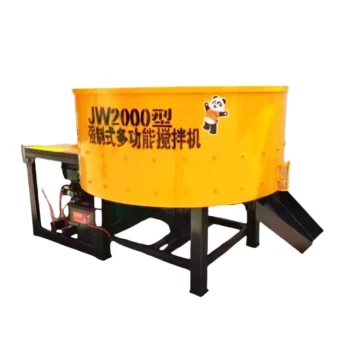
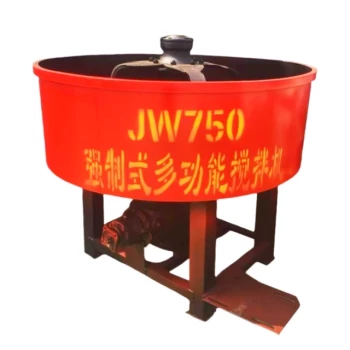
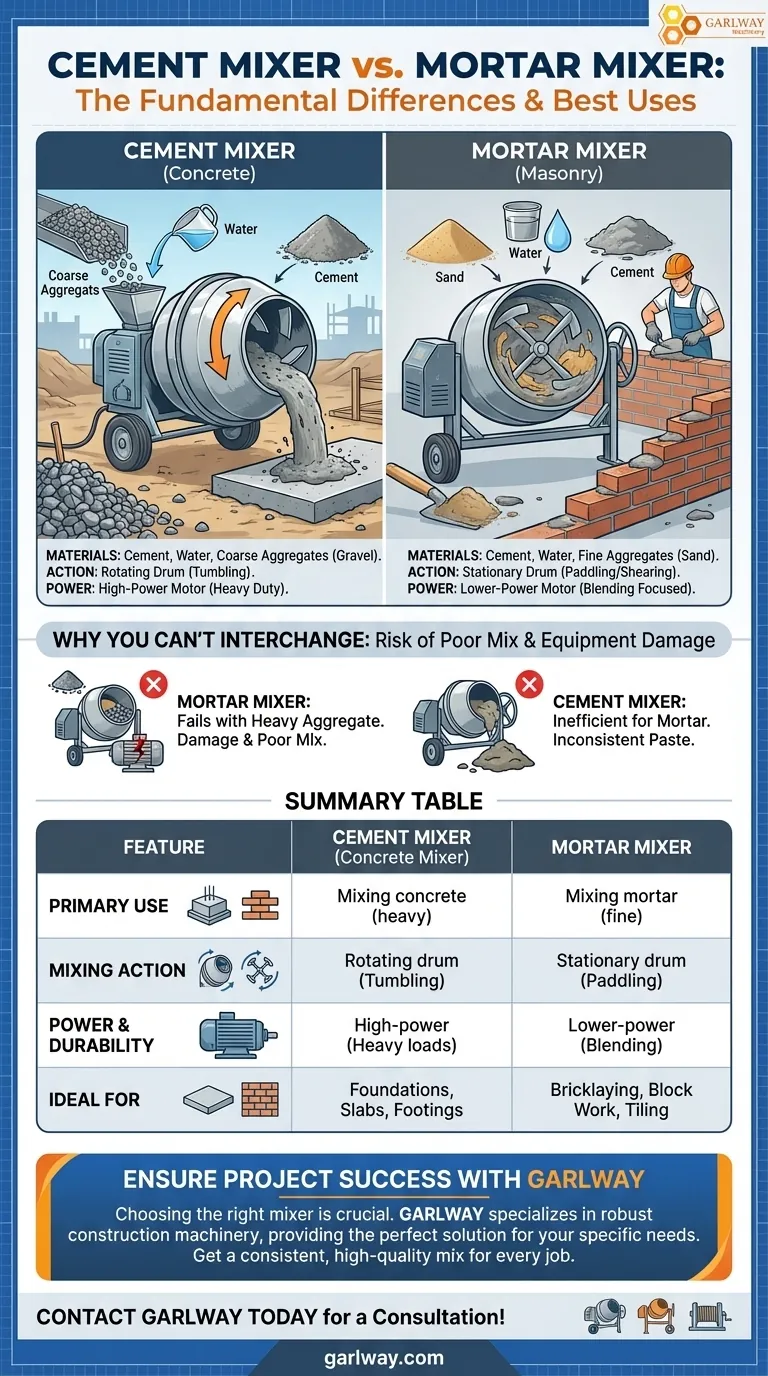
The fundamental difference between a cement mixer and a mortar mixer lies in the materials they are designed to handle. A cement mixer is built to combine cement, water, and coarse aggregates like gravel to create concrete, while a mortar mixer is designed to blend cement, water, and fine aggregates like sand to create mortar.
The core distinction is in their mixing action and power. A cement mixer tumbles heavy concrete, while a mortar mixer uses paddles to shear and blend lighter mortar. Using the wrong machine for the job can lead to a poor-quality mix and damage the equipment.
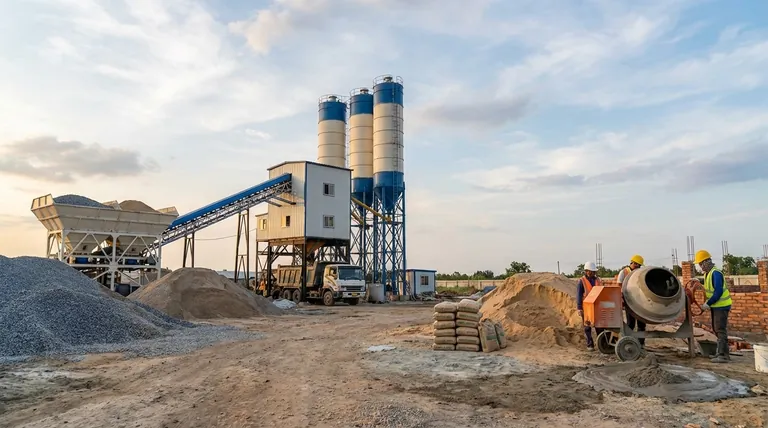
The Core Mechanical Differences
To understand why these machines are not interchangeable, you must look at their fundamental design and how they operate. Each is engineered specifically for the consistency of the material it is meant to produce.
Mixing Action: Tumbling vs. Paddling
A cement mixer, often called a concrete mixer, uses a large rotating drum. As the drum spins, fins on the inside lift the materials—including heavy gravel—and let them tumble back down, using gravity to do the mixing.
A mortar mixer, in contrast, typically has a stationary drum. Inside, a set of paddles rotates on a central shaft, shearing through the mixture. This action is ideal for blending the finer particles of sand and cement into the smooth, consistent paste required for masonry work.
Power and Durability
Creating concrete is a heavy-duty task. Cement mixers are built with more powerful motors to handle the weight and force required to tumble a slurry containing coarse stone and gravel.
Mortar mixers require less power. Their design is focused on the blending action of the paddles, not on lifting and dropping heavy aggregate, so they utilize smaller motors.
The Consequences of Using the Wrong Mixer
Attempting to use these machines for the wrong application is not just inefficient; it can be destructive and result in a failed project.
Why You Can't Use a Mortar Mixer for Concrete
Placing concrete ingredients into a mortar mixer is a recipe for failure. The mixer's lower-power motor and paddle system cannot effectively move the heavy, coarse aggregate.
This leads to a poor mix where the material may harden too quickly. Furthermore, the gravel can damage the mixer's sides and rubber seals, clog the paddles, and ultimately destroy the machine.
Can You Use a Cement Mixer for Mortar?
While you technically can mix mortar in a cement mixer, it is highly inefficient. The tumbling action is not well-suited for creating the smooth consistency mortar requires.
Without the shearing action of paddles, the mortar tends to stick to the sides of the drum, resulting in an inconsistent mix that is difficult to work with.
A Note on Terminology: "Cement" vs. "Concrete" Mixer
The terms cement mixer and concrete mixer are used interchangeably. While "cement" is just one ingredient, both terms refer to the same machine designed to produce concrete by mixing cement, aggregate, and water.
Making the Right Choice for Your Job
Selecting the correct mixer is critical for the efficiency of your work and the structural integrity of the final product.
- If your primary focus is concrete work (foundations, slabs, footings): You must use a cement/concrete mixer designed to handle heavy, coarse aggregates.
- If your primary focus is masonry work (bricklaying, block work, tiling): You need a mortar mixer to achieve the smooth, consistent blend required for adhesion.
Ultimately, choosing the right tool is the first step toward ensuring the quality and durability of your construction project.
Summary Table:
| Feature | Cement Mixer (Concrete Mixer) | Mortar Mixer |
|---|---|---|
| Primary Use | Mixing concrete (cement, water, gravel) | Mixing mortar (cement, water, sand) |
| Mixing Action | Rotating drum with fins; tumbling action | Stationary drum with rotating paddles; shearing action |
| Power & Durability | High-power motor for heavy aggregates | Lower-power motor for fine materials |
| Ideal For | Foundations, slabs, footings | Bricklaying, block work, tiling |
Ensure Project Success with the Right Equipment from GARLWAY
Choosing the correct mixer is crucial for the efficiency and quality of your construction work. GARLWAY specializes in providing robust and reliable construction machinery, including cement mixers and mortar mixers, tailored for construction companies and contractors globally.
Let us help you select the perfect machine for your specific needs. Our experts can guide you to the ideal equipment, ensuring you get a consistent, high-quality mix for every job, from large-scale concrete pours to precise masonry work.
Contact GARLWAY today for a consultation and discover how our durable winches, concrete mixers, and batching plants can power your projects to success!
Visual Guide
Related Products
- HZS25 Best Cement Mixer for Quick Mix Concrete at Bunnings
- JDC350 Small Cement Concrete Mortar Mixer
- JW1000 Mobile Cement Mixer Concrete Mixer Truck and Batching Plant
- JZC400 Mobile Small Concrete Mixer Cement Mixer Machine
- Concrete Cement Mixer Machine Drum Mixer for Construction
People Also Ask
- How do cement mixers enhance safety on construction sites? Reduce Strain, Hazards, and Accidents
- What are the main components of a cement mixer? A Guide to Core Parts & Functions
- What are some tips for using a cement mixer effectively? Maximize Your Mixer's Performance & Concrete Quality
- How does cleaning a cement mixer after use benefit its performance? Maximize Lifespan and Mix Quality
- Why is it important to clean the cement mixer after use? Prevent Costly Damage and Ensure Quality Concrete