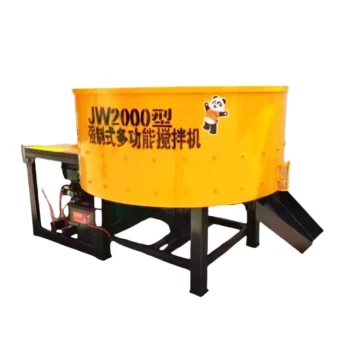
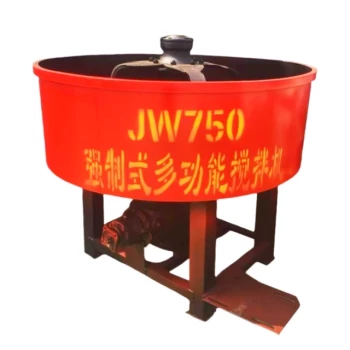
Continuous mixers are the engines of large-scale construction, used for massive projects where an uninterrupted supply of concrete is non-negotiable. They are the standard for building major infrastructure like dams, bridges, and roads, as well as for high-rise buildings and large precast manufacturing operations.
The decision to use a continuous mixer is driven by the need for immense volume and consistent flow. Unlike batch mixers, which produce concrete in discrete loads, continuous systems provide a steady, uninterrupted stream essential for monolithic structures and high-efficiency operations.
The Principle of Uninterrupted Flow
To understand where continuous mixers are used, you must first understand how they operate. Their design is fundamentally different from the more common batch mixer.
How Continuous Mixing Works
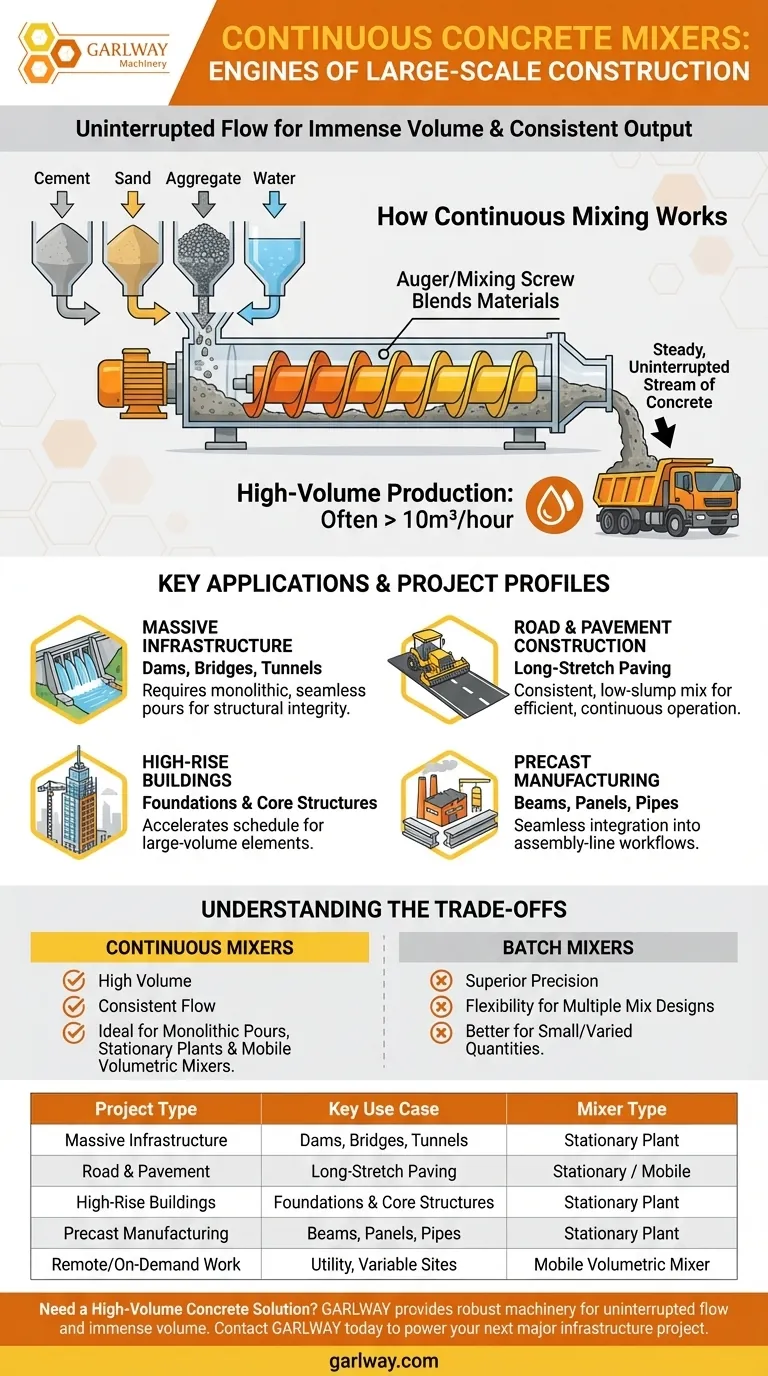
A continuous mixer operates as an ongoing process. Raw materials like cement, sand, aggregate, and water are constantly fed from hoppers into the system.
These materials are then moved through a long chamber, typically by an auger or mixing screw, which blends them into concrete. The finished concrete is discharged at the other end at the same rate the materials are loaded, creating a steady stream.
The Defining Advantage: High Volume
The primary benefit is high-volume production. These systems are designed to run for prolonged periods without stopping, often producing well over 10 cubic meters of concrete per hour.
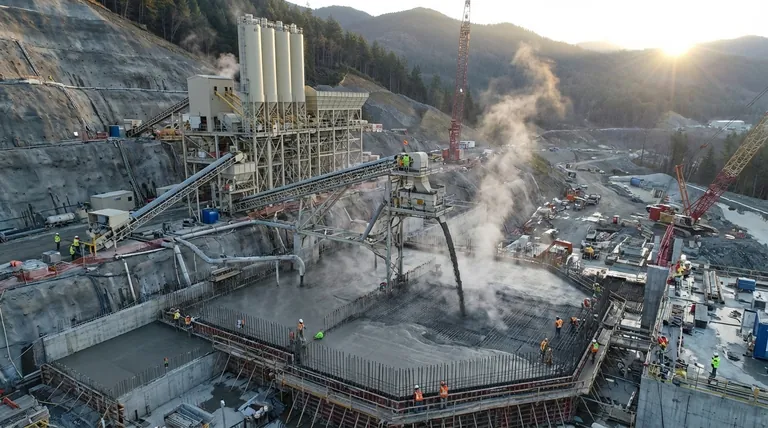
This makes them indispensable for projects that require massive, single-placement pours, such as the foundation of a dam or a large bridge deck, where stopping the flow of concrete is not an option.
Key Applications and Project Profiles
The operational advantages of continuous mixers make them the definitive choice for specific project categories defined by scale and demand.
Massive Infrastructure Projects
This is the classic application for continuous mixers. Projects like dams, large bridges, and tunnels require a colossal amount of concrete placed over a sustained period. A continuous mixer ensures the structural integrity that comes from a monolithic, seamless pour.
Road and Pavement Construction
Paving long stretches of roadway requires a consistent, low-slump (stiff) concrete mix. Continuous mixers excel at producing this type of concrete efficiently, allowing paving machines to operate without costly interruptions.
High-Rise Buildings
While batch mixers are common, continuous systems can be used for the massive foundations or core structures of skyscrapers and other high-rise buildings. The consistent supply helps accelerate the construction schedule for these large-volume elements.
Precast Concrete Manufacturing
In a factory setting, efficiency is paramount. Precast concrete plants that produce standardized elements like beams, panels, or pipes benefit greatly from the steady output of a continuous mixer, which integrates seamlessly into an assembly-line-style workflow.
Understanding the Trade-offs
While powerful, continuous mixers are not universally superior. Their strengths in volume come with trade-offs in flexibility.
Precision vs. Volume
Batch mixers offer superior control over the precise specifications of each individual load. This makes them better suited for projects requiring multiple, distinct concrete mix designs. Continuous mixers are optimized for producing one consistent mix at a massive scale.
Mobile vs. Stationary Systems
The term "continuous mixer" can refer to two distinct setups. Large, stationary plants are built on-site for megaprojects like dams.
However, mobile volumetric mixers (often seen on trucks) are also a type of continuous mixer. They carry unmixed materials to a job site and mix concrete on demand, making them ideal for remote locations, utility work, or projects with variable demand.
Startup and Shutdown Inefficiency
Continuous mixers are designed for long, uninterrupted runs. They are less efficient for projects that require frequent starts and stops or need only small quantities of concrete at a time. The setup and cleaning process is more involved than that of a simple batch mixer.
Making the Right Choice for Your Goal
Selecting the correct mixing technology is about matching the equipment's capabilities to the project's specific demands.
- If your primary focus is a massive, monolithic pour (like a dam or large foundation): A stationary continuous mixing plant is the only choice for its unmatched volume and steady output.
- If your primary focus is large-scale paving or precast manufacturing: A continuous mixer provides the consistent, high-volume production needed for maximum efficiency.
- If your primary focus is on-demand concrete at remote or varied sites: A mobile volumetric mixer offers exceptional flexibility by mixing fresh concrete precisely when and where it is needed.
- If your primary focus is architectural work with multiple, custom mix designs: A traditional batch mixer will provide far greater control and less waste for your specific needs.
Ultimately, the choice hinges on whether the project prioritizes sheer volume and consistency over the flexibility of individual batches.
Summary Table:
| Project Type | Key Use Case | Mixer Type |
|---|---|---|
| Massive Infrastructure | Dams, Bridges, Tunnels | Stationary Plant |
| Road & Pavement | Long-Stretch Paving | Stationary/Mobile |
| High-Rise Buildings | Foundations & Core Structures | Stationary Plant |
| Precast Manufacturing | Beams, Panels, Pipes | Stationary Plant |
| Remote/On-Demand Work | Utility, Variable Sites | Mobile Volumetric Mixer |
Need a High-Volume Concrete Solution for Your Large-Scale Project?
GARLWAY specializes in providing robust construction machinery, including concrete batching plants and mixers, for construction companies and contractors globally. Our equipment is engineered to deliver the uninterrupted flow and immense volume essential for your most demanding projects, from dam foundations to high-rise buildings.
Let us help you achieve superior efficiency and structural integrity.
Contact GARLWAY today to discuss how our solutions can power your next major infrastructure project.
Visual Guide
Related Products
- JS1000 Volumetric Concrete Mortar Mixer for Sale Skid Steer Cement Mixer
- Portable Concrete Mixer Machine Equipment for Mixing Concrete
- Portable Cement Mixer with Lift Concrete Machine
- JDY350 Electric Hydraulic Mortar Mud Concrete Mixer
- Portable Electric Concrete Mixer Machine for Cement Mixing
People Also Ask
- What is the basic working principle of volumetric concrete mixers? On-Demand Mixing for Zero Waste
- What are the advantages of using volumetric mixers for small concrete jobs? Save Costs and Gain On-Site Control
- What are the advantages of volumetric concrete mixers compared to drum mixers? Achieve On-Demand Mixing & Zero Waste
- What are some innovations in volumetric concrete mixers? Boost Efficiency with On-Demand Production
- Why do volumetric mixers provide better ROI? Maximize Profit with On-Demand Concrete Production