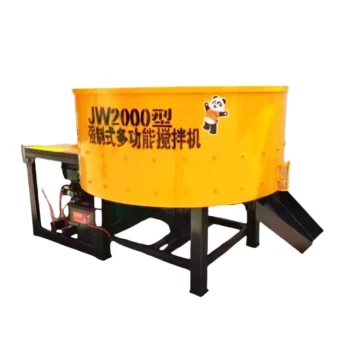
At its core, a mortar mixer is engineered for versatility with fine, smooth, and sticky compounds. While its primary purpose is to mix mortar for masonry, its design makes it highly effective for a wide range of materials including stucco, plaster, grout, drywall mud, terrazzo, epoxy, and even thick paints.
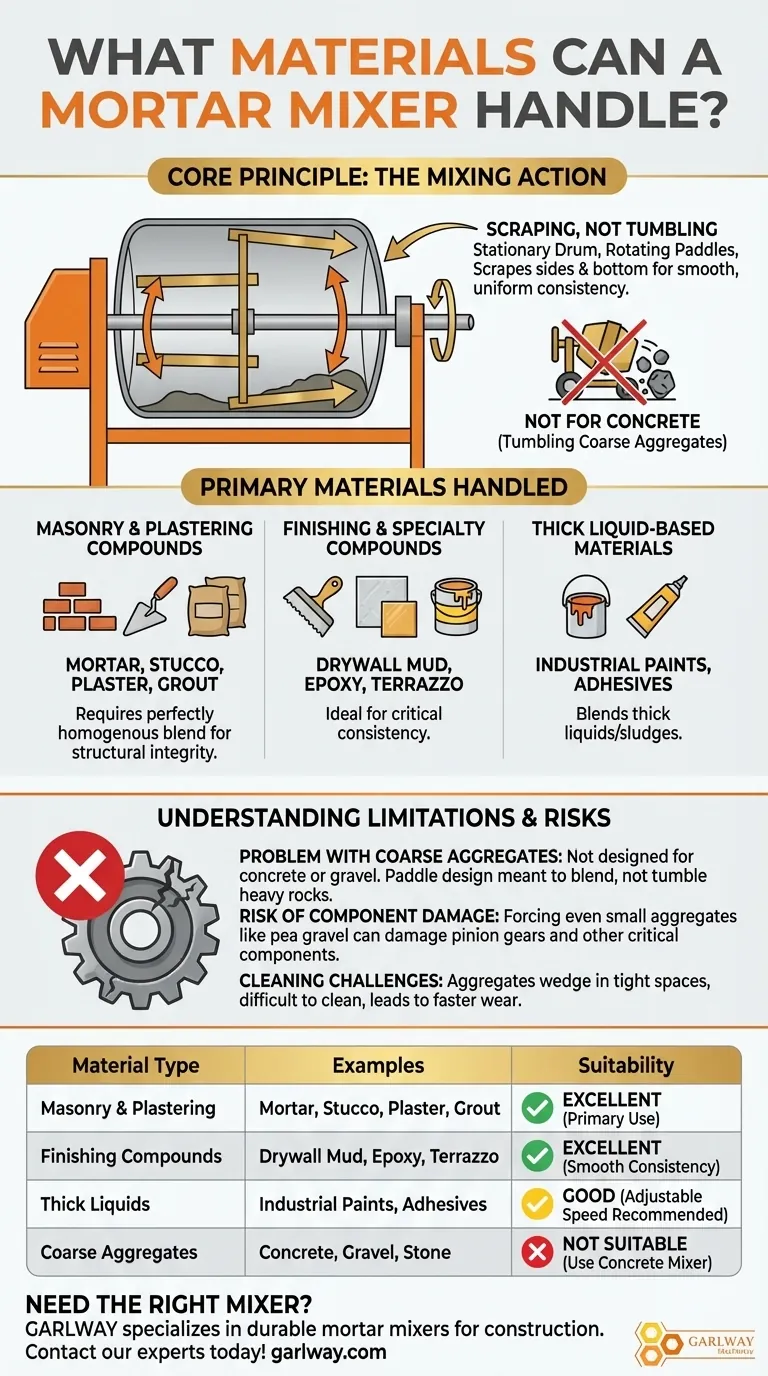
The key distinction is the mixing action. A mortar mixer uses rotating paddles inside a stationary drum to scrape and combine materials, making it ideal for fine, sticky compounds. This is fundamentally different from a concrete mixer, which tumbles coarse aggregates.
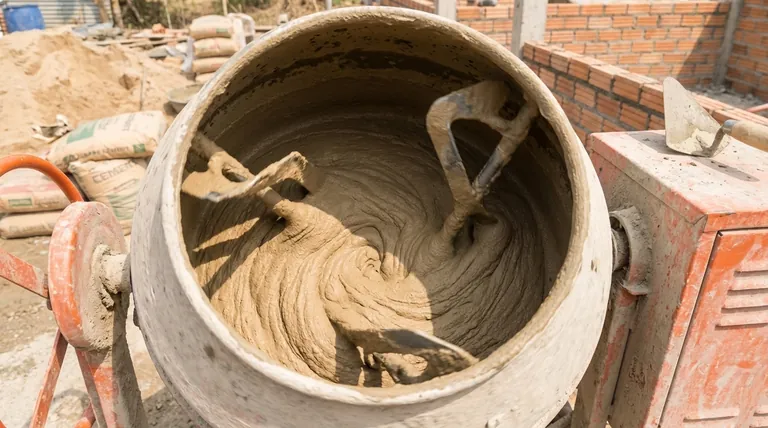
The Principle of the Mortar Mixer: How It Works
A mortar mixer's effectiveness stems directly from its mechanical design, which is purpose-built for materials that require a smooth, uniform consistency rather than the tumbling action needed for heavy aggregates.
A Stationary Drum with Rotating Paddles
Unlike a concrete mixer that rotates its entire drum, a mortar mixer's drum is stationary. Inside, a set of horizontal paddles rotates on a shaft.
This design is the single most important feature. It allows for a controlled, powerful, and consistent mixing process throughout the entire batch.
A Scraping, Not Tumbling, Action
The rotating paddles are designed to continuously scrape the sides and bottom of the drum.
This action is crucial for thoroughly blending sticky or thick materials like mortar and plaster, preventing them from clumping or sticking to the sides and ensuring a perfectly uniform mixture.
Achieving a Smooth, Flawless Consistency
The goal of mixing materials like mortar or grout is a smooth, workable paste. The paddle action shears and folds the material, eliminating lumps and creating the ideal consistency for applications like bricklaying, plastering, and tiling.
Primary Materials Handled by a Mortar Mixer
The design of a mortar mixer makes it the superior choice for a specific category of building materials.
Masonry and Plastering Compounds
This is the mixer's primary domain. It excels at mixing mortar (cement, sand, water), stucco, plaster, and grout. These materials require a perfectly homogenous blend to ensure structural integrity and a clean finish.
Finishing and Specialty Compounds
The thorough mixing action is also ideal for materials where consistency is critical. This includes drywall mud, epoxy compounds, and terrazzo mixtures, ensuring all components are evenly distributed.
Thicker Liquid-Based Materials
For applications requiring the blending of thick liquids or sludges, such as industrial paints or certain adhesives, a mortar mixer can provide the necessary force to achieve a uniform mixture.
Understanding the Trade-offs and Limitations
While versatile, a mortar mixer is not a universal solution. Using it with the wrong materials can lead to poor results and equipment damage.
The Problem with Coarse Aggregates
A mortar mixer is not designed for concrete or any mix containing large, coarse aggregates like gravel.
The paddle design is meant to blend, not lift and tumble heavy rocks. Attempting to mix concrete will result in an improper mix and excessive strain on the machine.
Risk of Component Damage
Forcing a mortar mixer to handle even small aggregates like pea gravel can cause significant wear. There is a high risk of damaging critical components like the pinion gears if larger rocks get caught in the mechanism.
Cleaning and Maintenance Challenges
Even if the mixer handles materials with small aggregates without immediate damage, it becomes significantly more difficult to clean. The aggregates can get wedged in tight spaces, leading to faster wear and tear.
Making the Right Choice for Your Material
To select the correct equipment, you must match the tool's design to the material's composition.
- If your primary focus is fine masonry or finishing work: A mortar mixer is the correct tool for achieving the smooth, consistent blend required for mortar, stucco, plaster, and grout.
- If your primary focus is mixing with coarse aggregates: You must use a concrete mixer, as its tumbling action is specifically designed to handle the weight and size of gravel and stone.
- If your primary focus is specialty compounds or thick liquids: A mortar mixer is highly effective, but consider one with adjustable speed controls to fine-tune the mixing action for different viscosities.
Ultimately, understanding that the mixer's paddle design is optimized for blending fine materials is the key to using it effectively and safely.
Summary Table:
| Material Type | Examples | Suitability for Mortar Mixer |
|---|---|---|
| Masonry & Plastering | Mortar, Stucco, Plaster, Grout | Excellent - Primary Use |
| Finishing Compounds | Drywall Mud, Epoxy, Terrazzo | Excellent - Smooth Consistency |
| Thick Liquids | Industrial Paints, Adhesives | Good - Adjustable Speed Recommended |
| Coarse Aggregates | Concrete, Gravel, Stone | Not Suitable - Use Concrete Mixer |
Need the right mixer for your project? GARLWAY specializes in construction machinery, offering durable and efficient mortar mixers perfect for construction companies and contractors working with mortar, plaster, grout, and other fine compounds. Our equipment ensures a smooth, uniform mix every time. Contact our experts today to find the ideal solution for your specific materials and boost your jobsite productivity!
Visual Guide
Related Products
- JDY350 Electric Hydraulic Mortar Mud Concrete Mixer
- JDC350 Small Cement Concrete Mortar Mixer
- Mini Cement Mortar Mixer Truck for Construction
- Belle Mixer Drum Self Loading Mortar Mixers JS3000
- JS1000 Volumetric Concrete Mortar Mixer for Sale Skid Steer Cement Mixer
People Also Ask
- When are electric mortar mixers typically used? Find the Perfect Tool for Small to Medium-Sized Jobs
- What are hydraulic concrete mixers used for? Powering Large-Scale Construction Projects
- How are mortar mixers utilized in concrete and grout projects? Maximize Your Mixing Efficiency
- What are the benefits of electric concrete mixers? Quiet, Clean, and Low-Maintenance Mixing
- What is a mortar mixer and what is its primary use? Master Masonry with the Right Equipment