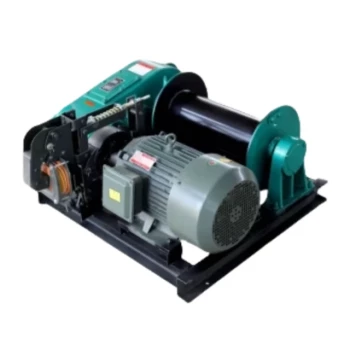
To put it simply, a quick winch is available with either a single drum or a double drum. These two configurations define the winch's operational capacity and its suitability for different types of tasks.
The choice between a single or double drum winch is a fundamental decision that balances operational simplicity against advanced capability. A single drum is for straightforward pulling, while a double drum opens up more complex rigging and multi-line operations.
The Role of the Winch Drum
Before comparing configurations, it's essential to understand what the drum does. It's the central component around which the entire winch system operates.
Core Function
The drum is the cylindrical barrel that spools the wire rope or synthetic cable. Its primary job is to wind the cable under load, converting the rotational force from the motor and gearbox into linear pulling power.
How It Integrates into the System
A winch drum doesn't work in isolation. It is part of a system that typically includes a power source (like a hydraulic or electric motor), a planetary gear train for torque multiplication, and a braking mechanism, many of which are housed within the drum itself.
Single Drum vs. Double Drum: The Key Differences
The number of drums is the most significant architectural difference between winch models, directly impacting how you can use the equipment.
The Single Drum Winch
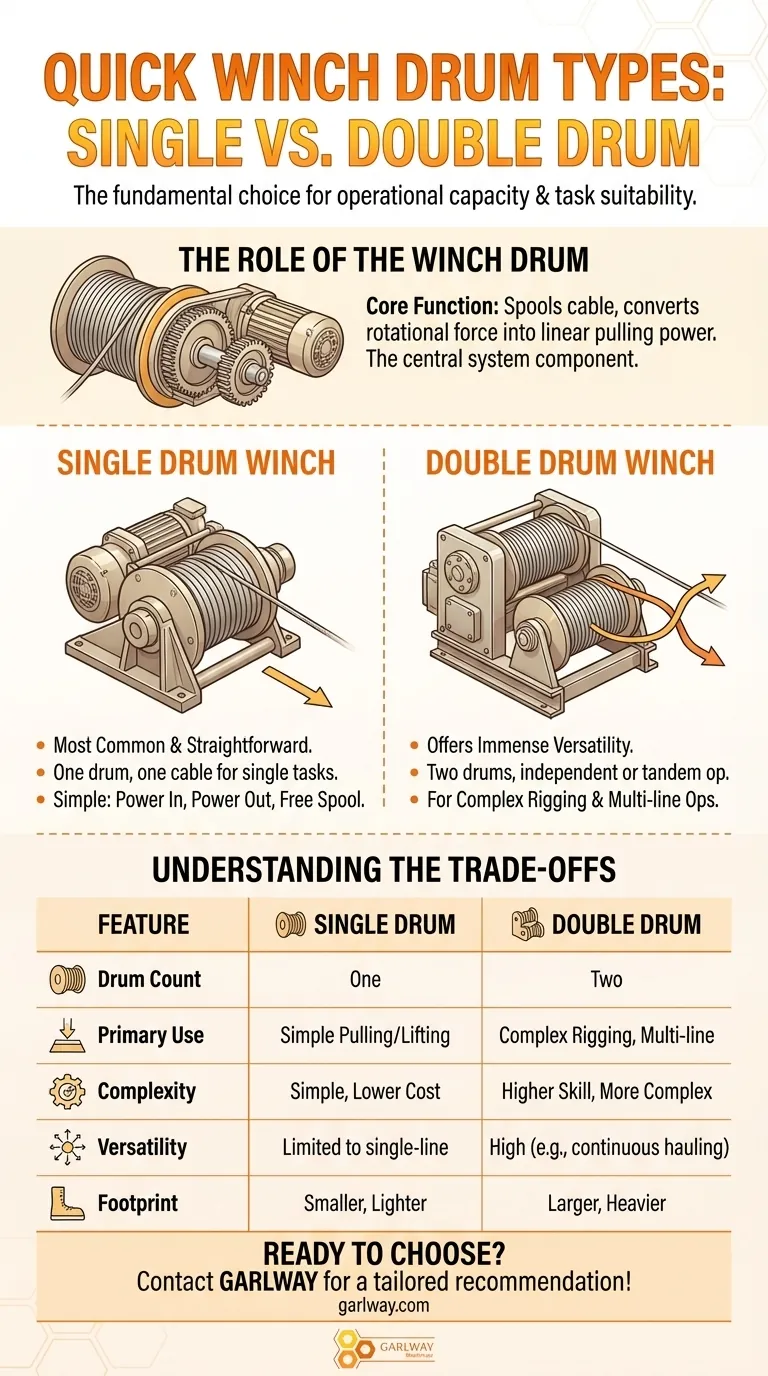
This is the most common and straightforward winch configuration. It features one drum that manages one cable, designed for a single, primary pulling or lifting task. Its operation is simple: power in, power out, or free spool.
The Double Drum Winch
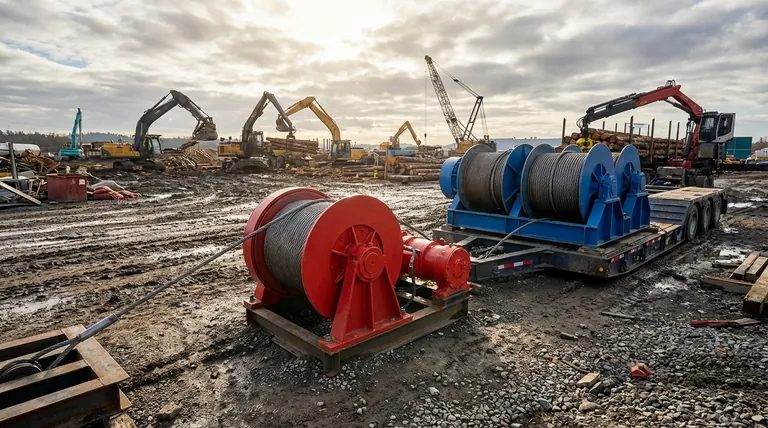
A double drum winch, sometimes called a "waterfall" winch, features two drums mounted on a common frame. These drums can often be operated independently or in tandem, providing significantly more operational flexibility for complex tasks.
Understanding the Trade-offs
Choosing a configuration requires balancing cost, complexity, and capability. There is no single "best" option; there is only the right tool for your specific application.
Simplicity vs. Versatility
A single drum winch is mechanically simpler, which generally means it is more cost-effective, lighter, and easier to maintain.
A double drum winch offers immense versatility. It can manage two separate loads, create a continuous loop system for hauling objects back and forth, or allow for more advanced rigging scenarios.
Operational Complexity
Operating a double drum winch requires more skill and attention. The user must manage two separate lines, which adds a layer of complexity not present with a standard single-line pull.
Footprint and Weight
By its nature, a double drum winch is larger, heavier, and requires more mounting space than its single drum counterpart. This is a critical factor for vehicle-mounted applications where weight and space are at a premium.
Making the Right Choice for Your Application
Your final decision should be guided by the tasks you need to accomplish.
- If your primary focus is straightforward recovery or pulling a single load: A single drum winch is the most reliable, efficient, and cost-effective solution.
- If your primary focus involves complex rigging, multi-line pulls, or continuous hauling: A double drum winch provides the advanced capability necessary to perform the job safely and effectively.
Ultimately, understanding the distinction between these two core designs empowers you to select the right tool for your specific goal.
Summary Table:
| Feature | Single Drum Winch | Double Drum Winch |
|---|---|---|
| Drum Count | One | Two |
| Primary Use | Straightforward pulling/lifting | Complex rigging, multi-line operations |
| Complexity | Simple operation and maintenance | Higher operational skill required |
| Versatility | Limited to single-line tasks | High (e.g., continuous hauling, separate loads) |
| Ideal For | Standard recovery, simple pulls | Advanced construction, logging, specialized tasks |
Ready to Choose the Right Winch for Your Project?
Whether you need the simplicity of a single drum winch for straightforward tasks or the advanced capability of a double drum for complex operations, GARLWAY has the solution. We specialize in durable construction machinery, including winches, concrete mixers, and batching plants, designed for construction companies and contractors worldwide.
Let us help you enhance your operational efficiency and safety. Contact our experts today to discuss your specific requirements and get a tailored recommendation!
Visual Guide
Related Products
- Quick Windlass Portable Winch for Truck and Boat Best Boat Winch
- Small Electric Winch 120V and 240V for Compact Applications
- Portable Small Trailer Winch
- Hydraulic Winding Engine Harbor Freight Winch
- Electric and Hydraulic Winch for Heavy Duty Applications
People Also Ask
- What features were incorporated into the upgraded portable winch system? Boost Your Recovery Power & Safety
- What are some uses mentioned for portable winches beyond vehicle recovery? Essential Versatility for Property & Work
- How could the twisting issue with a portable winch be mitigated? Achieve Safe, Centered Pulls with Proper Rigging
- What are the primary uses of a portable winch for a truck? Boost Your Truck's Capability and Self-Reliance
- What is the single rope traction force of the quick winch without a pulley block? 0.5 to 40 Tons Explained