
For any concrete mixing plant, the operational integrity of your belt conveyors and bucket elevators hinges on ensuring they run smoothly and flexibly. They must operate without any abnormal noises or chain jams, as these are the primary indicators of potential failure and inefficiency in the material handling process.
The reliability of a concrete plant's material conveying system is not just a matter of day-to-day observation. It is the direct result of proper equipment selection, rigorous pre-operation checks, and strict adherence to safety protocols designed to prevent costly downtime.
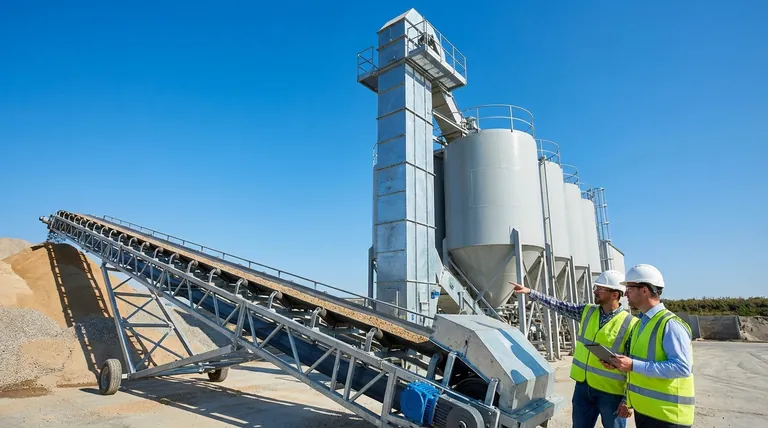
The Foundation: Pre-Operation Verification
Before any production run, a series of no-load tests are critical to verify the mechanical and electrical soundness of the conveying systems. This is a non-negotiable step for safe and efficient operation.
Confirming Rotational Direction
Upon starting the motors, your first check is to ensure that all shafts rotate in the direction indicated on the equipment nameplate. Reversing the motor direction is strictly prohibited and can cause significant damage.
Testing Hoist and Brake Systems
For bucket elevators or hopper hoists, start the hoist motor and verify that the hopper lifts correctly and stops automatically at the designated discharge position.
The brake motor is a critical safety component. If power is cut during a lift, the brake must hold the hopper firmly. If the hopper slides more than 150mm, the braking torque must be adjusted immediately.
Ensuring No Obstructions
The hopper must not get stuck or catch on any part of its track. The system should also be designed to ensure the hoist motor stops automatically when the hopper reaches the bottom and the wire rope loosens slightly.
Addressing Abnormalities Immediately
If any malfunction, unusual noise, or operational error is observed during these tests, the machine must be stopped. Production can only commence after all faults have been diagnosed and completely resolved by qualified personnel.
Core Operational Principles
During live production, continuous monitoring is key. The goal is to identify deviations from normal operation before they escalate into system failures.
Maintain Smooth and Flexible Movement
The defining characteristic of a healthy conveyor or elevator is smooth, uninterrupted movement. Any jerking, hesitation, or inconsistent speed is a sign of an underlying issue.
Monitor for Abnormal Noise
Mechanical noise is often the earliest indicator of a problem. Listen for grinding, squealing, or loud clanking, which can signal bearing failure, misalignment, or foreign objects in the system.
Prevent Jams and Blockages
For bucket elevators, this means preventing chain jams. For belt conveyors, it involves ensuring material flows freely from hoppers and transfer points without accumulation or overflow.
Avoid Load Starts
Never start a conveyor belt or mixer motor when it is already under a full load of material. This practice puts immense strain on the motor and mechanical components, leading to premature failure.
Understanding Key Safety Protocols
Operational integrity is inseparable from safety. These protocols protect both personnel and the equipment itself.
Comprehensive Equipment Knowledge
All operators and maintenance staff must be thoroughly familiar with the equipment's structure, functions, and control systems. When in doubt, always consult the manufacturer's technical documentation.
Safe Maintenance Practices
During any maintenance, the inspection door must be kept open, and a dedicated person must be on watch to ensure the safety of the technician inside. This prevents accidental startups.
Electrical and Environmental Safety
Avoid operating the plant during thunderstorms due to the risk of lightning strikes. Unless absolutely necessary for diagnostics, all network ports on control systems should remain properly sealed to protect sensitive electronics.
Data and System Integrity
Control system data should be backed up periodically. If a weighing sensor is ever replaced, the scales must be recalibrated to ensure the accuracy of the concrete mix, which directly impacts the conveying system's load.
How to Apply This to Your Project
Based on your responsibilities, prioritize the following checks to ensure system integrity.
- If your primary focus is daily operations: Monitor constantly for smooth movement, listen for any abnormal noises, and strictly enforce the rule against load starts.
- If your primary focus is maintenance: Prioritize pre-operation brake tests, inspect for potential chain jams or material buildup, and implement strict lockout/tagout procedures during all repairs.
- If your primary focus is plant management: Ensure all operators are fully trained, safety protocols are documented and followed, and that new equipment selection prioritizes long-term reliability and maintainability.
A proactive and vigilant approach to conveyor and elevator operation is fundamental to the efficiency, safety, and profitability of your entire concrete production process.
Summary Table:
| Focus Area | Key Action | Critical Check |
|---|---|---|
| Pre-Operation | No-load testing | Confirm rotational direction, test brakes |
| Core Operation | Continuous monitoring | Smooth movement, no abnormal noise |
| Safety | Adhere to protocols | Avoid load starts, ensure safe maintenance |
Maximize the reliability of your concrete plant's material handling system. GARLWAY specializes in providing robust construction machinery, including durable belt conveyors and bucket elevators designed for construction companies and contractors globally. Our equipment is engineered for smooth operation and long-term performance. Contact our experts today to discuss how our solutions can enhance your plant's efficiency and safety.
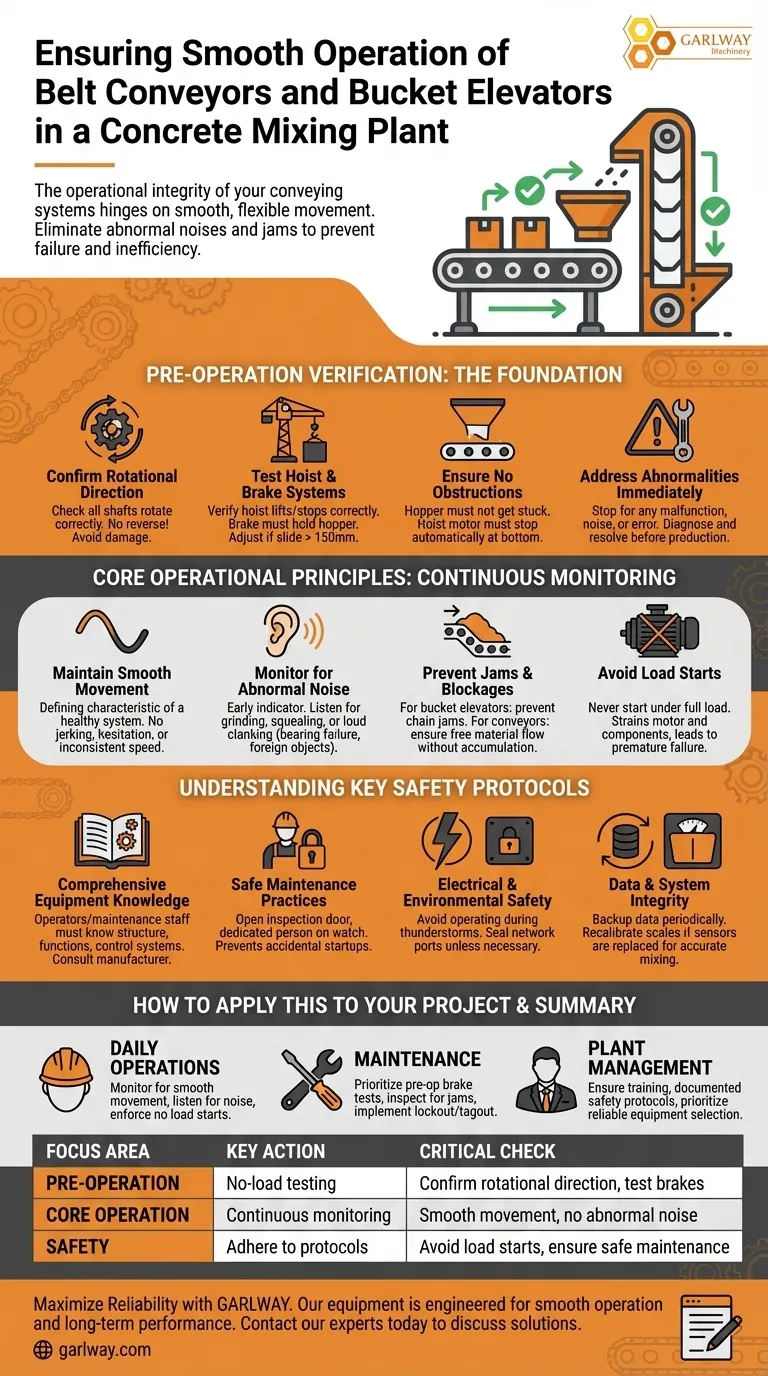
Visual Guide
Related Products
- Portable Cement Mixer with Lift Concrete Machine
- Construction Products Concrete Plant Machine Mixing Concrete Mixer
- Portable Concrete Mixer Machine Equipment for Mixing Concrete
- JW1000 Mobile Cement Mixer Concrete Mixer Truck and Batching Plant
- HZS35 Small Cement Concrete Mixing Batch Plant
People Also Ask
- What are the size and portability options for portable cement mixers? Find Your Perfect Match for Any Job
- Why is it necessary to use a portable concrete mixer? Gain Total Control & Efficiency
- How much concrete can you pour with a portable mixer? Find the Perfect Fit for Your Project
- What is a portable cement mixer? Achieve Consistent, On-Demand Concrete Mixing
- What are the power sources for portable cement mixers? Choose the Right Power for Your Job Site




