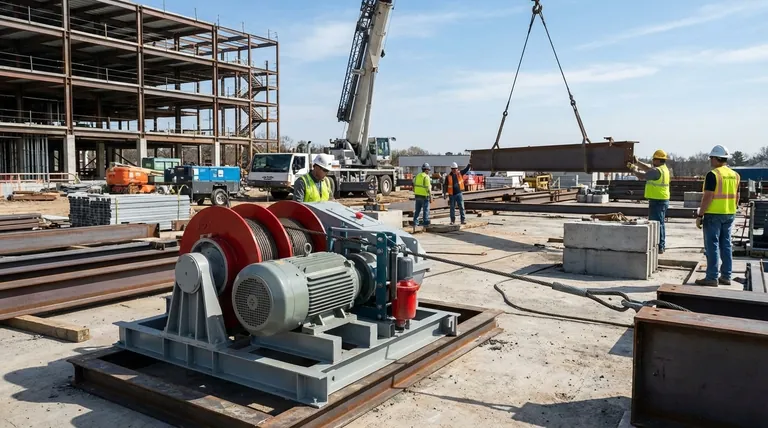
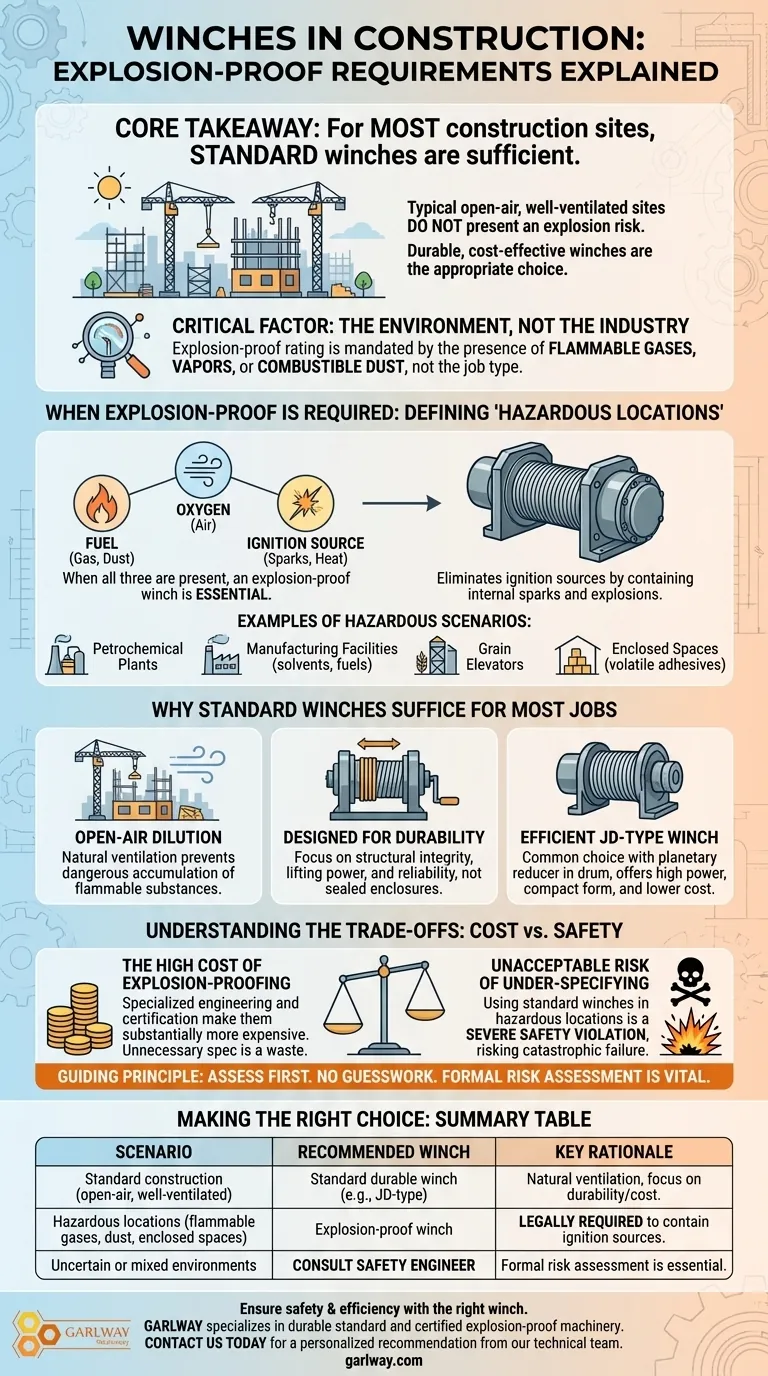
For the vast majority of standard construction environments, an explosion-proof winch is not required. The typical open-air or well-ventilated nature of building sites means that standard, durable winches designed for heavy-duty use are the appropriate and cost-effective choice.
The critical factor is not the industry, but the specific atmosphere of the worksite. While most construction jobs do not present an explosion risk, any environment containing sufficient quantities of flammable gases, vapors, or combustible dust legally and ethically mandates an explosion-proof rating.
When Are Explosion-Proof Ratings Actually Required?
Understanding the environment is the key to correct winch specification. The need for explosion-proofing is dictated by the potential for an explosive atmosphere to form.
Defining a "Hazardous Location"
A location is considered hazardous when three elements are present: fuel (like a flammable gas or dust), oxygen (from the air), and an ignition source.
An explosion-proof winch is designed to eliminate the third element. It contains any internal sparks or explosions within its housing, preventing them from igniting the surrounding atmosphere.
The Principle of the Ignition Source
Standard electric motors, brakes, and control panels can create sparks or high heat during normal operation. In a hazardous location, this energy is more than enough to trigger a catastrophic explosion.
Explosion-proof equipment uses specialized enclosures and wiring techniques to contain these potential ignition sources safely.
Construction Scenarios Requiring a Deeper Look
While a typical high-rise or roadway project is not a hazardous location, some construction-related activities absolutely are.
Examples include work within petrochemical plants, certain manufacturing facilities, grain elevators, or enclosed spaces where solvents, fuels, or volatile adhesives are heavily used.
Why Standard Winches Suffice for Most Construction Jobs
For typical construction applications, the design priorities for a winch are fundamentally different. The focus shifts from ignition containment to raw durability and operational efficiency.
Open-Air Dilution
Most construction sites are open to the atmosphere. This natural ventilation prevents flammable substances from accumulating to the explosive concentrations needed to pose a threat.
Designed for Durability, Not Containment
Standard construction winches are built to withstand physical abuse, weather, and heavy loads. Their engineering prioritizes structural integrity, lifting power, and reliable braking over the sealed enclosures required for explosion-proofing.
A Note on the JD-Type Winch
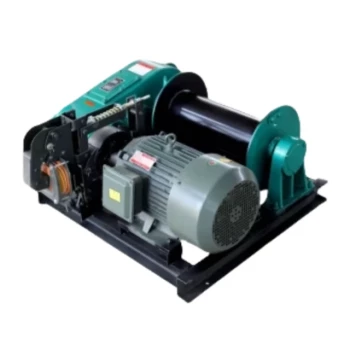
A common and effective choice for general construction is the JD-type winch. This model often features a planetary reducer housed inside the drum.
This design offers excellent cooling conditions, provides high output power from a compact form factor, and is significantly less expensive than its explosion-proof counterparts.
Understanding the Trade-offs: Cost vs. Safety
Specifying the wrong type of winch has significant consequences, both financial and in terms of safety.
The High Cost of Explosion-Proofing
Due to the specialized engineering, robust materials, and rigorous testing and certification process, explosion-proof equipment is substantially more expensive than standard models. Unnecessarily specifying this feature is a significant waste of project funds.
The Unacceptable Risk of Under-Specifying
Conversely, using a standard winch in a true hazardous location is a severe safety violation that can lead to catastrophic failure, loss of life, and massive legal liability. This is a non-negotiable safety line that must never be crossed.
The Guiding Principle: Assess First
The decision should never be based on guesswork. A formal risk assessment of the specific work environment is the only reliable method to determine if a hazardous atmosphere could exist.
Making the Right Choice for Your Project
Use the specific conditions of your worksite as your definitive guide.
- If your primary focus is a standard building, bridge, or infrastructure project: A robust, non-explosion-proof winch is the correct and most cost-effective choice.
- If your project involves any work in or around facilities that process volatile chemicals, fuels, or combustible dusts: You must begin with a formal hazardous location assessment before selecting any equipment.
- If you are ever in doubt about the environment: Always consult a qualified safety engineer to ensure compliance and protect your team.
Ultimately, a correct winch specification is the direct result of a thorough environmental risk assessment.
Summary Table:
| Scenario | Recommended Winch Type | Key Rationale |
|---|---|---|
| Standard construction (open-air, well-ventilated) | Standard durable winch (e.g., JD-type) | Natural ventilation prevents explosive atmospheres; focus on durability and cost-efficiency. |
| Hazardous locations (flammable gases, dust, enclosed spaces) | Explosion-proof winch | Required by law to contain ignition sources and prevent catastrophic explosions. |
| Uncertain or mixed environments | Consult a safety engineer | A formal risk assessment is essential to avoid safety violations or unnecessary costs. |
Ensure your construction project's safety and efficiency with the right winch.
GARLWAY specializes in construction machinery, offering durable standard winches for typical sites and certified explosion-proof models for hazardous environments. Our expertise helps construction companies and contractors globally make informed, cost-effective, and compliant equipment choices.
Contact us today (#ContactForm) to discuss your specific site requirements and get a personalized recommendation from our technical team.
Visual Guide
Related Products
- 12000 lb Electric Boat Trailer Winch with Windlass Anchor Warn
- Electric and Hydraulic Winch for Heavy Duty Applications
- Heavy Duty Electric Boat Winch Windlass Anchor
- Electric Hoist Winch Boat Anchor Windlass for Marine Applications
- 12000 lb Heavy Duty Electric Boat Winch
People Also Ask
- How does an electric boat trailer winch differ from a manual one? Effort vs. Control Explained
- What size winch do I need for my boat? Get the Right Capacity for Safe Hauling
- How should a boat trailer winch be properly used? A Step-by-Step Guide for Safe Loading
- What maintenance steps are specific to boat trailer winches? Ensure Safety & Reliability at the Ramp
- How strong of a winch do I need for my boat? Get the Right Pulling Power for Trailering & Anchoring