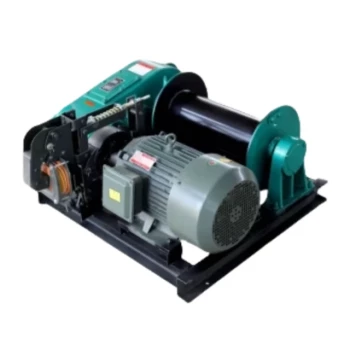
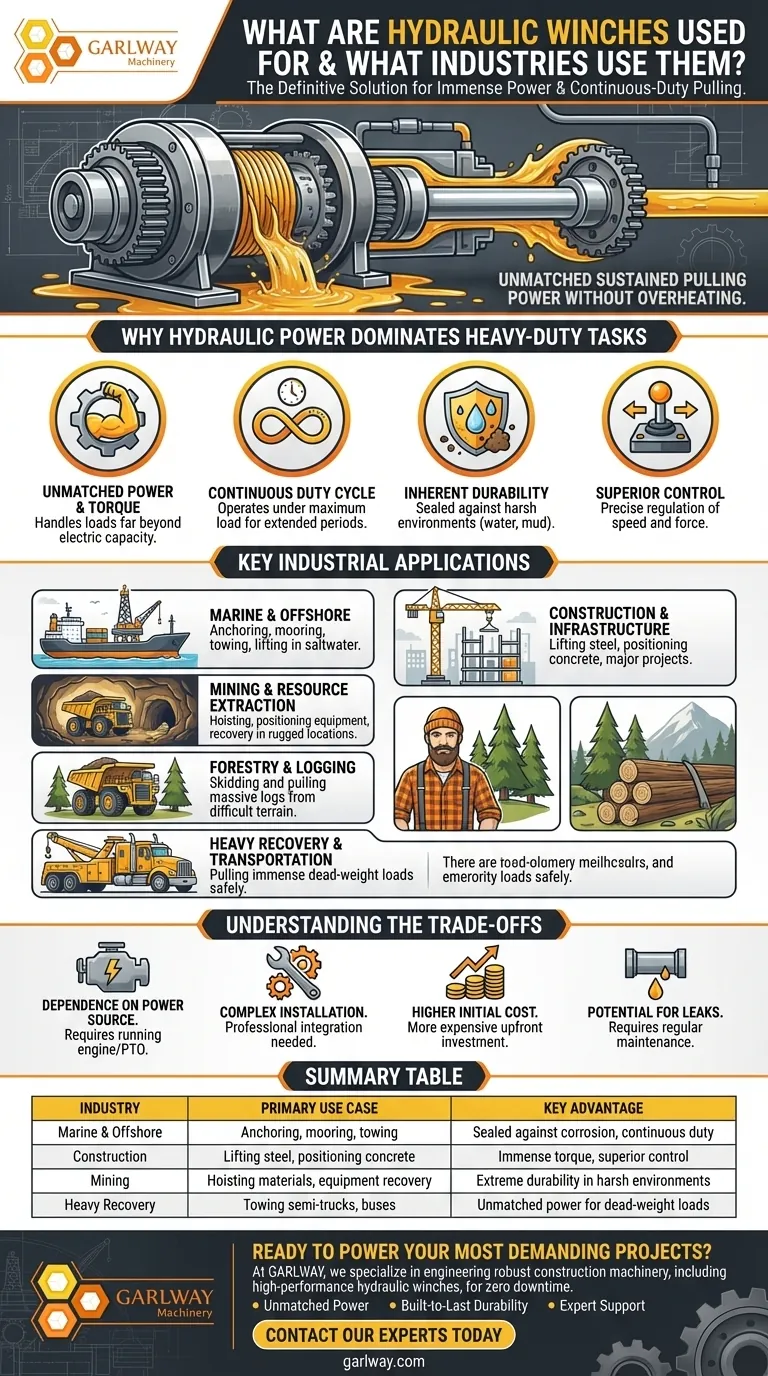
Hydraulic winches are the definitive solution for immense power and continuous-duty pulling. They are purpose-built for the heaviest industrial applications where failure is not an option. These systems are most commonly found in industries like marine and offshore operations, heavy construction, mining, and large-scale vehicle recovery.
The core reason to choose a hydraulic winch is its ability to deliver unmatched, sustained pulling power without overheating. Unlike electric alternatives, its performance is limited only by the strength of its mechanical components, not by battery life or motor temperature.
Why Hydraulic Power Dominates Heavy-Duty Tasks
To understand where hydraulic winches are used, you must first understand why they are the superior choice for certain jobs. Their design principles give them distinct advantages in extreme conditions.
Unmatched Power and Torque
A hydraulic system, which uses pressurized fluid, is exceptionally efficient at converting engine power into raw pulling force. This allows these winches to handle loads far beyond the capacity of electric models.
Continuous Duty Cycle
Electric winches generate significant heat and require cool-down periods after heavy use. Hydraulic winches, powered by a constantly circulating fluid, can operate continuously under maximum load for extended periods, which is essential for industrial operations.
Inherent Durability
Hydraulic winches are built for the harshest environments. Their components are typically sealed against water, dirt, and mud, making them the standard for marine, mining, and offshore applications where exposure to the elements is constant.
Superior Control
The flow of hydraulic fluid can be precisely regulated, giving the operator exceptional control over the speed and force of the winch. This is critical when positioning multi-ton components in construction or conducting delicate recovery operations.
A Breakdown of Key Industrial Applications
The unique capabilities of hydraulic winches make them indispensable across several key sectors. Their presence indicates a need for serious, reliable power.
Marine and Offshore Operations
On ships, docks, and offshore oil platforms, hydraulic winches are essential. They are used for anchoring, mooring, towing, and lifting heavy cargo and equipment in highly corrosive saltwater environments.
Construction and Infrastructure
These winches are frequently integrated into cranes and other heavy machinery. They are used for lifting structural steel, positioning pre-cast concrete sections, and providing the pulling force needed for major road and bridge projects.
Mining and Resource Extraction
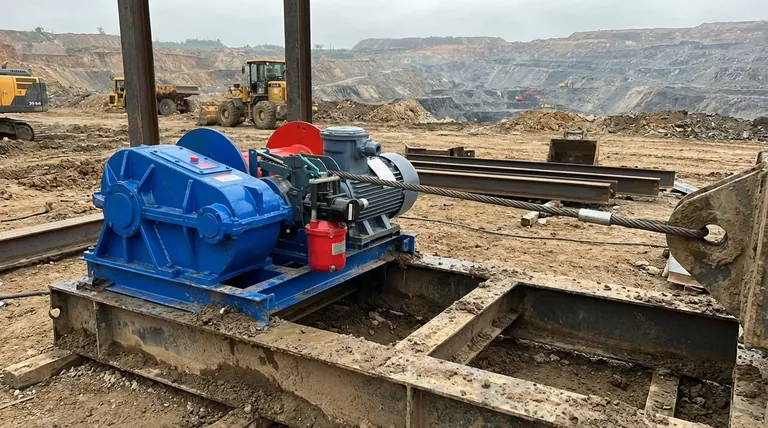
In both surface and underground mining, hydraulic winches are used for hoisting materials, positioning heavy drilling equipment, and recovering disabled machinery in rugged and often remote locations.
Forestry and Logging
The immense torque of a hydraulic winch is perfect for skidding and pulling massive, heavy logs from difficult terrain. Their durability is crucial in the demanding and debris-filled logging environment.
Heavy Recovery and Transportation
The largest tow trucks, designed to recover semi-trucks, buses, and heavy equipment, rely exclusively on hydraulic winches. Their power is necessary to pull immense, dead-weight loads safely.
Understanding the Trade-offs
While incredibly powerful, hydraulic winches are a specialized tool with specific requirements and limitations.
Dependence on a Power Source
A hydraulic winch requires a running engine to power the hydraulic pump (often a Power Take-Off or PTO system). It cannot be operated if the vehicle or primary power plant is disabled.
Complex Installation
Unlike a simple bolt-on electric winch, a hydraulic system must be professionally integrated into the host vehicle or equipment's hydraulic circuit. This is a more complex and costly process.
Higher Initial Cost
The robust components and installation requirements make hydraulic winches significantly more expensive upfront than their electric counterparts.
Potential for Leaks
As with any hydraulic system, there is a risk of fluid leaks. This requires regular inspection and maintenance to ensure both operational safety and environmental protection.
Making the Right Choice for Your Application
Selecting the correct winch type comes down to a clear understanding of your operational demands.
- If your primary focus is extreme, continuous power: A hydraulic winch is the only reliable choice for repeated, heavy-duty commercial or industrial tasks.
- If you operate in harsh, wet, or dirty environments: The sealed and robust nature of hydraulic systems makes them the superior choice for marine, mining, or offshore use.
- If you require a simpler solution for intermittent use: An electric winch is a more practical and cost-effective option for most consumer-level vehicle recovery or utility work.
- If installation cost and complexity are major factors: Be prepared for the professional integration and higher upfront investment required for a hydraulic winch system.
Ultimately, choosing a hydraulic winch is an investment in uncompromising power and operational reliability for the most demanding jobs on earth.
Summary Table:
| Industry | Primary Use Case | Key Advantage |
|---|---|---|
| Marine & Offshore | Anchoring, mooring, towing | Sealed against corrosion, continuous duty |
| Construction | Lifting steel, positioning concrete | Immense torque, superior control |
| Mining | Hoisting materials, equipment recovery | Extreme durability in harsh environments |
| Heavy Recovery | Towing semi-trucks, buses | Unmatched power for dead-weight loads |
Ready to power your most demanding projects with a reliable hydraulic winch?
At GARLWAY, we specialize in engineering robust construction machinery, including high-performance hydraulic winches, concrete mixers, and batching plants. Our solutions are built for construction companies and contractors who cannot afford downtime.
Partner with GARLWAY to get:
- Unmatched Power: Handle extreme loads with continuous-duty performance.
- Built-to-Last Durability: Machinery engineered for the harshest job sites.
- Expert Support: From selection to integration, we ensure your success.
Contact our experts today for a consultation and discover the right winch solution for your industrial needs.
Visual Guide
Related Products
- Hydraulic Winding Engine Harbor Freight Winch
- Electric and Hydraulic Winch for Heavy Duty Applications
- Small Electric Winch 120V and 240V for Compact Applications
- Electric 120V Boat Winch by Badlands
- 12000 lb Electric Boat Trailer Winch with Windlass Anchor Warn
People Also Ask
- What role does hydraulic fluid play in hydraulic winches? It's the Lifeblood of Your Heavy-Duty Pulling Power
- What vehicles commonly use hydraulic winches? For Industrial Trucks Needing Unmatched Power
- What are the features of hydraulic winches? Unmatched Power and Continuous Duty for Heavy Loads
- What preventive measures can be taken to avoid oil leakage in hydraulic winches? Ensure Long-Term Reliability
- What does 'power out' mean in a hydraulic winch? Achieve Absolute Control When Lowering Heavy Loads