The fundamental safety precautions for using a winch fall into three critical phases: thorough preparation before the pull, controlled operation during the pull, and consistent maintenance between uses. This involves inspecting all equipment, understanding the winch's load limits, establishing a clear danger zone, and maintaining constant control over the entire process.
Winch safety is not a checklist to be rushed through; it is a systematic process for managing immense mechanical forces. The goal is to control the variables—equipment condition, anchor points, and line tension—to prevent catastrophic failure and ensure a predictable outcome.
The Foundation: Pre-Operation Inspection and Setup
Before any tension is applied to the line, the most critical safety work has already begun. A successful and safe operation is determined by your preparation.
Know Your Equipment
First, receive proper training before attempting to operate a winch. It is a safety-critical device that demands knowledge and respect.
Always read and understand the manufacturer's owner's manual. It contains specific load capacities, operating procedures, and warnings unique to your model.
Never attempt to pull a load that exceeds the winch's rated capacity. Overloading is a primary cause of equipment failure.
Inspect Every Component
Visually inspect the entire winch system before each use. Look for any signs of wear, damage, or corrosion on the winch body, cable or rope, and hooks.
Ensure the winch line is not kinked, frayed, or otherwise compromised. A damaged line is significantly weaker and can snap under load.
Gear Up for Safety
Always wear heavy-duty gloves when handling a winch line. Steel cables can have sharp frays, and both steel and synthetic rope can cause friction burns.
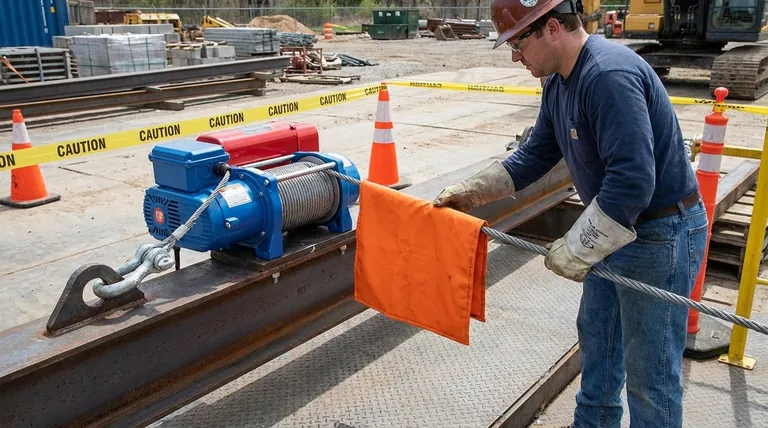
Place a winch dampener, heavy blanket, or floor mat over the middle of the winch line. This helps absorb the kinetic energy and directs the line downward if it breaks, preventing a dangerous whip-back.
Choose Your Points Wisely
Select an anchor point that is unquestionably stable and solid, such as a large tree, a significant rock, or another vehicle. Never use a weak or uncertain anchor.
When recovering a vehicle, attach the hook to a rated structural recovery point, such as a frame-mounted shackle or tow hook. Never attach the winch to a bumper, axle, or suspension component, as they can be easily torn off.
The Critical Phase: Safe Winching Operation
During the pull, the situation is dynamic. Maintaining situational awareness and control is paramount to preventing accidents.
Establish a Clear Danger Zone
Keep all people and unnecessary objects clear of the surrounding area. The direct line between the winch and the anchor point is the most dangerous zone.
Never stand in the path of the winch line during operation. If the line or an anchor point fails, it will become a deadly projectile.
Maintain Control and Communication
Operate the winch in a slow, smooth, and controlled manner. Avoid jerky movements, which dramatically increase the load on the components.
If working with others, establish clear and simple hand signals or verbal commands. The operator should be the only one to give commands to start or stop the winch.
Manage the Line Correctly
Guide the winch line to ensure it winds evenly onto the spool. Bunching on one side can damage the line and the winch itself.
Never hold or grab the winch line while it is under tension. Use the remote to control the operation from a safe distance.
Monitor the Operation
Do not leave the winch unattended during operation. Even with a remote, an operator with access to override controls should be monitoring the winch and the load.
Pay attention to the winch motor. If it seems to be straining excessively or overheating, stop the pull and allow it to cool down.
Common Pitfalls to Avoid
Understanding what can go wrong is just as important as knowing the correct procedure. These common mistakes often lead to equipment damage or serious injury.
The Myth of the "Good Enough" Anchor
A common failure point is an anchor that is not truly secure. A small tree or loose rock can be pulled free by the immense force of a winch, turning it into a dangerous projectile. If in doubt, find a better anchor.
Ignoring the Line's Condition
A winch line is a wear item. With each use, it is subjected to strain, abrasion, and the elements. Ignoring small frays in a steel cable or signs of abrasion on a synthetic rope is a gamble against its integrity.
Rushing the Process
Most winching accidents occur when operators are in a hurry. Rushing leads to skipped inspections, poor anchor choices, and a failure to clear the danger zone. The forces involved are too great to be managed without deliberate, careful action.
Making the Right Choice for Your Goal
Your approach to safety should be tailored to the specific task at hand. While all principles apply, your focus may shift based on the context.
- If your primary focus is off-road vehicle recovery: Prioritize selecting an unquestionably solid anchor and meticulously clearing the danger zone, as line or anchor failure presents the highest risk of injury.
- If your primary focus is industrial load pulling: Emphasize certified operator training, documented regular maintenance schedules, and periodic load testing to ensure compliance and reliability.
- If you are a new winch user: Your first step is not the pull itself, but thoroughly reading the manual and practicing in a low-stakes, controlled environment to build familiarity.
Ultimately, safety is a proactive mindset, not a reactive measure.
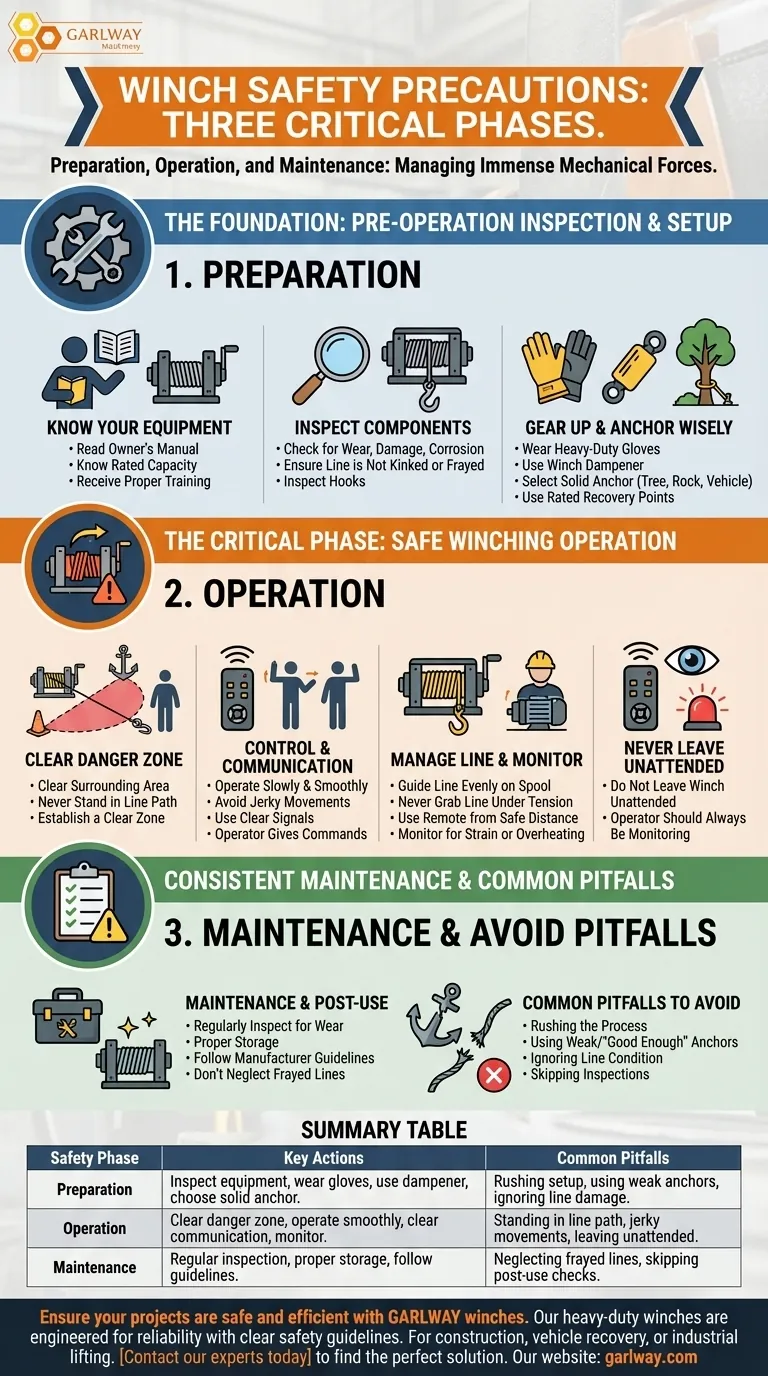
Summary Table:
| Safety Phase | Key Actions | Common Pitfalls |
|---|---|---|
| Preparation | Inspect equipment, wear gloves, use a winch dampener, choose a solid anchor. | Rushing setup, using weak anchors, ignoring line damage. |
| Operation | Clear the danger zone, operate smoothly, use clear communication, monitor the winch. | Standing in the line path, jerky movements, leaving the winch unattended. |
| Maintenance | Regular inspection for wear, proper storage, follow manufacturer guidelines. | Neglecting frayed lines, skipping post-use checks. |
Ensure your projects are safe and efficient with GARLWAY winches. Our heavy-duty winches are engineered for reliability and come with clear safety guidelines. Whether you're in construction, vehicle recovery, or industrial lifting, GARLWAY provides the durable equipment and support you need. Contact our experts today to find the perfect winch solution for your requirements and receive professional guidance on safe operation.
Visual Guide
Related Products
- Warn Winch Windlass Boat Trailer Winch
- Electric and Hydraulic Winch for Heavy Duty Applications
- Small Electric Winch 120V and 240V for Compact Applications
- Quick Windlass Portable Winch for Truck and Boat Best Boat Winch
- Hydraulic Winding Engine Harbor Freight Winch
People Also Ask
- What are the main components of a boat trailer winch? A Guide to Safe & Efficient Boat Loading
- What factors should be considered when choosing a boat trailer winch? Ensure Safe and Effortless Boat Loading
- What is the purpose of boat trailer winches? Safely and Efficiently Load Your Boat
- What are the two main types of boat trailer winches? Manual vs. Electric Explained
- How often should a boat trailer winch be replaced? Your Guide to Safety and Longevity