The primary safety features of a self-loading concrete mixer are engineered to protect the operator and ensure stability in demanding environments. These include totally enclosed, oil-bath disc brakes for reliable stopping power, a mechanical parking brake, a low center of gravity to prevent tipping, and a swiveling operator's seat that can rotate up to 270 degrees for superior visibility.
A self-loading mixer's safety isn't just a list of features; it's an integrated system. The machine's design fundamentally combines robust mechanical components with enhanced operational stability to mitigate the unique risks of rugged, off-road construction sites.
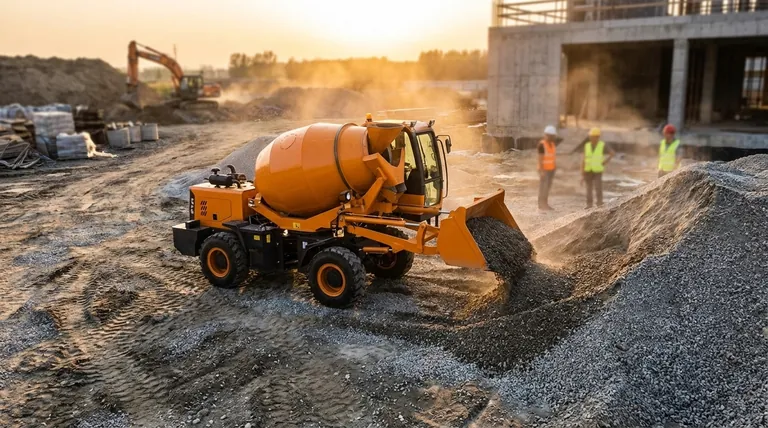
Core Safety Mechanisms Explained
Understanding how each safety component functions provides a clearer picture of the machine's overall reliability on a worksite. These features work together to create a secure operating environment.
Braking and Stopping Power
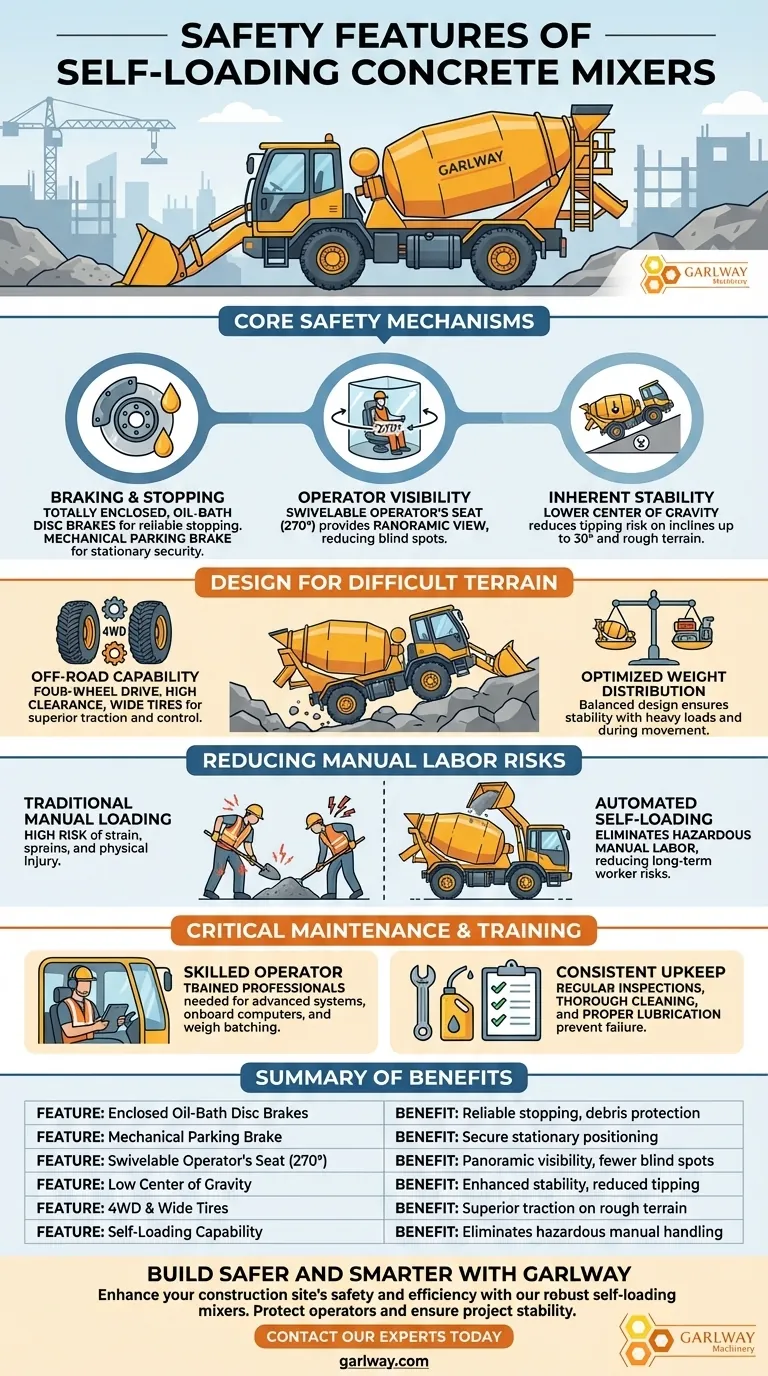
The machine is equipped with totally enclosed, oil-bath disc brakes. This design protects the braking system from dirt, water, and debris, ensuring consistent and reliable stopping power, which is critical for heavy machinery. A separate mechanical parking brake provides an additional layer of security when the vehicle is stationary.
Operator Visibility and Control
A key feature is the swivelable operator's seat, which can rotate up to 270 degrees. This provides the driver with a panoramic view of the worksite, dramatically reducing blind spots during maneuvering, loading, and pouring. Direct visibility is one of the most effective ways to prevent accidents.
Inherent Machine Stability
Self-loading mixers are engineered with a lower center of gravity. This design choice is fundamental to the machine's safety, as it significantly reduces the risk of tipping or rollovers, especially when operating on uneven surfaces or inclines up to 30 degrees.
Reducing Manual Labor Risks
The very nature of a "self-loading" mixer is a crucial safety advantage. By automating the loading of aggregates like sand and cement, it eliminates the hazardous manual labor associated with traditional mixers. This directly reduces the risk of worker strain, sprains, and other physical injuries.
How Design Enhances Safety on Difficult Terrain
Beyond specific components, the overall engineering of the mixer is focused on safe and stable operation in the challenging conditions where it is most valuable.
Off-Road Capability
Features like four-wheel drive, high ground clearance, and low-pressure wide tires are essential for safety. They ensure the machine maintains traction and control on rough terrain, steep inclines, and uneven surfaces, preventing slips or loss of control that could lead to an accident.
Optimized Weight Distribution
The system is designed for optimized weight distribution, even while the drum is loaded with heavy materials. This balance is crucial for maintaining stability while moving and operating, preventing the machine from becoming dangerously unbalanced.
The Critical Role of Maintenance and Training
Even the best-designed safety features are only effective if the machine is properly maintained and operated by a knowledgeable professional.
Technology Requires a Skilled Operator
Advanced features like onboard computer systems and weigh batching add efficiency but also complexity. A properly trained operator is essential to use these systems correctly and safely, ensuring that concrete mixes are accurate and the machine is not overloaded.
Maintenance is Non-Negotiable
Safety relies on consistent upkeep. Regular inspections of the hydraulic systems and mixing drum are critical. Thorough cleaning after each use prevents concrete buildup that can throw the drum off balance, while proper lubrication of moving parts ensures they function as designed. Without this diligence, safety features can degrade and fail.
Making the Right Choice for Your Goal
Selecting the right machine involves matching its safety profile to the specific challenges of your worksite.
- If your primary focus is operator safety in tight or congested spaces: Prioritize a model with a fully swiveling 270-degree seat to maximize visibility and reduce blind spots.
- If your primary focus is stability on steep or rough terrain: Look for a design that emphasizes a low center of gravity, robust four-wheel drive, and optimized weight distribution.
- If your primary focus is minimizing worker injury and long-term risk: The self-loading capability itself is the key feature, as it removes the dangers of manual material handling.
Understanding that a machine's safety is a result of both its built-in features and its operational design empowers you to create a more secure and efficient worksite.
Summary Table:
| Safety Feature | Primary Benefit |
|---|---|
| Totally Enclosed, Oil-Bath Disc Brakes | Reliable stopping power, protected from debris |
| Mechanical Parking Brake | Secure stationary positioning |
| Swivelable Operator's Seat (270°) | Panoramic visibility, reduces blind spots |
| Low Center of Gravity | Enhanced stability, reduces tipping risk |
| Four-Wheel Drive & Wide Tires | Superior traction and control on rough terrain |
| Self-Loading Capability | Eliminates hazardous manual material handling |
Ready to enhance your construction site's safety and efficiency?
At GARLWAY, we specialize in manufacturing robust self-loading concrete mixers engineered with the advanced safety features detailed above. Our machines are designed to protect your operators and ensure project stability, directly benefiting construction companies and contractors working in demanding environments.
Let us help you build safer and smarter. Contact our experts today to discuss your specific needs and find the perfect solution for your projects.
Visual Guide
Related Products
- Skid Steer Self Loading Concrete Mixers for Construction
- Belle Mixer Drum Self Loading Mortar Mixers JS3000
- Portable Cement Mixer with Lift Concrete Machine
- Portable Concrete Mixer Machine Equipment for Mixing Concrete
- Portable Ready Mix Concrete Mixer Equipment
People Also Ask
- How does the control system improve production efficiency in a self loading concrete mixer? Automate Mixing for Speed & Quality
- What is the purpose of keeping the drum rotating during transportation in a self loading concrete mixer? Ensure Quality & Consistency
- How does the weighing process work in a self loading concrete mixer? Achieve Precise, On-Site Concrete Batching
- What components are involved in the loading process of a self loading concrete mixer? A Guide to the Key Systems
- How should materials be loaded into a self-loading concrete mixer? Master the Step-by-Step Process