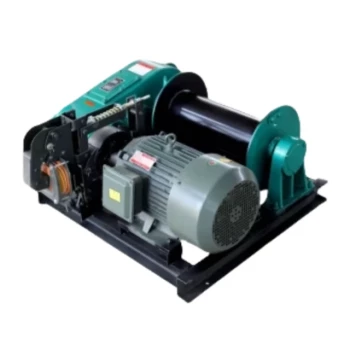
The fundamental role of a hoisting device is to enhance the efficiency of engineering machinery by automating the lifting and positioning of heavy objects. This core function simplifies complex operations, significantly reduces the need for manual labor, and accelerates the pace of engineering tasks across various industries.
The true value of a hoisting device extends beyond mere lifting; it transforms a physically demanding, time-consuming, and often hazardous task into a precise, controlled, and highly repeatable mechanical process.
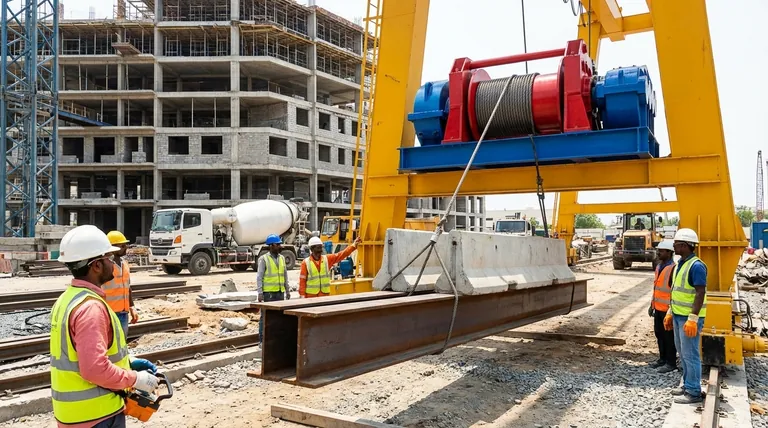
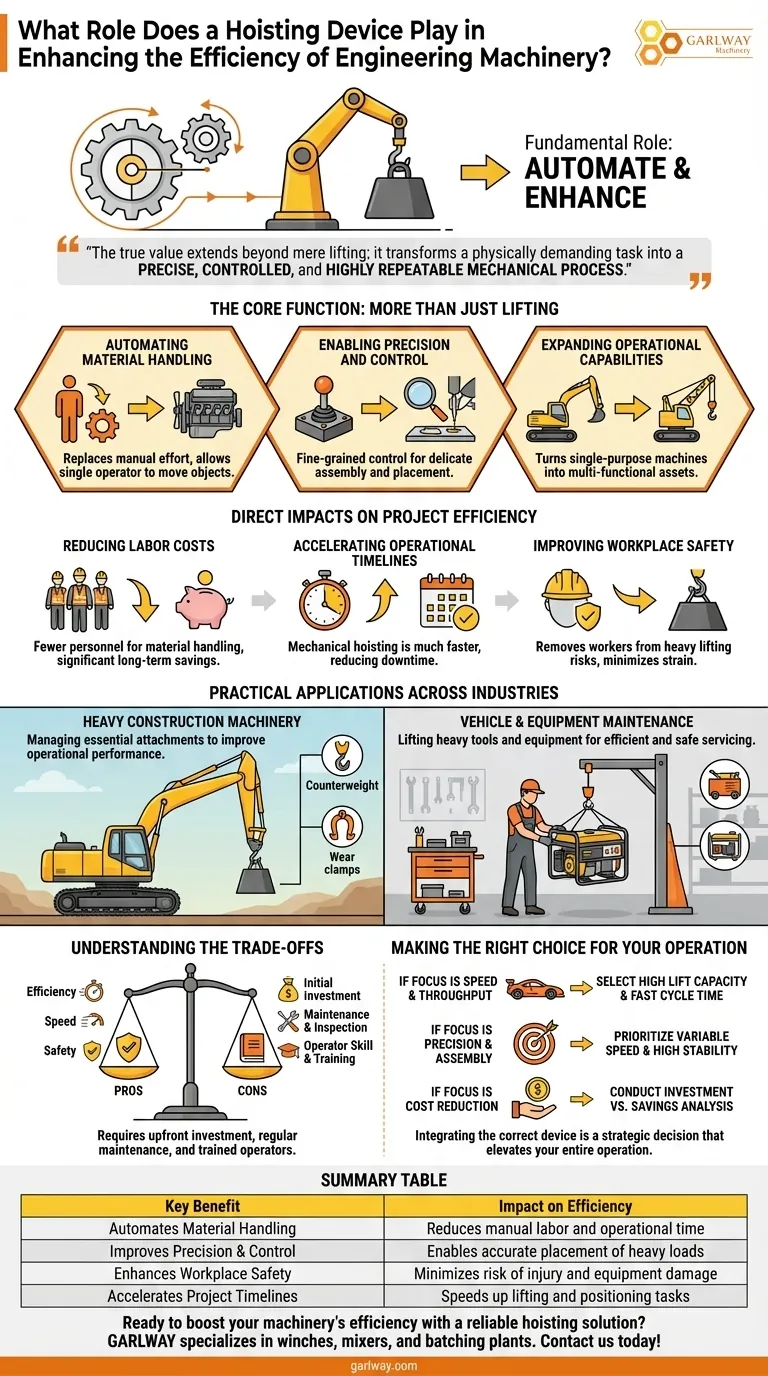
The Core Function: More Than Just Lifting
A hoisting device is an indispensable component integrated into engineering machinery to lift or lower loads. Its impact, however, goes much deeper than this simple definition.
Automating Material Handling
The primary function is to replace manual effort with mechanical power. This allows a single operator to move objects that would otherwise require a team of workers, a separate specialized machine, or be impossible to move altogether.
Enabling Precision and Control
Modern hoisting systems offer fine-grained control over the lifting, lowering, and positioning of heavy components. This precision is critical for tasks like assembling machinery, placing structural elements, or performing delicate maintenance.
Expanding Operational Capabilities
Integrating a hoisting device can turn a single-purpose machine into a multi-functional asset. For example, an excavator equipped with a proper hoisting attachment can not only dig but also serve as a light-duty crane for lifting pipes, tools, or other materials on a job site.
Direct Impacts on Project Efficiency
The integration of hoisting devices creates a ripple effect of benefits that directly improve project outcomes, from cost and speed to safety.
Drastically Reducing Labor Costs
By mechanizing the lifting process, you reduce the number of personnel required for material handling tasks. This leads to direct and significant savings on labor costs over the life of a project.
Accelerating Operational Timelines
Mechanical hoisting is far faster than manual lifting. Tasks that could take hours, such as positioning a heavy engine component or moving tool carts, can be completed in minutes, reducing downtime and keeping projects on schedule.
Improving Workplace Safety
Removing personnel from the immediate vicinity of heavy lifting operations is one of the most effective ways to reduce the risk of injury. Hoisting devices bear the load, minimizing worker strain and exposure to crush hazards.
Practical Applications Across Industries
The versatility of hoisting devices makes them crucial in a wide range of engineering contexts, proving their value time and again.
In Heavy Construction Machinery
On machines like excavators, hoisting devices are used to manage essential attachments like hooks, counterweights, and wear clamps. This improves the machine's operational performance and simplifies its maintenance.
In Vehicle and Equipment Maintenance
Within a workshop or field service environment, hoists are used to lift heavy tool carts, portable generators, and other equipment. This allows technicians to work more efficiently and safely when servicing large machinery.
Understanding the Trade-offs
While indispensable, integrating and relying on hoisting devices comes with practical considerations that must be managed.
Initial Investment and Integration
Acquiring and fitting a hoisting device to engineering machinery requires an upfront capital investment. The cost must be weighed against the projected long-term savings in labor and increased productivity.
Maintenance and Inspection Requirements
To operate safely and reliably, hoisting devices require regular inspection and preventative maintenance. This represents an ongoing operational cost and requires diligent oversight to prevent equipment failure.
Operator Skill and Training
Properly and safely operating a hoisting device requires a trained and competent operator. Inadequate training can lead to accidents, damage to equipment, or inefficient use of the machinery's capabilities.
Making the Right Choice for Your Operation
Choosing to integrate a hoisting device should be guided by your primary operational goals.
- If your primary focus is speed and throughput: Select a device with a high lift capacity and fast cycle time to minimize the time spent on material handling.
- If your primary focus is precision and assembly: Prioritize a system that offers variable speed control and high stability for the accurate placement of components.
- If your primary focus is cost reduction: Conduct a thorough analysis of the initial investment versus the long-term savings in labor hours and reduced project delays.
Ultimately, integrating the correct hoisting device is a strategic decision that elevates the capability and efficiency of your entire engineering operation.
Summary Table:
| Key Benefit | Impact on Efficiency |
|---|---|
| Automates Material Handling | Reduces manual labor and operational time |
| Improves Precision & Control | Enables accurate placement of heavy loads |
| Enhances Workplace Safety | Minimizes risk of injury and equipment damage |
| Accelerates Project Timelines | Speeds up lifting and positioning tasks |
Ready to boost your machinery's efficiency with a reliable hoisting solution?
GARLWAY specializes in construction machinery, offering durable winches, concrete mixers, and batching plants tailored for construction companies and contractors worldwide. Let us help you enhance operational speed, safety, and precision. Contact us today to discuss your needs!
Visual Guide
Related Products
- Electric Hoist Winch Boat Anchor Windlass for Marine Applications
- Electric and Hydraulic Winch for Heavy Duty Applications
- Hydraulic Winding Engine Harbor Freight Winch
- Portable Small Trailer Winch
- Quick Windlass Portable Winch for Truck and Boat Best Boat Winch
People Also Ask
- How does an electric anchor winch work? Power, Safety, and Reliable Operation Explained
- What are the advantages of installing an electric anchor winch on a boat? Boost Safety & Ease for Boaters
- What are the operational differences between electric hoists and winches? A Guide to Safe Lifting vs. Pulling
- What are the main benefits of a boat anchor winch? Boost Safety & Efficiency for Your Vessel
- How does a boat anchor winch work? A Guide to Reliable Anchor Handling