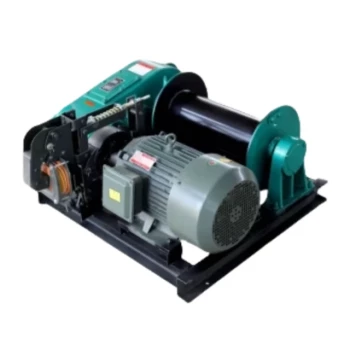
At their core, electric winches are defined by a unique combination of precise control, high efficiency, and operational convenience. They use electric motors, sophisticated gear systems, and electromagnetic braking to deliver adjustable speeds and automated control, making them highly versatile for a wide range of tasks.
The primary performance characteristic of an electric winch is its ability to merge raw pulling power with precise, programmable electronic control. This makes it a highly adaptable tool, unlike simpler mechanical or hydraulic systems.
The Foundation of Performance: Precision and Control
The defining advantage of an electric winch lies in its sophisticated control systems, which allow for a level of precision that is difficult to achieve with other winch types.
Adjustable Speed and Distance
Modern electric winches often use variable frequency drives (VFDs). This technology allows operators to program specific line speeds, accommodating both very slow, careful pulls and faster operations.
You can also set exact travel distances and stop positions, which is critical for repetitive industrial lifting or complex recovery tasks.
Remote and Automated Operation
The electric nature of these winches makes them easy to automate. Push-button and remote-control capabilities are standard features.
This allows an operator to manage the pull from a safe distance with a clear line of sight, significantly improving both safety and efficiency.
Electromagnetic Braking
Instead of relying solely on mechanical friction, electric winches use electromagnetic braking. This system provides reliable, immediate stopping power the moment the motor is disengaged.
This feature is essential for safely holding heavy loads without slipping.
Power-Out Functionality
Many electric winches offer a "power-out" option. This uses the motor in reverse to unspool the line under tension.
It provides superior control when lowering a heavy object or launching a large boat on a steep ramp, preventing uncontrolled free-spooling.
Efficiency and Design Advantages
Beyond control, the electromechanical design of these winches offers inherent benefits in power usage, physical form factor, and operational cleanliness.
High Power Efficiency
The drivetrain, typically consisting of an elastic coupling and a three-stage enclosed gear reducer, is designed for high efficiency.
This means more of the electrical energy consumed is converted directly into pulling force, minimizing wasted power.
Compact and Lightweight Design
Compared to hydraulic systems that require pumps, reservoirs, and hoses, electric winches are remarkably self-contained and compact.
Their smaller size and lighter weight make them easier to install, transfer between vehicles, or integrate into tight spaces.
Clean and Quiet Operation
Electric winches run quietly and produce no emissions. Critically, they do not use hydraulic fluid, eliminating the risk of messy and environmentally damaging leaks.
This makes them ideal for indoor, marine, or other sensitive environments.
Understanding the Trade-offs
While powerful and precise, electric winches are not without limitations. Understanding these trade-offs is key to proper application.
Dependency on Electrical Power
The most significant limitation is their reliance on a stable electrical source. In remote field applications, this means a heavy dependency on a vehicle's battery and charging system.
Prolonged, heavy use can drain a battery quickly if the vehicle's engine is not running to recharge it.
Heat Management Under Load
Electric motors generate significant heat under continuous, heavy loads. Overheating can reduce performance or even cause permanent damage to the motor.
Most electric winches are designed for intermittent use with specific duty cycles (time on vs. time off) to allow for proper cooling.
Making the Right Choice for Your Application
Selecting a winch depends entirely on matching its performance characteristics to your primary goal.
- If your primary focus is automation and precision: The programmable speeds, stop positions, and remote operation of an electric winch are ideal for industrial lifting or assembly line tasks.
- If your primary focus is vehicle recovery: The compact size, high power-to-weight ratio, and remote control offer a significant advantage, but you must manage your vehicle's battery life carefully.
- If your primary focus is clean and controlled operation: An electric winch is the superior choice for marine applications like boat ramps or indoor material handling where fluid leaks are unacceptable.
Ultimately, the performance of an electric winch empowers you with controlled power exactly when and where you need it.
Summary Table:
| Key Characteristic | Benefit |
|---|---|
| Precise Electronic Control | Adjustable speeds, programmable stops, and automated operation for safe, repeatable tasks. |
| Electromagnetic Braking | Immediate, reliable stopping power to hold heavy loads securely without slipping. |
| Power-Out Functionality | Controlled lowering of loads under tension, preventing dangerous free-spooling. |
| High Efficiency & Compact Design | More pulling force from electrical energy, with a lightweight, self-contained unit for easy installation. |
| Clean, Quiet Operation | No hydraulic fluid or emissions, ideal for indoor, marine, and sensitive environments. |
Ready to harness the precision and power of an electric winch for your projects? As GARLWAY, a trusted manufacturer of construction machinery, we specialize in durable, high-performance electric winches, concrete mixers, and batching plants for contractors and construction companies worldwide. Our solutions are engineered for reliability, safety, and efficiency—whether you're automating industrial lifts or managing tough recovery tasks. Contact us today to discuss your needs and discover how GARLWAY can equip you with the right machinery to boost productivity and control on your job site.
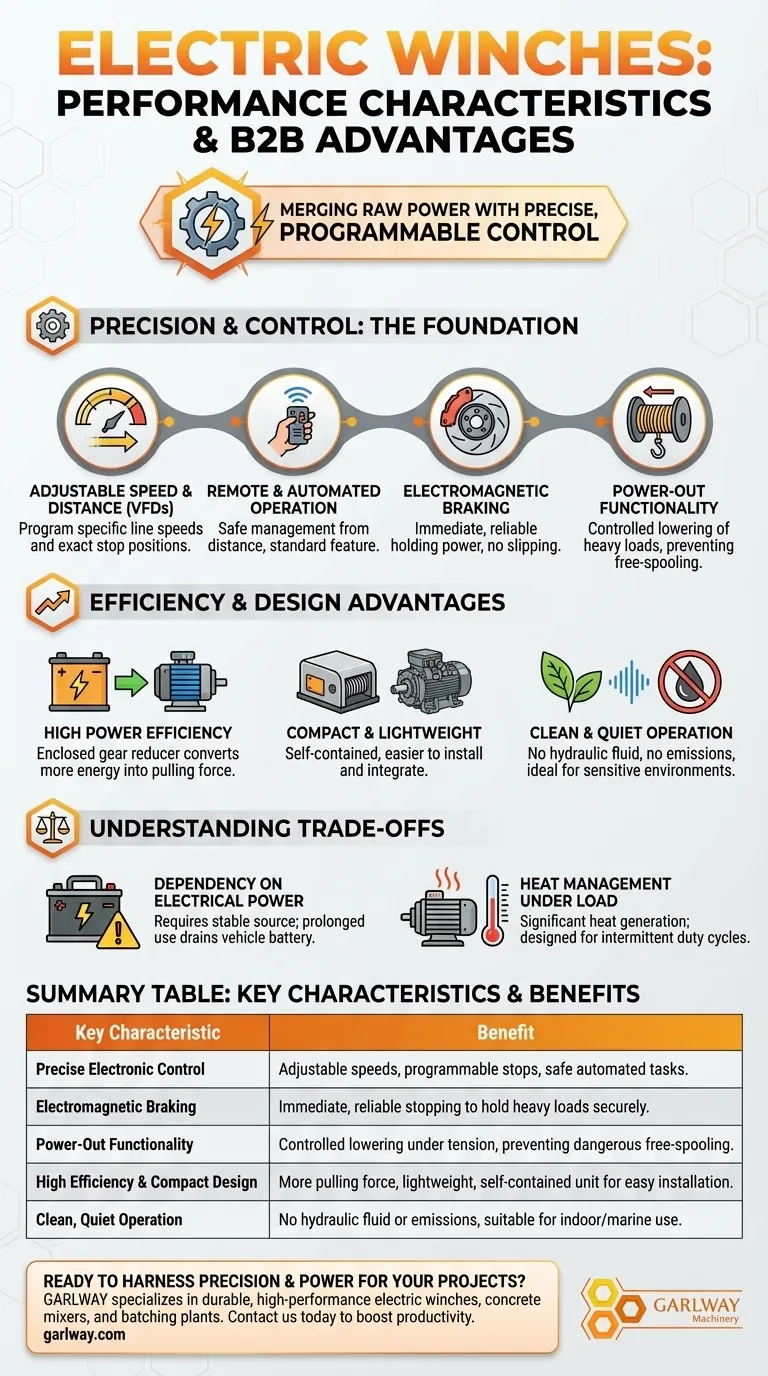
Visual Guide
Related Products
- Electric 120V Boat Winch by Badlands
- Electric and Hydraulic Winch for Heavy Duty Applications
- Small Electric Winch 120V and 240V for Compact Applications
- 12000 lb Electric Boat Trailer Winch with Windlass Anchor Warn
- Electric Hoist Winch Boat Anchor Windlass for Marine Applications
People Also Ask
- How do electric boat winches work? Unlock Effortless Launching & Retrieval
- How much current does an electric boat winch draw? Plan Your Electrical System for Peak Performance
- Can I run a winch straight from a battery? Essential Power Setup for Safe Operation
- What are the types of electric winches available? Choose the Right Winch for Your Job
- What are the uses of electric winches in mining and tunneling? Enhance Safety and Efficiency Underground