At its core, a durable cement mixer relies on a strategic combination of steel and cast iron. These materials are chosen for their exceptional strength, abrasion resistance, and ability to withstand the intense, repetitive stresses of mixing heavy aggregates like sand, gravel, and cement.
The key to a cement mixer's durability isn't a single "best" material, but rather the intelligent application of different materials to specific components, matching the unique demands of each part—from the abrasion-resistant drum to the vibration-damping frame.
The Anatomy of a Durable Mixer: A Component-by-Component Breakdown
A cement mixer is a system where each part faces a different kind of stress. Manufacturers select materials specifically to counter these forces, ensuring the machine's longevity and reliable performance.
The Drum: The Heart of Abrasion Resistance
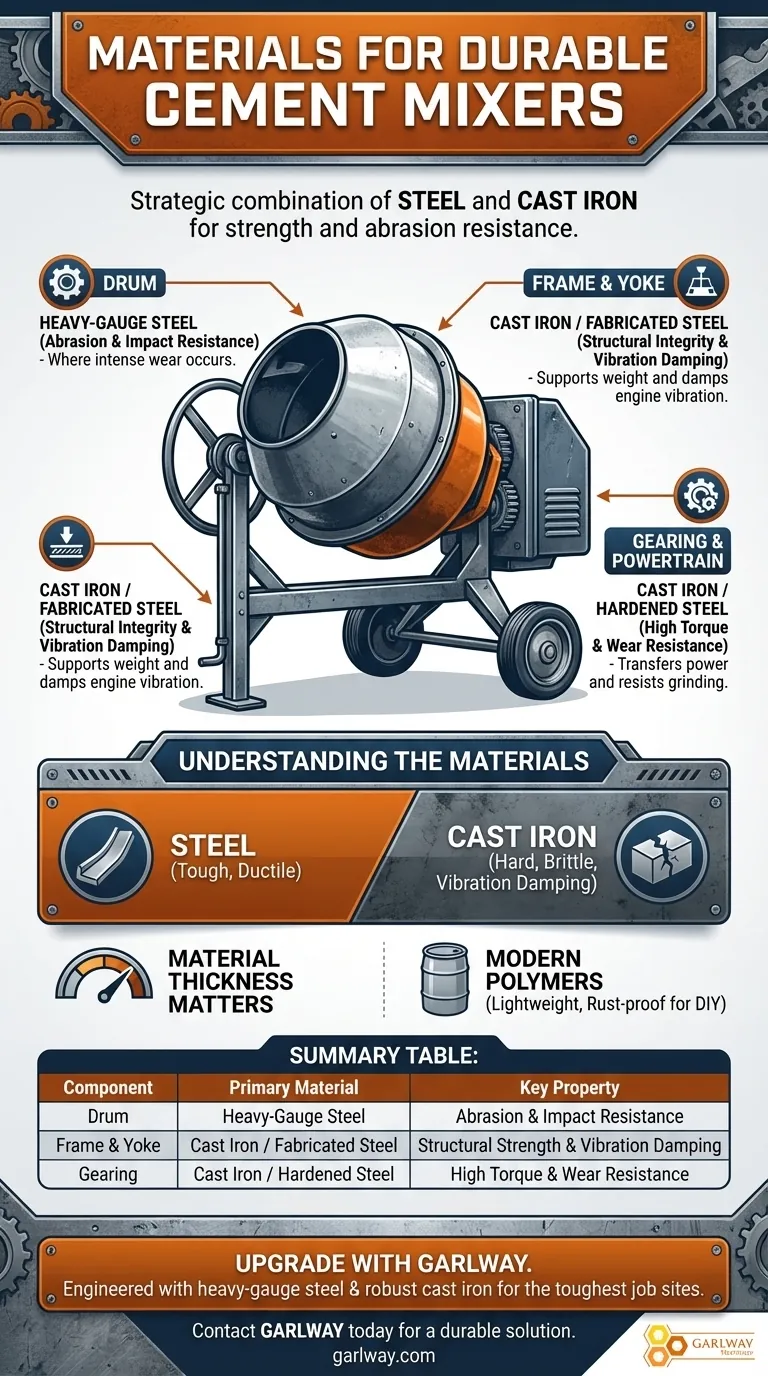
The drum is where the most intense wear occurs. It must endure the constant grinding and tumbling of sharp, heavy materials.
For this reason, most high-quality drums are constructed from heavy-gauge steel. This provides the necessary toughness to resist denting from impacts and the hardness to withstand constant abrasive wear.
The Frame and Yoke: The Foundation of Structural Integrity
The frame and yoke support the entire weight of the drum, its contents, and the engine. This requires immense structural strength and rigidity.
These components are often made from cast iron or heavy-duty fabricated steel. Cast iron is exceptionally good at absorbing vibrations from the engine and the mixing action, which prevents stress fractures and increases stability.
The Gearing and Powertrain: Where Strength Meets Precision
The gears that turn the drum are critical failure points if not built correctly. They must transfer high torque while resisting the grinding wear of fine cement dust.
The main "ring gear" is almost always made of cast iron. Its inherent hardness and wear resistance allow it to mesh reliably for years without significant degradation. Internal powertrain components rely on hardened steel for similar reasons.
Understanding the Trade-offs: Not All Iron Is Created Equal
While "iron and steel" are the common answer, the specific type and quality of these materials create significant differences in performance and lifespan. Understanding these nuances is key to identifying a truly durable machine.
Steel vs. Cast Iron
Steel is tougher and more ductile, meaning it can bend or deform under extreme stress without cracking. This makes it ideal for the drum, which might be subjected to impacts.
Cast iron is harder but more brittle. Its excellent compressive strength and ability to dampen vibration make it the perfect choice for engine mounts, yokes, and gears, where stability is more critical than impact resistance.
The Importance of Material Thickness
Two mixers can both have steel drums, but one may last twice as long as the other. The deciding factor is often the gauge, or thickness, of the steel. A thicker drum provides a much longer wear life but also adds weight and cost.
The Role of Modern Polymers
For smaller, portable mixers intended for DIY use, you may find drums made from high-density polyethylene (plastic). This material is lightweight, rust-proof, and easy to clean. The trade-off is significantly lower abrasion resistance compared to steel, making it unsuitable for heavy, professional use.
How to Assess Material Quality for Your Needs
By focusing on the materials used in key components, you can make a much more informed decision about a mixer's long-term value.
- If your primary focus is maximum lifespan for professional use: Seek out a machine with a heavy-gauge, welded steel drum paired with a cast iron ring gear, yoke, and engine mount.
- If your primary focus is portability for occasional home projects: A mixer with a polyethylene drum and a lighter steel frame can be a practical, rust-proof, and cost-effective choice.
- If your primary focus is overall reliability: Pay close attention to the powertrain. A robust cast iron gear system with sealed bearings will often outlast the mixer's other components.
Understanding these core materials empowers you to look past the paint and assess the true structural integrity of any cement mixer.
Summary Table:
| Component | Primary Material | Key Property |
|---|---|---|
| Drum | Heavy-Gauge Steel | Abrasion & Impact Resistance |
| Frame & Yoke | Cast Iron / Fabricated Steel | Structural Strength & Vibration Damping |
| Gearing | Cast Iron / Hardened Steel | High Torque & Wear Resistance |
Upgrade your project's efficiency with a GARLWAY cement mixer built to last.
Our mixers are engineered with the optimal combination of heavy-gauge steel drums and robust cast iron components, specifically designed to withstand the toughest job site conditions. This focus on superior materials translates to less downtime, lower long-term costs, and reliable performance for your construction company or contracting business.
Contact GARLWAY today for a durable solution that meets your exact mixing needs.
Visual Guide
Related Products
- HZS25 Best Cement Mixer for Quick Mix Concrete at Bunnings
- JDC350 Small Cement Concrete Mortar Mixer
- Concrete Cement Mixer Machine Drum Mixer for Construction
- JW1000 Mobile Cement Mixer Concrete Mixer Truck and Batching Plant
- JZC500 Large Cement Mixer Machine Price for Concrete Mix
People Also Ask
- How do cement mixers enhance safety on construction sites? Reduce Strain, Hazards, and Accidents
- What are the main components of a cement mixer? A Guide to Core Parts & Functions
- What are some tips for using a cement mixer effectively? Maximize Your Mixer's Performance & Concrete Quality
- How does cleaning a cement mixer after use benefit its performance? Maximize Lifespan and Mix Quality
- Why is it important to clean the cement mixer after use? Prevent Costly Damage and Ensure Quality Concrete