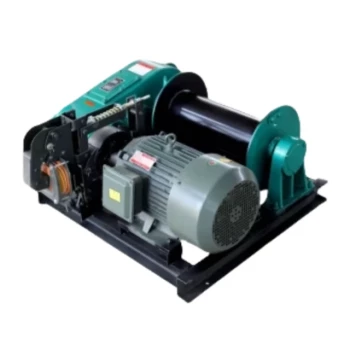
At their core, hydraulic towing winches derive their exceptional efficiency and reliability from the fundamental principle of using a nearly incompressible fluid to transmit immense power with minimal energy loss. This design results in a system that is not only powerful but also inherently durable and resistant to the harsh conditions common in marine and industrial environments.
The key is simplicity in the face of complexity. By replacing intricate mechanical gears and sensitive electrical components with a robust, sealed fluid power system, hydraulic winches achieve superior durability, precise control, and unmatched performance under extreme loads.
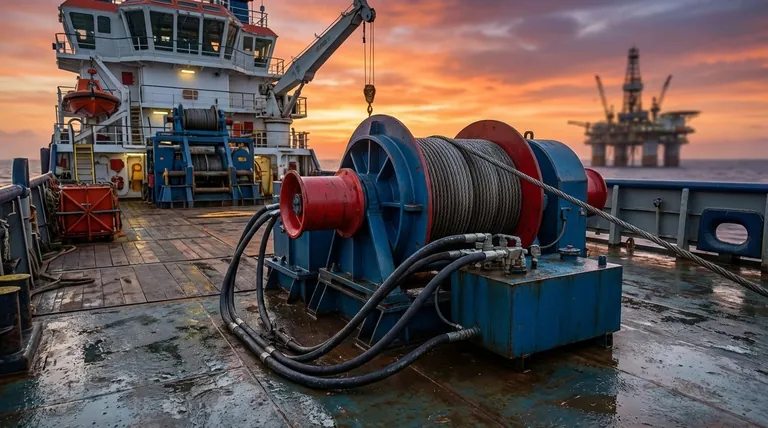
The Core Principle: Power Through Fluid Dynamics
To understand the reliability of a hydraulic winch, you must first understand how it generates and controls force. It's a system built on robust, physical principles rather than delicate electronic ones.
Direct and Efficient Power Transmission
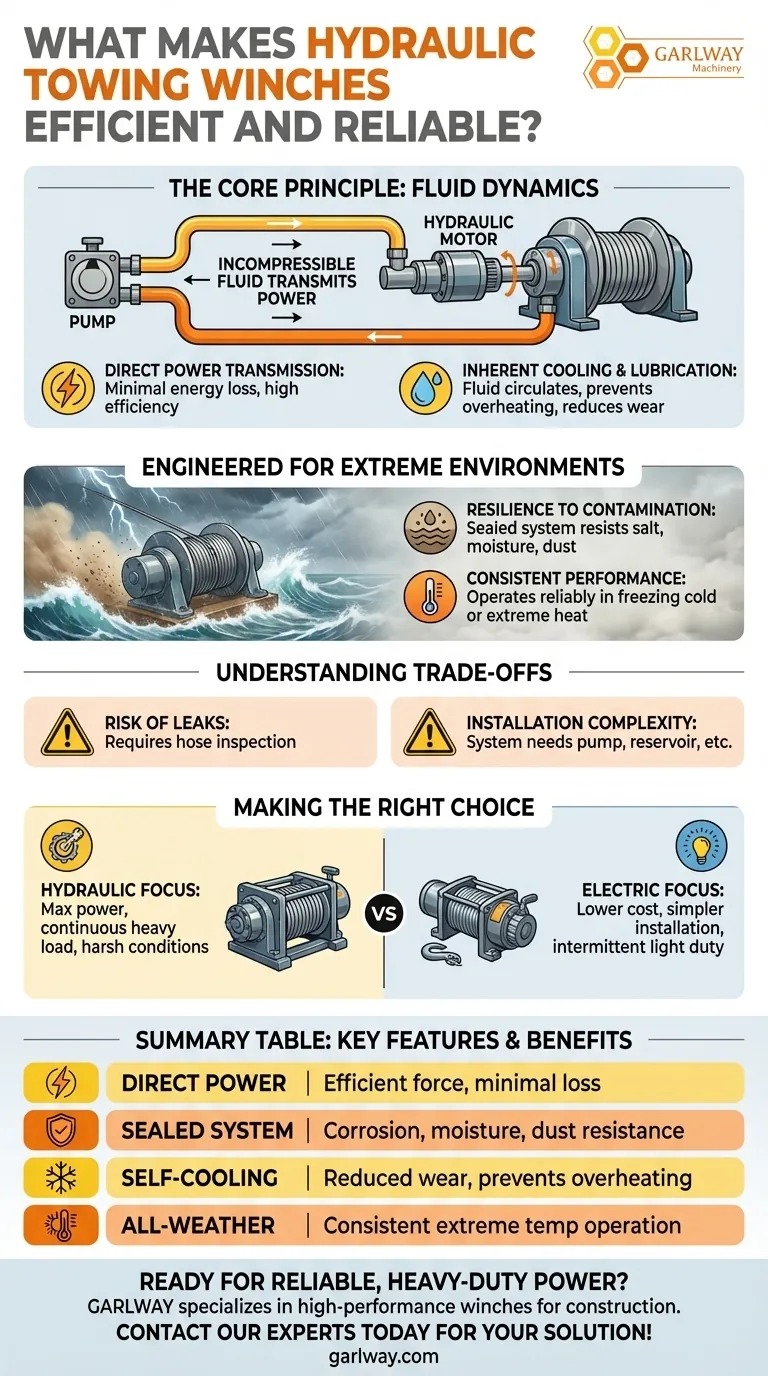
Hydraulic systems use a specialized fluid, moved by a pump, to drive a hydraulic motor. Because this fluid is practically incompressible, the force applied by the pump is transferred to the motor almost instantly and with very little energy wasted as heat.
This direct transfer of force is what makes the system so efficient, reducing fuel consumption and overall operating costs compared to mechanical or electrical alternatives that suffer from friction or resistive losses.
Inherent Cooling and Lubrication
The hydraulic fluid itself serves a dual purpose. As it circulates through the system, it carries heat away from the motor and other components, acting as a constant cooling agent.
This prevents the overheating that often plagues high-load electrical systems. Simultaneously, the fluid lubricates all moving parts, drastically reducing wear and the need for frequent maintenance.
Engineered for Extreme Environments
Hydraulic winches are not just powerful; they are purpose-built to survive where other systems fail. Their design addresses the primary points of failure in heavy-duty equipment.
Resilience to Contamination
The entire hydraulic system is sealed. This design makes it exceptionally resistant to the corrosive effects of salt water, moisture, and dust—common elements in marine, offshore, and industrial settings.
Electrical components, in contrast, are highly vulnerable to moisture and corrosion, which can lead to shorts and system failure.
Consistent Performance in All Climates
Hydraulic systems excel in a wide range of temperatures. The fluid's properties can be tailored for specific climates, ensuring consistent, reliable power whether in freezing conditions or extreme heat.
This stability is critical for operations where performance cannot be compromised by environmental factors.
Understanding the Trade-offs
No technology is without its compromises. Acknowledging the potential downsides of hydraulic systems is key to making an informed decision.
The Risk of Fluid Leaks
The primary vulnerability of a hydraulic system is the potential for leaks in hoses or seals. A leak not only reduces system power but can also create an environmental and safety hazard.
Regular inspection of hoses and connection points is a critical maintenance task to mitigate this risk.
Installation and System Complexity
While the winch motor itself is simple, the supporting hydraulic system—including a pump, reservoir, filters, and hoses—can be more complex and costly to install than a self-contained electric winch.
This initial setup requirement means hydraulic systems are better suited for heavy-duty commercial or industrial applications where the power source is already available or planned for.
Making the Right Choice for Your Application
Your final decision depends on balancing the demands of your operation with the characteristics of the technology.
- If your primary focus is maximum power and unwavering reliability in harsh, corrosive environments: A hydraulic winch is the definitive choice due to its sealed design and robust power transmission.
- If your primary focus is continuous, heavy-load operations: The superior efficiency and self-cooling properties of a hydraulic system will provide longer service life and lower operating costs.
- If your primary focus is lower initial cost and simpler installation for intermittent, lighter-duty use: An electric winch may be a more practical solution, provided the environmental conditions are not extreme.
Ultimately, choosing a hydraulic winch is an investment in operational certainty for the most demanding tasks.
Summary Table:
| Key Feature | Benefit |
|---|---|
| Direct Hydraulic Power | Efficient force transmission with minimal energy loss |
| Sealed System | Excellent resistance to corrosion, moisture, and dust |
| Self-Cooling & Lubricating | Reduced wear and prevention of overheating |
| All-Weather Performance | Consistent operation in extreme temperatures |
Ready to equip your operation with reliable, heavy-duty power?
GARLWAY specializes in high-performance construction machinery, including robust hydraulic winches designed for construction companies and contractors who demand efficiency and durability in the toughest environments.
Contact our experts today to find the perfect winch solution for your project's needs!
Visual Guide
Related Products
- Electric and Hydraulic Winch for Heavy Duty Applications
- Hydraulic Winding Engine Harbor Freight Winch
- Warn Winch Windlass Boat Trailer Winch
- 12000 lb Electric Boat Trailer Winch with Windlass Anchor Warn
- Portable Small Trailer Winch
People Also Ask
- What are the differences between electric and hydraulic winches? Choose the Right Winch for Your Job
- What are some common uses for a heavy-duty winch? Power Your Construction & Industrial Projects
- What are electro-hydraulic winches and their applications? The Integrated Power Solution for Heavy-Duty Operations
- How do winches assist in bridge launching? Accelerate Bridge Placement with Controlled Pulling Power
- What are the benefits of using heavy-duty winches for large projects? Boost Efficiency & Safety