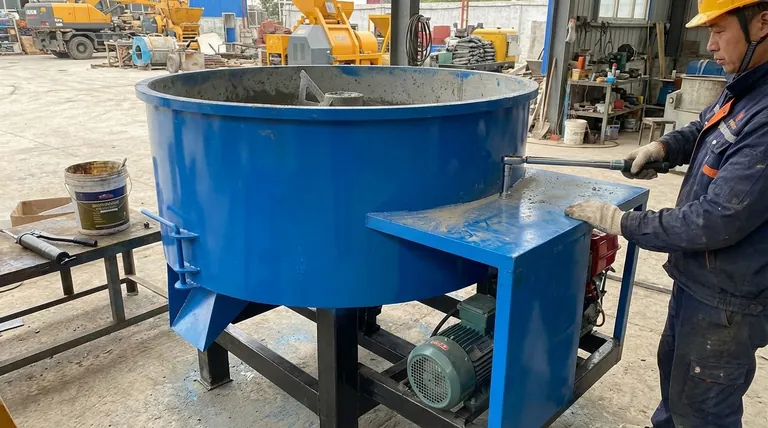
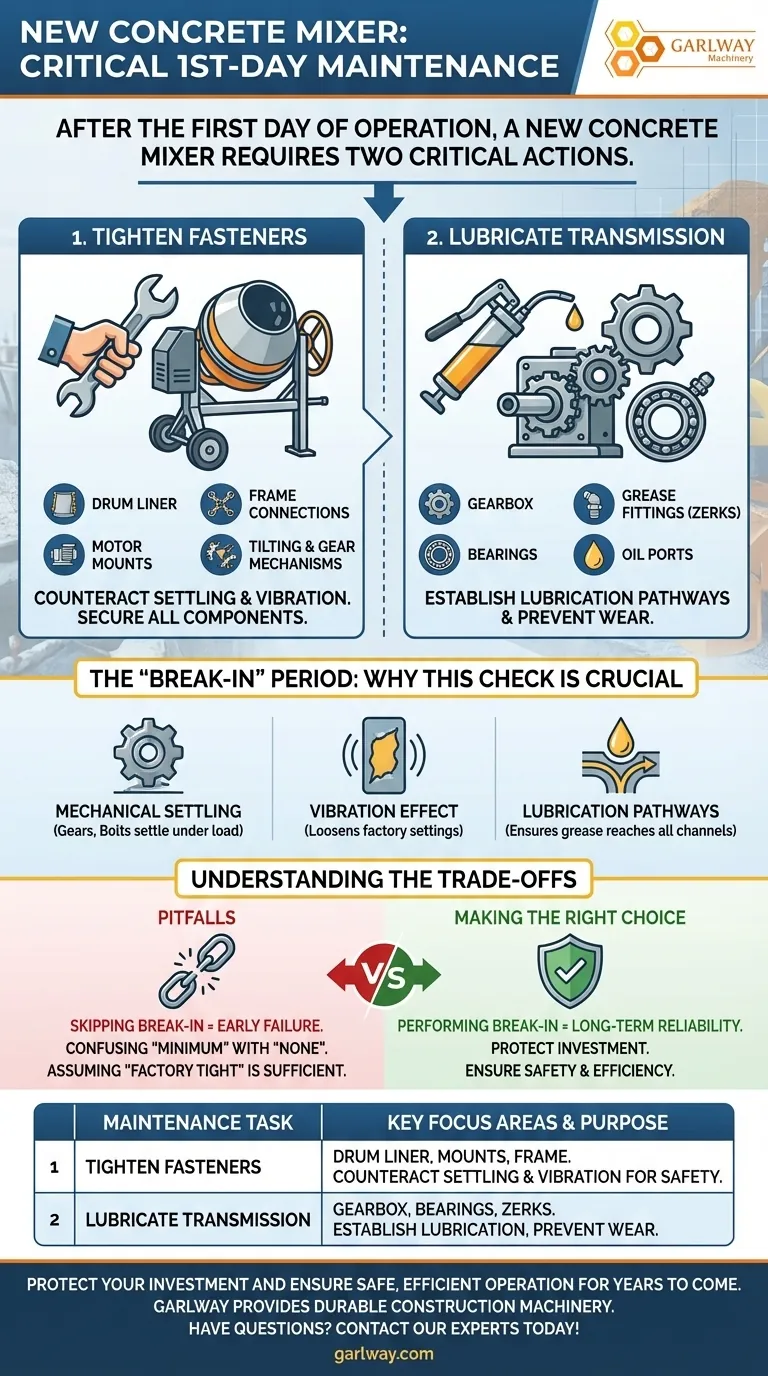
After the first day of operation, a new concrete mixer requires two critical maintenance actions. You must systematically check and tighten all bolts and nuts, paying special attention to those on the drum liner, and apply oil or grease to all lubrication points on the transmission system.
This initial check-up is not routine maintenance; it is a crucial "break-in" procedure. The vibrations and stresses of the first use will cause new mechanical parts to settle, and this single inspection prevents premature wear and ensures the long-term reliability of your investment.
The "Break-In" Period: Why This First Check is Crucial
A new machine, no matter how well-built, undergoes a period of settling. The first day of mixing heavy materials like concrete subjects every component to its first real-world operational stress.
The Principle of Mechanical Settling
New parts, particularly metal fasteners and bolted components, will slightly shift and compress into their final positions under load and vibration. This settling can create small gaps, causing bolts that were tight at the factory to become loose.
Vibration and Its Effect on Fasteners
The intense vibration generated by a rotating, aggregate-filled drum is the primary force that works to loosen nuts and bolts. Addressing this after the initial run ensures all components remain securely fastened before any damage can occur.
Establishing Lubrication Pathways
While the machine may be lubricated from the factory, this is often for assembly and corrosion prevention. The first operational lubrication ensures the correct grease or oil is forced into all critical channels, bearings, and gears under operational conditions.
A Step-by-Step Guide to First-Day Checks
This process is straightforward but requires diligence. Do not assume any bolt is secure until you have checked it yourself.
Inspect and Tighten All Fasteners
Systematically go over the entire machine. Pay close attention to high-stress areas like the mixing drum liner, motor mounts, frame connections, and any part of the tilting or gear mechanism. A securely tightened machine operates more safely and efficiently.
Lubricate the Transmission System
Locate all specified lubrication points on the gearbox and transmission components. These are typically grease fittings (zerks) or oil ports. Apply the manufacturer-recommended lubricant to purge any assembly grease and establish a fresh layer of protection against friction and wear.
Understanding the Trade-offs
The reference to "minimum maintenance" can be misleading if not put in the proper context. Understanding the distinction between initial and routine tasks is key.
Pitfall: Confusing "Minimum" with "None"
The design goal of "minimum maintenance" applies to the machine's long-term, routine service schedule. It does not eliminate the need for this essential, one-time break-in procedure. Skipping this first check is the most common cause of early-life equipment failure.
Pitfall: Assuming "Factory Tight" is Sufficient
Factory torque settings are a baseline. They cannot account for the specific dynamic loads and settling that will occur during your first real-world use. Verifying bolt tightness after the first day is the only way to confirm the machine is secure.
Making the Right Choice for Your Goal
Your approach to this first check-up directly impacts the mixer's service life and performance.
- If your primary focus is operational safety: Prioritize checking and tightening all structural bolts and fasteners, as loose components are a significant safety hazard.
- If your primary focus is maximizing the mixer's lifespan: Ensure every lubrication point is properly serviced to prevent the friction that causes premature wear on gears and bearings.
This simple, 30-minute procedure after the first use is the most effective action you can take to protect your new equipment for years to come.
Summary Table:
| Maintenance Task | Key Focus Areas | Purpose |
|---|---|---|
| Tighten Fasteners | Drum liner, motor mounts, frame connections | Counteract settling and vibration from first use to prevent damage and ensure safety. |
| Lubricate Transmission | Gearbox, bearings, grease fittings (zerks) | Establish proper lubrication pathways under operational conditions to prevent premature wear. |
Protect your investment and ensure your new concrete mixer operates safely and efficiently for years to come. GARLWAY specializes in providing durable construction machinery, including concrete mixers, winches, and batching plants, for construction companies and contractors worldwide. Our equipment is built for reliability, but proper initial care is key. Have questions about maintenance or need a reliable machine for your next project? Contact our experts today to learn how GARLWAY can support your business goals.
Visual Guide
Related Products
- Portable Concrete Mixer Machine Equipment for Mixing Concrete
- Construction Products Concrete Plant Machine Mixing Concrete Mixer
- Portable Electric Concrete Mixer Machine for Cement Mixing
- JZC400 Mobile Small Concrete Mixer Cement Mixer Machine
- Hydraulic Concrete Mixer Machine Cement Mixing Equipment for Mixture Concrete
People Also Ask
- Why is it necessary to use a portable concrete mixer? Gain Total Control & Efficiency
- How much concrete can you pour with a portable mixer? Find the Perfect Fit for Your Project
- What types of projects are portable concrete mixers suitable for? Ideal for DIY & Small-Scale Construction
- How much does a portable concrete mixer hold? A Guide to Choosing the Right Capacity
- What types of portable concrete mixers exist? Find the Perfect Mixer for Your Project