For a mortar mixer's engine, the standard and most commonly recommended oil is SAE 10W-30. This multi-grade oil is suitable for general, all-purpose use across a wide range of ambient temperatures, ensuring your equipment starts reliably and remains protected during operation.
The question isn't just about the type of oil, but understanding that you are maintaining a small gasoline engine, not the mixer's gearbox. The key is matching the oil's viscosity (its thickness) to your typical operating temperature to ensure maximum engine protection and longevity.

Why Your Mixer's Engine Needs a Specific Oil
A mortar mixer is a simple machine, but its power source—a small gas engine—is not. Just like the engine in a car or lawnmower, it requires the right type of oil to prevent catastrophic failure.
The Engine vs. The Gearbox
First, it is critical to distinguish between the two main components. The oil recommendation applies to the gasoline engine that powers the unit. Many mixers also have a separate, sealed gearbox that turns the drum, which often requires a much thicker gear oil. Always confirm you are adding oil to the correct reservoir.
What "10W-30" Actually Means
The numbers on an oil bottle refer to its viscosity, or resistance to flow.
- 10W: The "W" stands for "Winter." This number indicates how easily the oil flows at cold temperatures. A lower number means it flows better, making engine starts easier in cold weather.
- 30: This number represents the oil's viscosity at the engine's normal operating temperature (212°F or 100°C).
SAE 10W-30 is a "multi-grade" oil, meaning it behaves like a thinner oil when cold but provides the protection of a thicker oil when hot.
Temperature is the Deciding Factor
While 10W-30 is the best general-purpose choice, extreme temperatures can call for a different viscosity. Your engine's manual is the ultimate authority, but general guidelines often suggest other options for consistent, extreme weather conditions to provide optimal protection.
The Correct Procedure for Adding Oil
Properly checking and adding oil is a simple process that prevents the two most common causes of engine damage: running with low oil or overfilling.
Start on a Level Surface
Always place the mixer on secure, level ground before checking the oil. If the mixer is tilted, you will get an inaccurate reading on the dipstick, which can easily lead to over- or under-filling.
Check When the Engine is Stopped
For safety and accuracy, only check the oil when the engine is stopped. Letting it sit for a few minutes allows the oil circulating in the engine to drain back into the crankcase.
Use the Dipstick Correctly
Unscrew the oil fill cap, which typically has a dipstick attached. Pull it out, wipe it clean with a rag, and re-insert it fully without screwing it back in. Pull it out again to get a clear reading between the 'Full' and 'Add' marks.
Add Oil Slowly
If the level is low, use a funnel to add a small amount of the correct oil. Wait a minute for it to settle, and then re-check the level. Repeat this process until the dipstick reads 'Full'.
Common Pitfalls to Avoid
Mistakes with engine oil are often costly. Understanding these common errors will keep your equipment running reliably.
Never Confuse Engine Oil with Gear Oil
Using engine oil in a gearbox or gear oil in an engine will cause rapid and severe damage. The gearbox requires a much thicker lubricant designed for high pressure between gears, whereas the engine needs a thinner oil that can circulate quickly.
The Danger of Overfilling
Adding too much oil is just as harmful as not adding enough. Excess oil can get churned into a foam by the crankshaft, which does not lubricate properly. This can also create excess pressure, potentially blowing out seals and causing leaks.
Forgetting to Check Regularly
Small engines can consume oil, especially under heavy load or in hot weather. Make it a habit to check the oil level before starting work each day. Running an engine low on oil is the fastest way to destroy it.
Making the Right Choice for Your Goal
Selecting the right oil is about matching it to your environment to ensure your equipment is always protected.
- If your primary focus is general, all-season use: Stick with SAE 10W-30, as it provides excellent protection for the widest range of common operating temperatures.
- If your primary focus is operating in consistently hot climates: A straight SAE 30 weight oil can offer slightly better protection against thinning in extreme heat, but check your manual first.
- If your primary focus is operating in consistently cold weather: An SAE 5W-30 oil will flow better on cold starts, reducing initial wear on engine components.
Ultimately, a daily oil check is the single most effective form of preventative maintenance you can perform for your mixer's engine.
Summary Table:
| Operating Condition | Recommended Oil Type | Key Benefit |
|---|---|---|
| General, All-Season Use | SAE 10W-30 | Optimal protection across a wide temperature range |
| Consistently Hot Climates | SAE 30 | Better resistance to thinning in high heat |
| Consistently Cold Weather | SAE 5W-30 | Improved flow for easier cold starts |
Ensure your construction projects run smoothly with reliable equipment from GARLWAY. We specialize in high-performance construction machinery, including durable mortar mixers, winches, concrete mixers, and batching plants designed for contractors and construction companies worldwide. Let us help you maximize uptime and efficiency on your job site—contact our experts today for personalized recommendations and support!
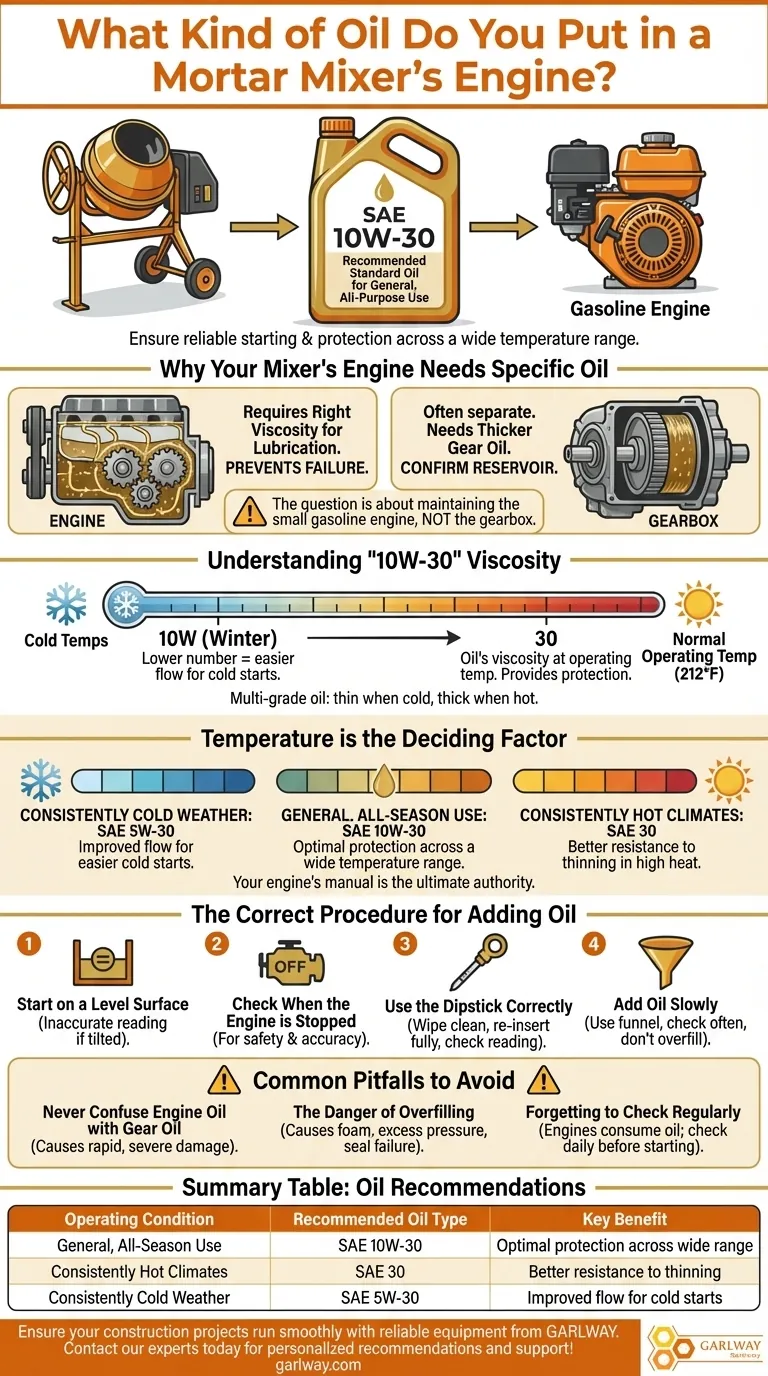
Visual Guide
Related Products
- JDY350 Electric Hydraulic Mortar Mud Concrete Mixer
- JDC350 Small Cement Concrete Mortar Mixer
- Mini Cement Mortar Mixer Truck for Construction
- Belle Mixer Drum Self Loading Mortar Mixers JS3000
- JS1000 Volumetric Concrete Mortar Mixer for Sale Skid Steer Cement Mixer
People Also Ask
- When are electric mortar mixers typically used? Find the Perfect Tool for Small to Medium-Sized Jobs
- What are hydraulic concrete mixers used for? Powering Large-Scale Construction Projects
- How are mortar mixers utilized in concrete and grout projects? Maximize Your Mixing Efficiency
- What are the benefits of electric concrete mixers? Quiet, Clean, and Low-Maintenance Mixing
- What is a mortar mixer and what is its primary use? Master Masonry with the Right Equipment