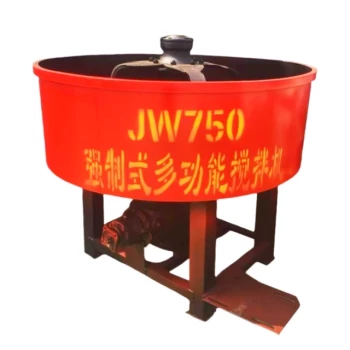
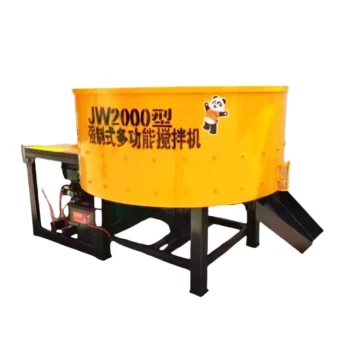
The fundamental purpose of mixing concrete is to thoroughly combine its core ingredients—cement, aggregates like sand or gravel, and water—into a completely uniform and workable mass. This process is essential for activating the chemical properties of the cement and ensuring that every part of the mixture has the same consistency and strength, which is the foundation for creating durable structures.
Concrete mixing is not merely about blending ingredients. It is the critical process that transforms a theoretical mix design into a predictable, high-performance material, ensuring the specified strength and durability become a physical reality.
From Raw Ingredients to a Predictable Material
The goal of mixing is to achieve a state of complete homogeneity. This uniformity is what allows concrete to perform its function as a reliable, load-bearing material.
Activating the Cement Paste
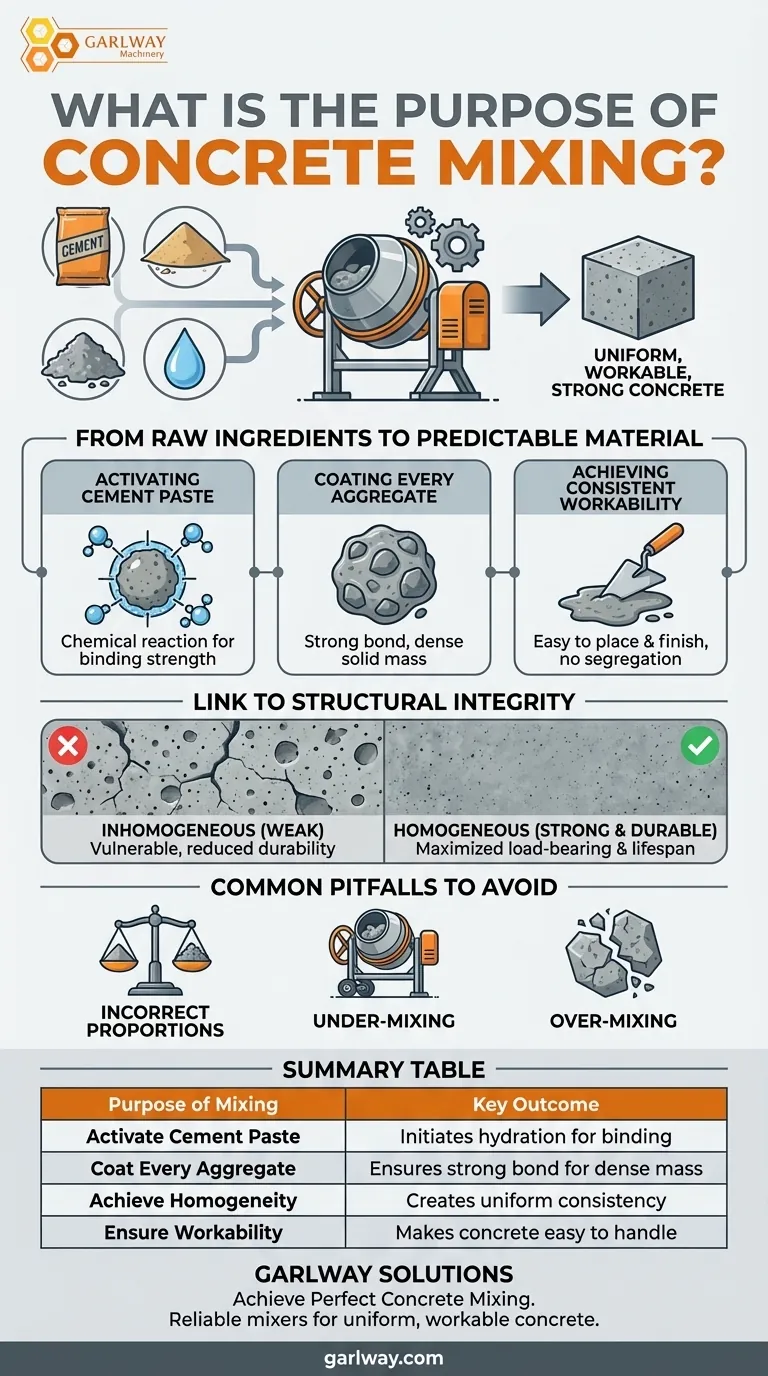
The strength of concrete comes from the chemical reaction between cement and water, a process called hydration. Proper mixing ensures every particle of cement comes into contact with water, creating the binding paste that holds the entire structure together. Incomplete mixing results in un-hydrated clumps of cement, creating inherent weak points.
Coating Every Aggregate
The cement paste must fully coat the surface of every piece of aggregate (sand and gravel). These aggregates are the primary structural filler, and the paste acts as the glue. A uniform coating ensures a strong bond, creating a dense, solid mass capable of resisting immense compressive forces.
Achieving Consistent Workability
Workability refers to how easily fresh concrete can be placed, consolidated, and finished without the materials segregating. A well-mixed batch has a consistent texture and flow, making it easier for construction crews to handle and preventing heavier aggregates from settling out of the mixture.
The Link Between Mixing and Structural Integrity
The quality of the mix directly translates to the final performance of the hardened concrete. Cutting corners at this stage has permanent and severe consequences for the structure's safety and lifespan.
The Dangers of Inhomogeneity
An unevenly mixed batch is unpredictable. It can lead to pockets of porous, weak material, voids, and a rough surface finish. These flaws compromise the concrete's ability to bear loads and make it vulnerable to water penetration and freeze-thaw cycles, drastically reducing its durability.
Maximizing Strength and Durability
Only a thoroughly mixed, homogeneous concrete can achieve the full compressive strength specified in its mix design. This ensures the foundation, column, or slab will perform as engineered for decades without premature failure.
Improving Project Efficiency
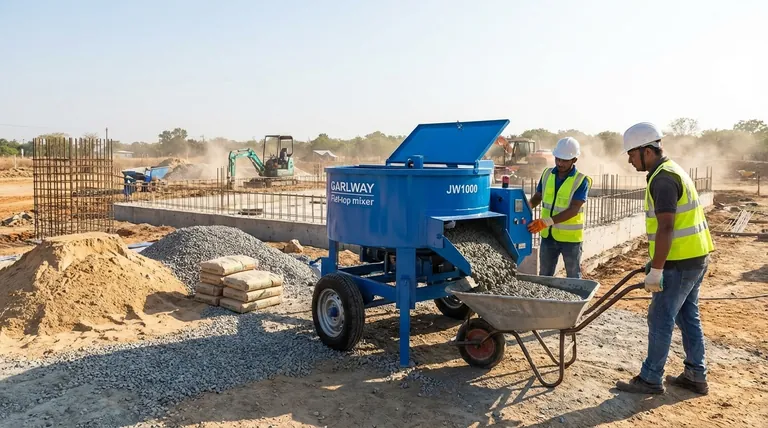
Using mechanical mixers ensures that each batch is consistent, saving significant time and labor compared to manual methods. This predictability prevents material waste, ensures the project stays on schedule, and maintains high safety standards on the job site.
Common Pitfalls to Avoid
The mixing process is a point of frequent error. Understanding these common mistakes is critical to ensuring a successful outcome.
Starting with Incorrect Proportions
Mixing cannot fix a bad recipe. The process begins with accurate batching, which is measuring the correct amounts of cement, sand, gravel, and water. Using incorrect proportions guarantees the final concrete will fail to meet its required technical specifications.
The Problem of Under-mixing
This is the most common failure. Under-mixed concrete will have visible clumps of cement or sand and an uneven, wet-and-dry texture. This leads directly to weak spots and a porous final product that will not last.
The Risk of Over-mixing
It is also possible to mix the concrete for too long. Over-mixing can begin to break down the aggregates, introduce excessive air into the mix, or cause too much water to evaporate, all of which can reduce the final strength.
Making the Right Choice for Your Goal
The objective of mixing remains the same, but your primary goal will determine where you place your focus.
- If your primary focus is maximum structural strength: Ensure mixing is thorough enough to eliminate all clumps and fully coat every aggregate with cement paste.
- If your primary focus is long-term durability: Prioritize achieving a perfectly homogenous mixture to prevent weak, porous spots where water and chemicals can penetrate.
- If your primary focus is project efficiency: Rely on a properly sized mechanical mixer to produce consistent, workable batches every time, reducing labor costs and material waste.
Ultimately, meticulous mixing is the non-negotiable step that transforms a simple list of ingredients into a reliable, high-performance construction material.
Summary Table:
| Purpose of Mixing | Key Outcome |
|---|---|
| Activate Cement Paste | Initiates the hydration process for binding strength. |
| Coat Every Aggregate | Ensures a strong bond for a dense, solid mass. |
| Achieve Homogeneity | Creates uniform consistency for predictable performance. |
| Ensure Workability | Makes concrete easy to place, consolidate, and finish. |
Achieve Perfect Concrete Mixing for Your Project
Consistent, high-quality concrete mixing is the foundation of any successful build. GARLWAY specializes in construction machinery, offering reliable concrete mixers and batching plants designed to deliver the uniform, workable concrete you need for maximum strength and durability.
Let our equipment help you eliminate weak spots, prevent material waste, and keep your project on schedule. Contact GARLWAY today to find the perfect mixing solution for your construction company or contracting business.
Visual Guide
Related Products
- Portable Concrete Mixer Machine Equipment for Mixing Concrete
- Construction Products Concrete Plant Machine Mixing Concrete Mixer
- Portable Electric Concrete Mixer Machine for Cement Mixing
- JZC400 Mobile Small Concrete Mixer Cement Mixer Machine
- Hydraulic Concrete Mixer Machine Cement Mixing Equipment for Mixture Concrete
People Also Ask
- Why is it necessary to use a portable concrete mixer? Gain Total Control & Efficiency
- How much concrete can you pour with a portable mixer? Find the Perfect Fit for Your Project
- What types of projects are portable concrete mixers suitable for? Ideal for DIY & Small-Scale Construction
- How much does a portable concrete mixer hold? A Guide to Choosing the Right Capacity
- What types of portable concrete mixers exist? Find the Perfect Mixer for Your Project